
Most commercial kitchen floors don’t fail because of bad luck. They fail because the contractor skipped something moisture testing, proper surface prep, or the wrong product for the wrong zone. When that happens, you’re not just dealing with a floor problem. You’re dealing with a health inspection citation, a closed kitchen, and a bill to redo work you already paid for once.
East Meadow’s commercial building stock along Hempstead Turnpike is largely post-war construction a lot of those concrete slabs are 60 to 70 years old. Decades of Long Island’s freeze-thaw winters and humid summers have worked their way into those slabs, creating the exact moisture conditions that cause epoxy to delaminate when a contractor doesn’t test before they coat. We test every slab before we coat it, because that’s the only way to know if the floor will bond correctly and stay bonded.
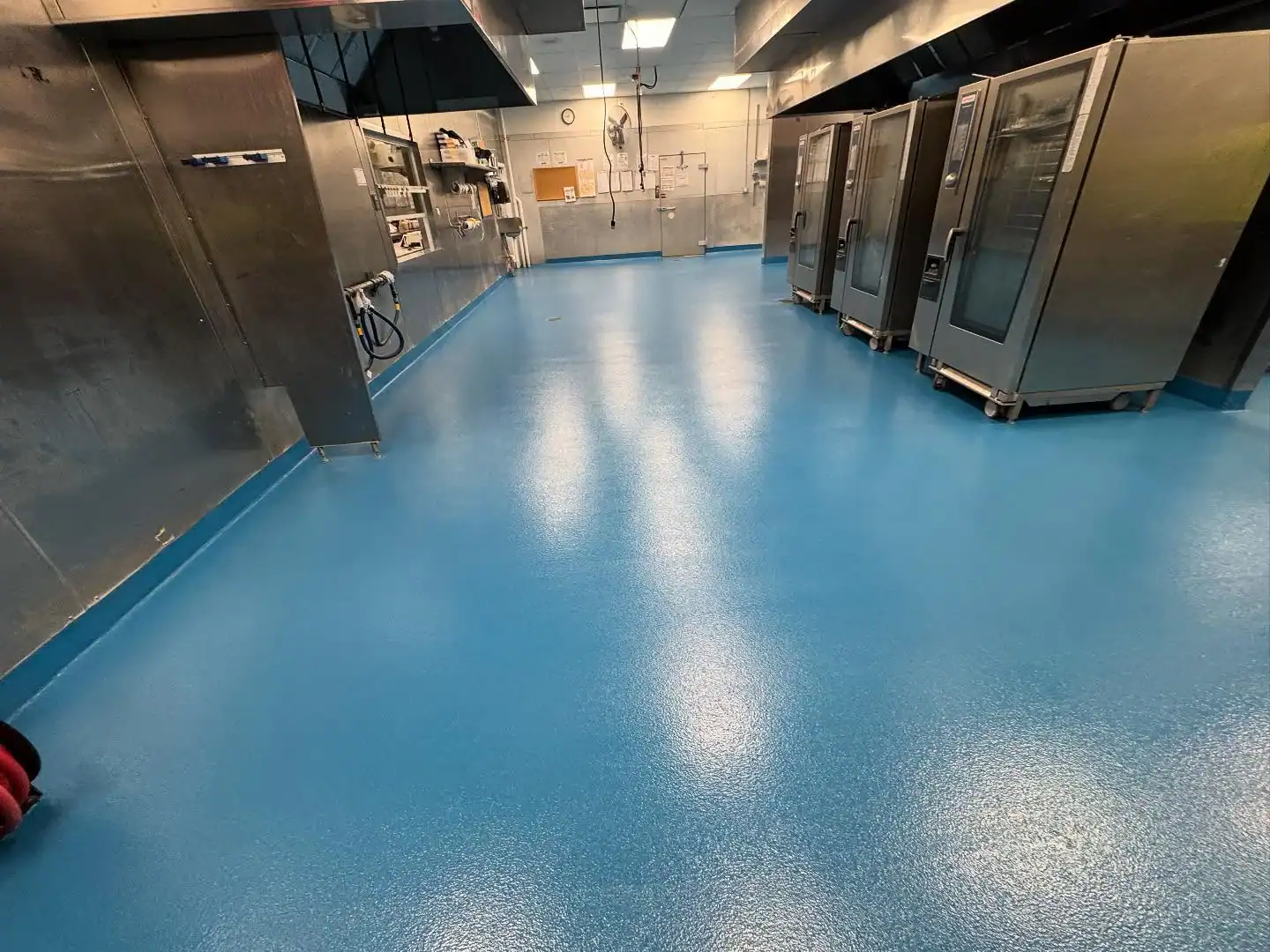
A properly installed seamless floor changes the daily reality of running a kitchen in East Meadow. No grout lines trapping grease between shifts. No cracked tile giving a health inspector something to write up. No peeling coating two years from now that sends you back to square one. When the floor is done right the first time, it stays out of your way which is exactly where it belongs.
We’ve been installing commercial kitchen floors for 35 years across Long Island, throughout the United States, and into the Bahamas. That experience matters most when we’re working in East Meadow, where the commercial real estate along Hempstead Turnpike and throughout the hamlet presents specific challenges: older concrete slabs, coastal humidity, and the freeze-thaw cycles that Long Island throws at buildings every winter.
We hold Sherwin-Williams High Performance Flooring ATP certification and Res Tech certification two manufacturer credentials that most contractors in Nassau County simply don’t have. Those aren’t wall decorations. They reflect a level of technical training across concrete assessment, surface preparation, coating systems, and application methods that separates a real commercial flooring specialist from a general contractor who occasionally rolls out epoxy.
From the restaurants lining Hempstead Turnpike to the institutional food service facilities at Nassau University Medical Center, we understand the range of kitchen environments East Meadow operators are running. We know exactly what Nassau County’s health department expects to see when they walk through the door, and we build every floor to meet those expectations.
The first thing we do on any East Meadow project is test the concrete. Not prime it, not grind it test it. Moisture vapor transmission is the number one reason epoxy floors delaminate, and in a hamlet where most commercial slabs date back to the 1950s and have been through decades of Long Island’s coastal humidity, that test is non-negotiable. If there’s a moisture issue, we address it before anything else happens. That’s how the floor bonds correctly and stays bonded.
Once the slab is assessed, we diamond-grind the surface to the right profile for adhesion, fill any cracks, and level uneven areas. This is the prep work most contractors rush or skip entirely because it takes time and doesn’t look impressive on a before-and-after photo. But it’s the single biggest factor in whether your floor lasts two years or twenty. After prep, we select the right coating system for each zone of your kitchen urethane cement where thermal shock from cooking equipment is a factor, food-grade epoxy mortar where chemical resistance matters most, and a slip-resistant topcoat throughout that meets OSHA’s COF standards for commercial kitchen surfaces.
We don’t rush the cure between coats. Every layer gets the time it needs to bond fully before the next one goes down. For East Meadow restaurant operators who can’t afford extended downtime, we schedule installations overnight or on weekends, and with fast-cure topcoat systems, most kitchens are back in service within 24 to 36 hours.
Ready to get started?
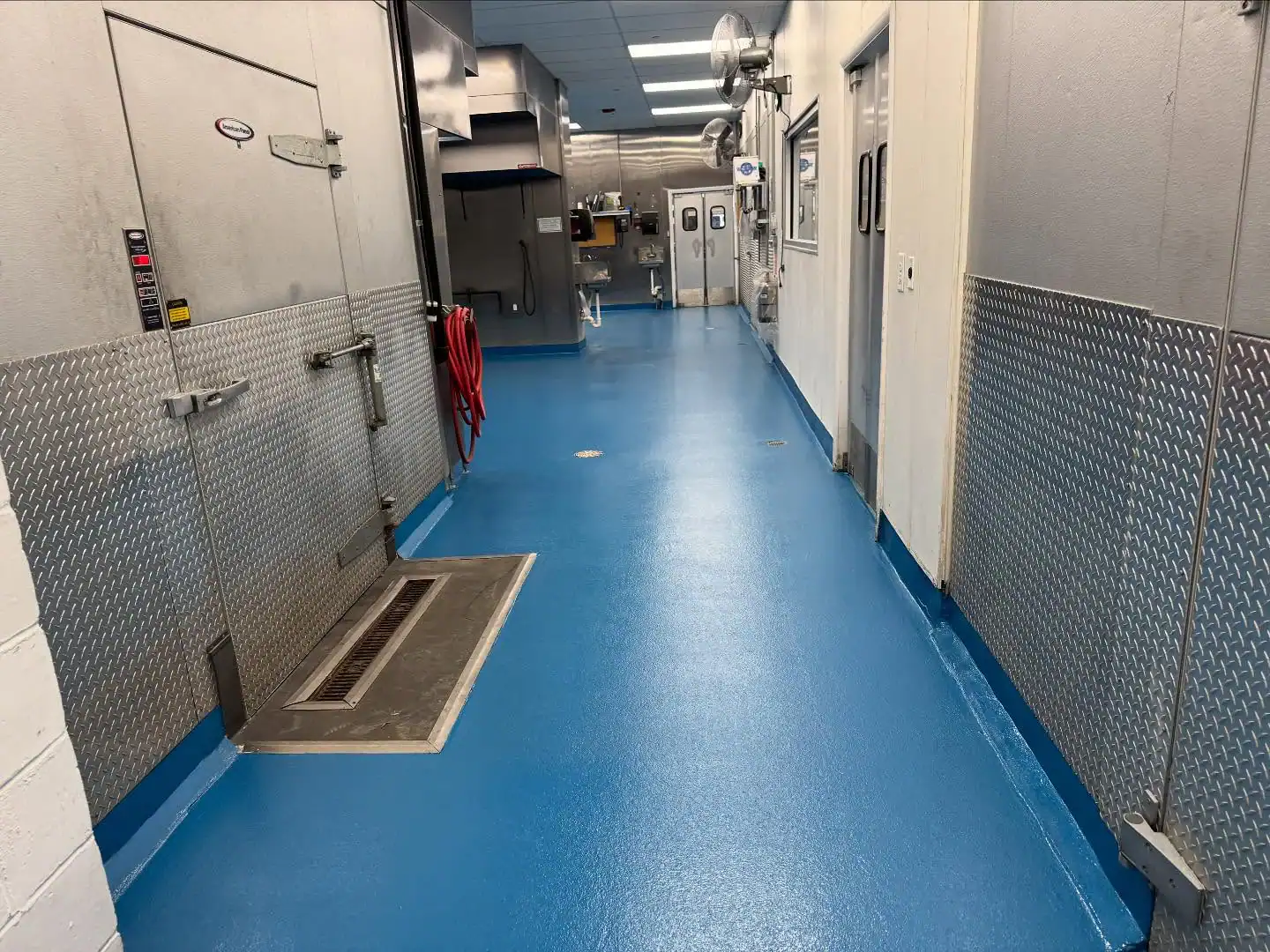
A commercial kitchen isn’t one environment it’s several. The area around your fryers and ranges faces thermal shock every time steam cleaning hits a hot surface. Your walk-in cooler sits on cold, potentially damp concrete that needs a moisture-tolerant formulation to bond correctly. Your prep line and dish station take a beating from commercial sanitizers that will eat through the wrong coating inside of a year. Treating the whole kitchen like one flat surface is how floors fail. We don’t do that.
Every installation we do in East Meadow is built around what’s actually happening in each zone. That means the right system in the right place and a coved base at every floor-to-wall junction to eliminate the bacterial crevices that Nassau County health inspectors look for specifically. The seamless surface we leave behind can be sanitized as effectively as a countertop, which matters whether you’re running a 10-table restaurant on East Meadow Avenue or managing food service operations at a large institutional facility.
For operators navigating Nassau County’s food service permit process whether you’re renewing, transferring after a tenant change, or opening for the first time the floor we install is built to check every box on the county’s physical facility requirements. Smooth, non-porous, non-absorbent, crack-free, and cleanable. That’s not marketing language. That’s the actual checklist, and it’s what we build to every time.
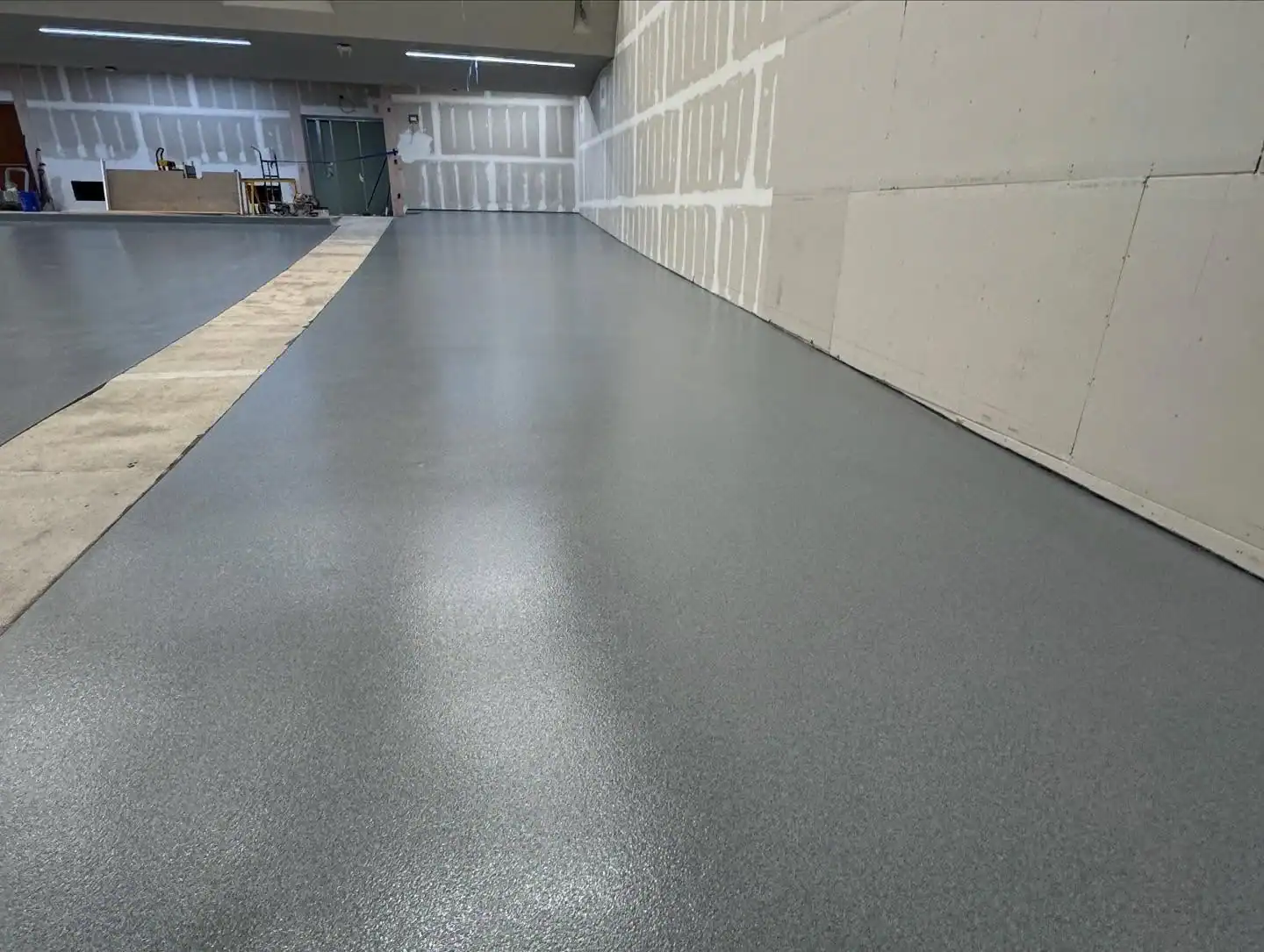
Nassau County’s Public Health Ordinance requires commercial kitchen floors to be smooth, non-porous, non-absorbent, and easily cleanable with no cracks, chips, or gaps where bacteria can accumulate. That language comes directly from the county’s food service establishment permit requirements, and health inspectors apply it during every routine inspection. A floor that was compliant at installation can become a violation once it starts to crack or pit, which is why the durability of the system matters as much as the initial installation.
The specific details inspectors look for include seamless surfaces with no open grout lines, proper slope toward floor drains, and coved base transitions at floor-to-wall junctions. That last one catches a lot of East Meadow operators off guard the 90-degree angle where a flat tile floor meets a wall is exactly the kind of crevice the county flags. A properly installed seamless epoxy system with a coved base eliminates every one of those issues in a single installation.
For most restaurant-scale kitchens in East Meadow, the installation itself from surface prep through final topcoat takes one to two days depending on the square footage, the condition of the existing concrete, and the coating system being applied. The older concrete slabs common along Hempstead Turnpike sometimes require additional prep work to address cracking or moisture issues, which can add time to the front end of the project. That’s not a problem it’s just honest scoping, and it’s far better than rushing past prep and ending up with a floor that fails in six months.
We schedule the majority of our East Meadow installations overnight or over weekends to minimize the impact on your operating hours. With fast-cure polyaspartic topcoat systems, light foot traffic is typically possible within hours of the final coat, and most kitchens are back in full commercial service within 24 to 36 hours. Before we start any project, we give you a clear timeline so you can plan around it no surprises mid-installation.
In most cases, yes but it depends on the condition of the tile and what’s underneath it. If the quarry tile is well-bonded, flat, and structurally sound, a skim coat system can be applied over it to create a seamless surface without the cost and disruption of a full tile removal. If the tile is cracked, loose, or unevenly settled which is common in East Meadow’s older commercial buildings removal is usually the better long-term call, because coating over a compromised substrate just transfers the problem upward.
The bigger issue with quarry tile isn’t whether you can coat over it it’s the grout lines. Even when tile is in decent shape, those grout lines have typically absorbed years of grease, food residue, and cleaning chemicals. A seamless epoxy system installed correctly over properly prepared tile eliminates those lines entirely, giving you a surface that can actually be sanitized rather than just mopped. We assess the tile condition during our initial evaluation and give you a straight answer on which approach makes sense for your specific kitchen.
The most common reason epoxy floors fail in commercial kitchens is moisture in the concrete slab that wasn’t tested or addressed before installation. When moisture vapor pushes up through the slab, it breaks the bond between the coating and the concrete and the floor starts to bubble, peel, or delaminate. This is especially common in East Meadow’s older commercial spaces, where concrete slabs have been through decades of Long Island’s coastal humidity and freeze-thaw cycles, and moisture vapor transmission is often elevated.
The second most common cause is rushed surface prep. Grinding the concrete to the correct surface profile, filling cracks, and properly priming the slab takes time and contractors who skip or rush these steps to get off a job faster are setting up a floor that looks fine on day one and starts failing by month three. We test for moisture before we do anything else, and we don’t move to the next step until the previous one is done correctly. That’s the process that produces floors that actually last.
Epoxy and urethane cement are both used in commercial kitchens, but they perform differently and are suited for different conditions. Standard food-grade epoxy is an excellent choice for most kitchen areas it’s seamless, non-porous, chemically resistant, and highly durable under normal commercial foot traffic and cleaning. It’s the right system for prep areas, service corridors, and most general kitchen zones.
Urethane cement is the better choice in areas that experience thermal shock the rapid temperature cycling that happens when steam cleaning hits a surface near hot cooking equipment, or when hot water hits a cold floor repeatedly throughout a shift. Urethane cement is more flexible than standard epoxy, which allows it to absorb that thermal stress without cracking. For East Meadow kitchens with heavy cooking lines high-volume restaurants, institutional cafeterias, or commissary-style operations we’ll often specify urethane cement in the cooking zone and food-grade epoxy everywhere else. The goal is matching the system to what the floor actually has to survive.
The clearest sign is visible damage that can’t be cleaned around cracks, chips, pitting, or areas where the coating has separated from the concrete. Any of those conditions create surface irregularities where bacteria can accumulate, and in Nassau County, those are exactly the items a health inspector will note during a food service establishment review. If you’ve received a citation or a warning, the timeline for addressing it is short the county expects documented corrective action, and a failing floor doesn’t fix itself between inspections.
Beyond the obvious damage, watch for surfaces that have become increasingly difficult to sanitize even with proper cleaning products, grout lines in tile floors that stay discolored no matter how aggressively you clean them, or any area where water pools rather than draining correctly. Those are functional failures, not just cosmetic ones. East Meadow restaurant operators who have been in the same space for years sometimes normalize these conditions gradually but a floor that’s making your cleaning routine harder and your inspection results worse is costing you more than a replacement would. Getting an honest assessment early is almost always cheaper than waiting until the damage forces your hand.