
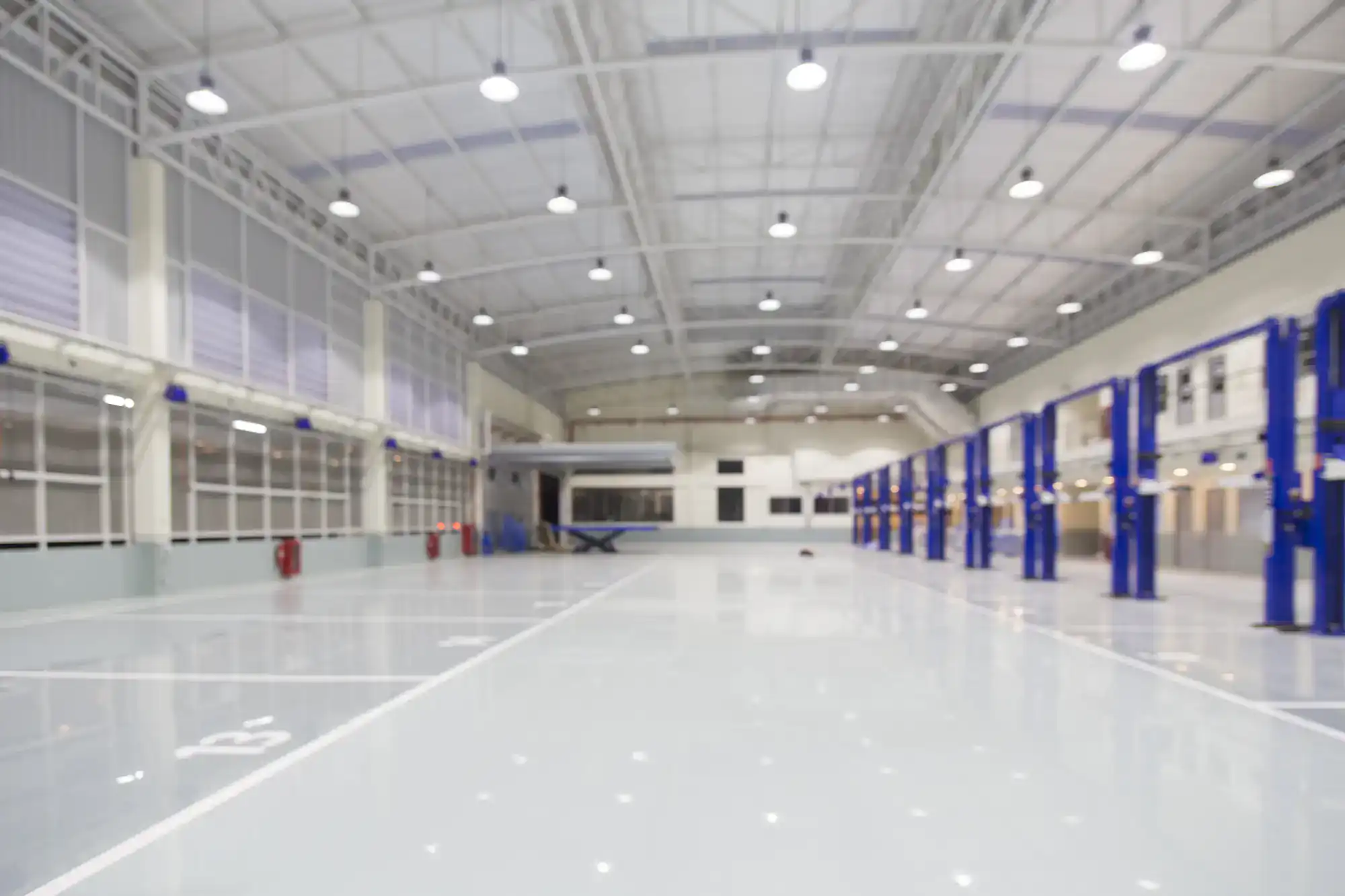
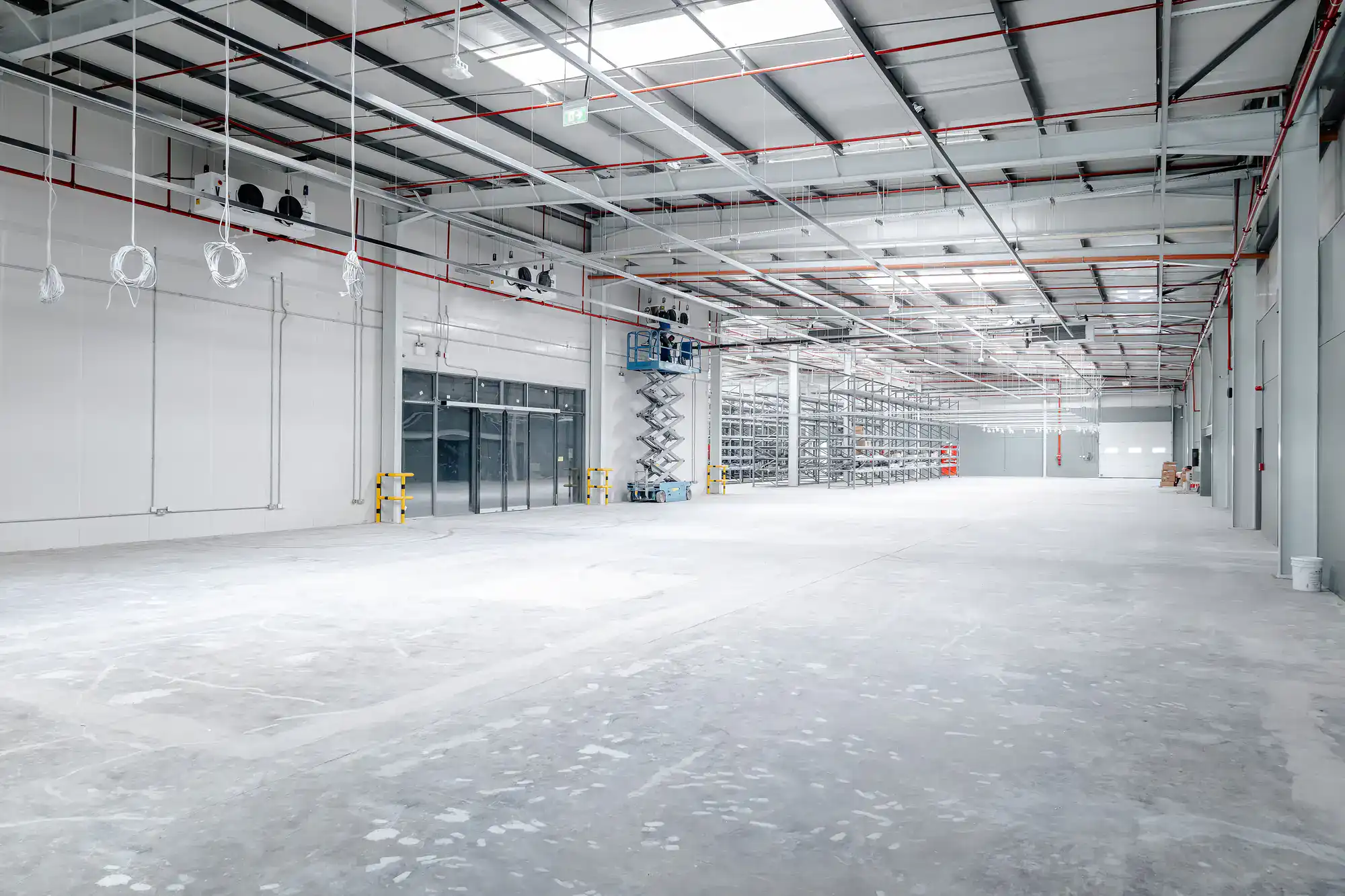
A hangar floor takes a beating that most floors never see. Aircraft weight, hydraulic fluid, jet fuel, tow equipment, daily cleaning it adds up fast. When the coating isn’t built for that environment, you’re looking at staining, cracking, delamination, and eventually a floor that becomes a liability instead of a surface.
The right system changes that completely. You get a floor that’s easy to clean, resistant to the chemicals that come with aircraft maintenance, and tough enough to handle the load without breaking down. Spills wipe up. Dropped tools show up against a bright, reflective surface. Your crew works safer, and your facility looks like it’s run by people who take it seriously.
In Uniondale specifically, Nassau County’s coastal humidity is a real factor. The Atlantic Ocean, Long Island Sound, and Jamaica Bay all contribute to year-round moisture in the air and that moisture works its way through large concrete slabs if the floor system isn’t installed with that in mind. A coating that wasn’t tested or specified for Long Island’s climate will show you exactly why that matters, usually within the first few years. We account for that from day one.
We’ve been doing this work for over 30 years, and the person running the company Danny Harmer has personally installed floors for more than four decades. That’s not a sales pitch. It means when something comes up during your project, the answer comes from someone who’s been on the floor, not just in the office.
Our crew reflects that same standard. Named field supervisors Javier, Eduardo, and Fredith bring a combined 40-plus years of hands-on experience between them, and most of the team has been with us for over a decade. That kind of continuity is rare in the trades, and it shows in the work.
We hold dual elite certifications Sherwin-Williams High Performance Flooring and Res Tech and every installer on our site carries OSHA 40 certification. For aviation facilities in Uniondale and across Nassau County, where federal OSHA standards and NFPA 409 compliance aren’t optional, that matters. From the former Mitchel Field grounds along Charles Lindbergh Boulevard to active hangars across Long Island, our team has the credentials and the experience to back up what we install.
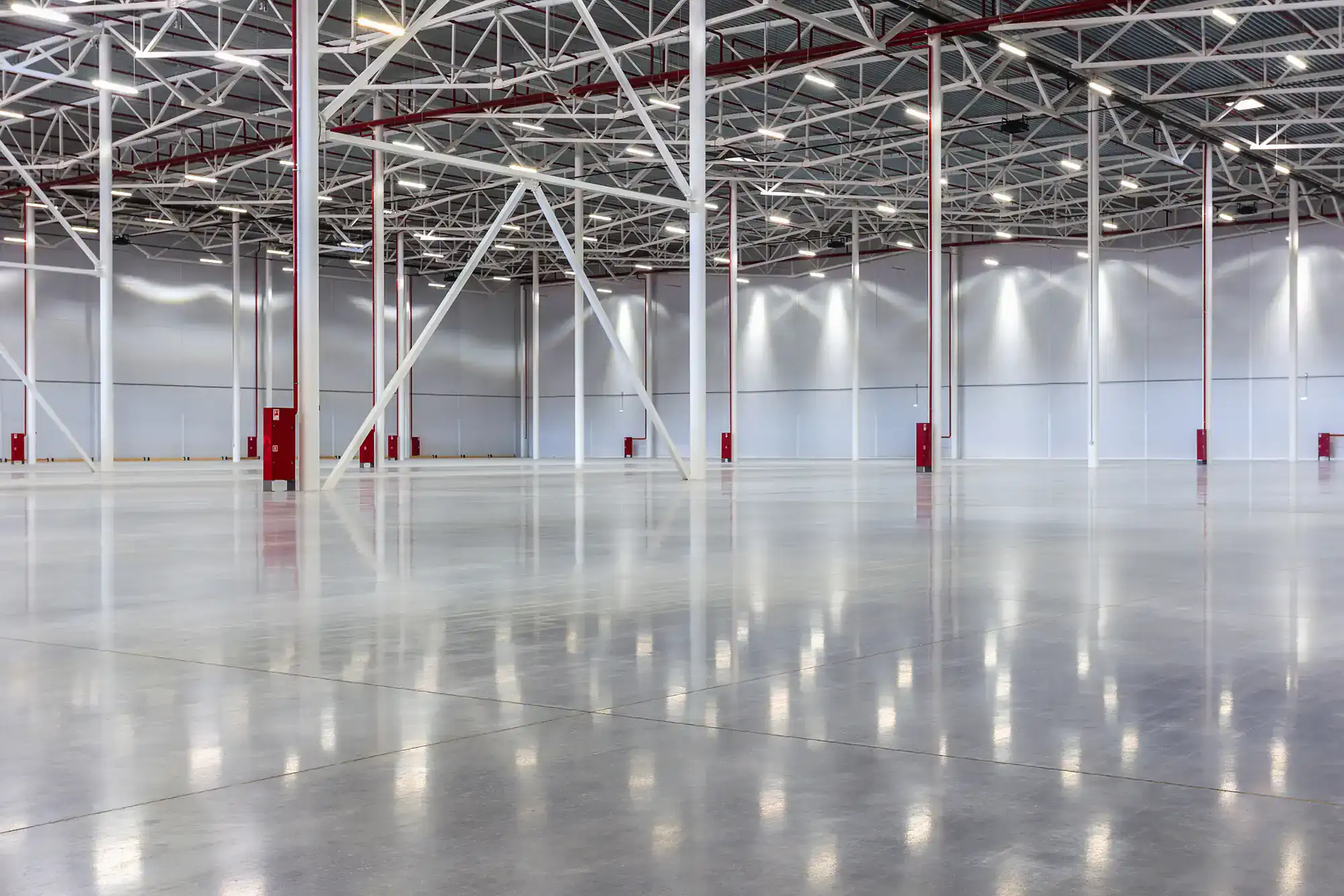
Every installation starts with the concrete, not the coating. The slab gets diamond-ground to create the surface profile required for the coating to actually bond not just sit on top. This is the step most failed floors have in common: it was skipped, or it wasn’t done correctly. Skipping it might save a few hours upfront, but it’s the reason floors start peeling within two or three years.
Before anything goes down, we perform moisture testing. In Uniondale’s coastal climate, this isn’t a formality it’s a requirement. Large hangar slabs are especially prone to moisture vapor transmission, and without testing first, you’re guessing. If moisture mitigation is needed, we address that before the primer goes down. Any cracks or spalled areas in the concrete are repaired at this stage as well.
From there, the system builds in layers: primer, build coat, and a UV-stable topcoat that meets NFSI non-slip requirements. For active aviation facilities that can’t afford extended downtime, we offer polyaspartic systems that return the floor to service within 24 hours. For Uniondale facilities operating under NFPA 409, the materials we use are noncombustible not a workaround, not a close approximation. The system is spec’d to meet the standard. When the job is done, you have a floor that’s ready to work as hard as the facility it’s in.
Ready to get started?
Our hangar floor coatings are engineered for the specific demands of aviation environments not adapted from a warehouse system or a residential garage product. That means Skydrol resistance. Skydrol is the phosphate ester hydraulic fluid used in commercial aircraft systems, and it’s corrosive to standard epoxy coatings. If your facility handles aircraft maintenance, your floor needs to be spec’d for it. Generic systems aren’t.
The coating options we offer include both epoxy and polyaspartic systems, matched to your facility’s traffic levels, chemical exposure, and operational schedule. Polyaspartic systems are a strong fit for active hangars in Uniondale where downtime is a real cost they cure fast, perform well in varying temperatures, and hold up long-term without the reapplication cycle that standard epoxy requires. High-gloss light finishes are available and recommended for working hangars, where a reflective surface makes dropped hardware and fluid spills immediately visible a practical safety benefit, not just an aesthetic one.
Every system we install is backed by the NFSI-certified non-slip topcoat, which is a tested standard not a label. For facilities in Uniondale governed by Town of Hempstead building requirements and New York State Building Code, we understand NFPA 409 compliance from the start, which keeps your project on the right side of code without scrambling after the fact.
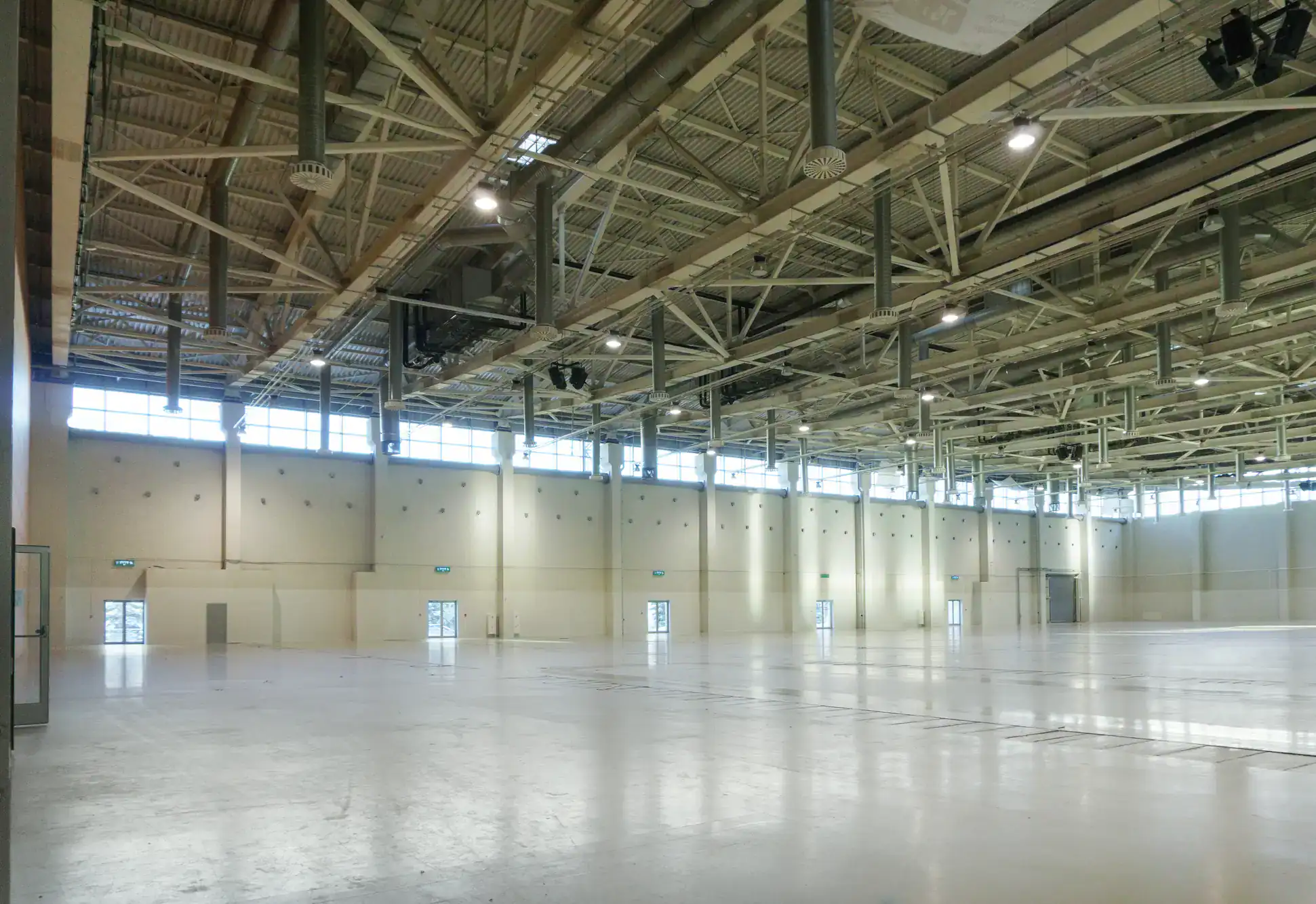
Yes if you’re operating a commercial aircraft hangar in Uniondale or anywhere in Nassau County, NFPA 409 applies. This is the national standard governing aircraft hangars, and it requires that hangar floor surfaces be noncombustible. New York State Building Code adopts NFPA standards for aviation facilities, which means it’s a code requirement, not just a best practice recommendation.
The practical issue is that a lot of general flooring contractors have never heard of NFPA 409. They’ll install a standard epoxy system that looks fine on day one, but it may not meet the noncombustibility requirement which creates a code violation, an insurance problem, and a potential liability exposure in an environment where aviation fuels are present. When you work with us, NFPA 409 compliance is part of the conversation from the start, not something you find out about after the floor is already down.
Both systems work well in aviation environments, but they perform differently depending on your priorities. Epoxy is a proven, durable option that bonds well to properly prepared concrete and holds up under aircraft loads and chemical exposure. It typically requires a multi-day cure window before the floor can return to service, which matters if your hangar is actively used.
Polyaspartic systems cure significantly faster many of our Uniondale installations are back in service within 24 hours and they maintain better performance across temperature ranges, including Long Island’s colder winter months when standard epoxy cure times slow down. Polyaspartic also tends to have a longer service life in high-traffic environments, which affects the total cost over time. For an active hangar in Uniondale where downtime has a real operational cost, polyaspartic is often the more practical choice. The right answer depends on your specific facility, traffic level, and schedule, and that’s a conversation worth having before you commit to either system.
It’s one of the most important factors in getting the installation right, and it’s one that gets overlooked by contractors who don’t work in this climate regularly. Uniondale sits in a Humid Subtropical zone, with the Atlantic Ocean, Long Island Sound, and Jamaica Bay all contributing to year-round atmospheric moisture. Large concrete slabs the kind you find in aircraft hangars are particularly susceptible to moisture vapor transmission, where moisture migrates upward through the slab and undermines the bond between the concrete and the coating.
If moisture testing isn’t done before installation, you’re guessing. And in Nassau County’s environment, that guess usually costs you delamination, bubbling, and peeling are the most common results of skipping this step. Every installation we do in the Uniondale area starts with moisture assessment. If the slab requires a moisture mitigation primer before the main system goes down, we handle that first. It adds a step, but it’s the difference between a floor that lasts 15 to 20 years and one that needs to be redone in four.
The timeline depends on the size of the hangar, the condition of the existing concrete, and which system you choose. A straightforward installation on a well-maintained slab with a polyaspartic system can be completed and returned to service within one to two days. If the concrete has significant cracking, spalling, or moisture issues that need to be addressed first, that adds time but it’s time that protects the investment you’re making in the floor.
For active aviation facilities in Uniondale where aircraft need to move in and out on a regular schedule, the timeline conversation is part of the planning process. Polyaspartic systems are specifically useful here because of their fast cure time. If you’re working around a corporate flight schedule or an FBO operation, that 24-hour return-to-service window is a meaningful difference compared to a traditional epoxy system that requires several days before it can handle traffic. The goal is always to minimize disruption to your operation without cutting corners on the installation itself.
It’s not just required it’s one of the most practically important features of a well-designed hangar floor. Aviation environments involve fuel spills, hydraulic fluid leaks, water from cleaning operations, and wet conditions that create serious slip hazards for anyone working in the space. OSHA standards govern workplace safety in commercial aviation facilities, and slip resistance is part of that framework.
The non-slip topcoat we install meets the National Flooring Safety Institute requirements that’s a tested, verified certification, not a marketing description. The distinction matters because a lot of coatings are described as “non-slip” without any independent testing to back it up. In a working hangar where a slip near an aircraft or a piece of maintenance equipment has real consequences, the difference between a certified non-slip surface and an uncertified one is worth understanding. The finish also works with a high-gloss, light-colored surface to make spills and dropped hardware immediately visible which is a safety benefit that goes beyond the texture of the floor itself.
Start with NFPA 409 knowledge. If you ask a contractor about it and they don’t know what it is, that’s a clear signal they haven’t worked in aviation environments before. The noncombustibility requirement for hangar floor surfaces is non-negotiable under New York State Building Code, and a contractor who isn’t familiar with it will install a system that may not comply which creates real problems down the line with inspections, insurance, and liability.
Beyond that, look for documented surface preparation practices. Ask specifically whether they diamond-grind the concrete before applying the coating. It’s the most commonly skipped step in the industry and the most common reason floors fail early. Ask about moisture testing in Nassau County’s coastal climate, this is especially important for large concrete slabs. And look for verifiable credentials: factory certifications from coating manufacturers, OSHA certification for installers, and a track record of actual aviation facility work, not just residential garage floors. A contractor who can answer those questions directly and specifically is one worth talking to further.