
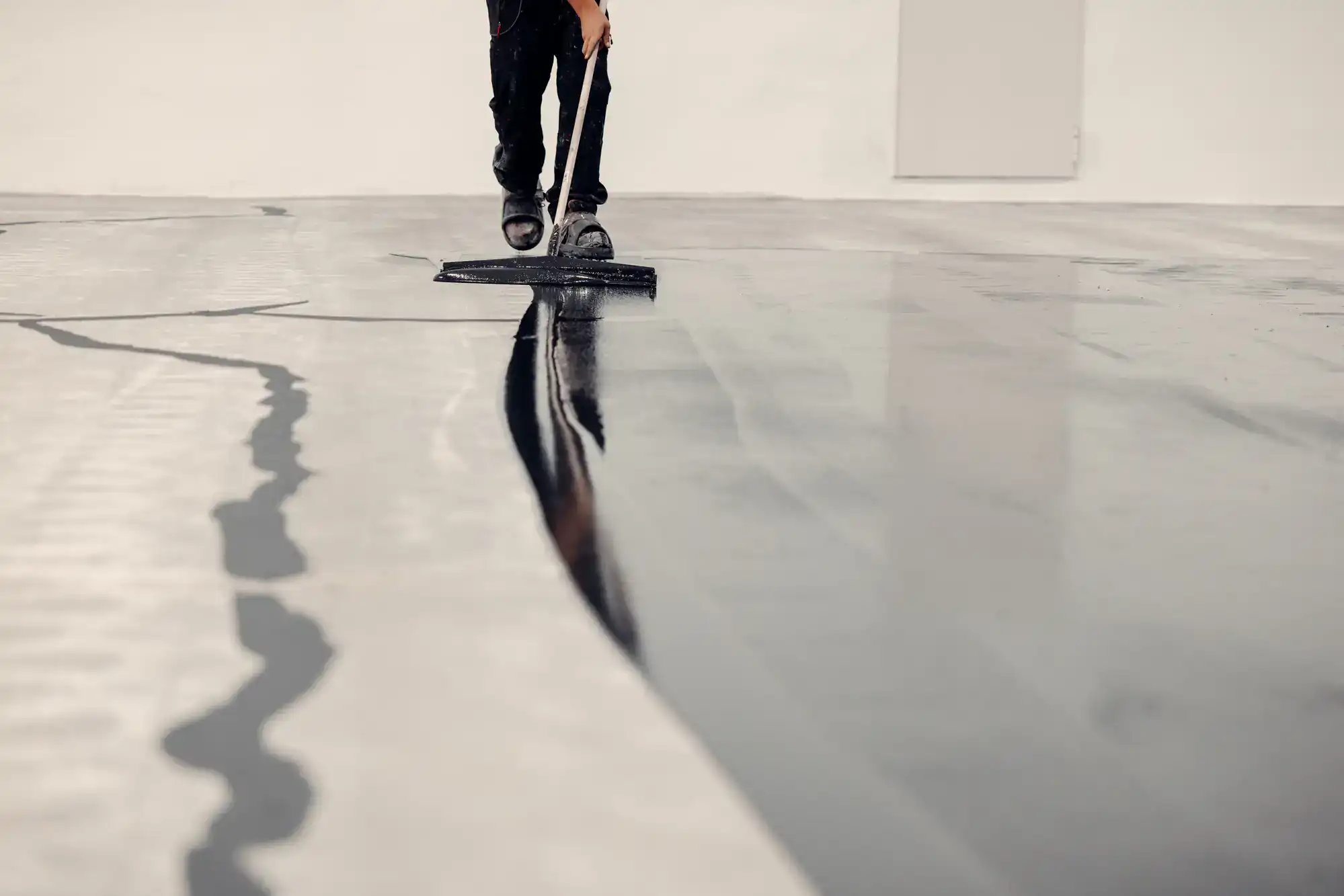
Most floors in Uniondale don’t fail because of bad luck. They fail because the contractor skipped the prep, used the wrong product for the environment, or didn’t account for what’s happening underneath the slab. Nassau County’s coastal position means moisture vapor is constantly pushing up through older concrete especially in buildings that went up in the 1950s and 1960s when much of this area was developed. When that moisture hits an epoxy coating that wasn’t properly tested and sealed for it, you get bubbling, peeling, and delamination within the first year or two.
The commercial corridors along Hempstead Turnpike, the institutional buildings at Nassau Community College, the office floors at RXR Plaza these aren’t light-use environments. They see heavy foot traffic, equipment loads, chemical exposure, and cleaning cycles that a standard coating simply can’t survive. What you actually need is a system that was specified for your environment, applied over a properly prepared surface, and installed by people who understand what Long Island slabs actually behave like.
When it’s done right, you get a floor that’s seamless, cleanable, compliant, and still performing a decade from now. No peeling edges. No grout lines collecting bacteria. No surprise replacement costs five years in. That’s what a professionally installed commercial epoxy flooring system in Uniondale, NY delivers and it’s a measurably different outcome than what most contractors in this market are offering.
We’ve been installing commercial and industrial epoxy floors across Nassau and Suffolk Counties since the early 1990s. That’s not a marketing number it means the crew working on your Uniondale floor has seen the moisture patterns, the building vintages, and the seasonal variables that define how epoxy performs specifically on Long Island. A contractor who covers Nassau County from a metro-wide service area page doesn’t carry that knowledge. We do.
Danny Harmer, our founder and CEO, has over 40 years of hands-on installation experience. He installed the White House kitchen floor in 1996 a project with zero tolerance for error and a hard return-to-service deadline. That same standard applies to every job we take in Uniondale, whether it’s a commercial kitchen on Hempstead Turnpike, a warehouse near the Mitchel Field campus, or an institutional facility that can’t afford extended downtime. Our crew is factory-trained and certified through Sherwin-Williams High Performance Flooring and Res Tech, OSHA 40 certified, and most of them have been with us for over a decade.
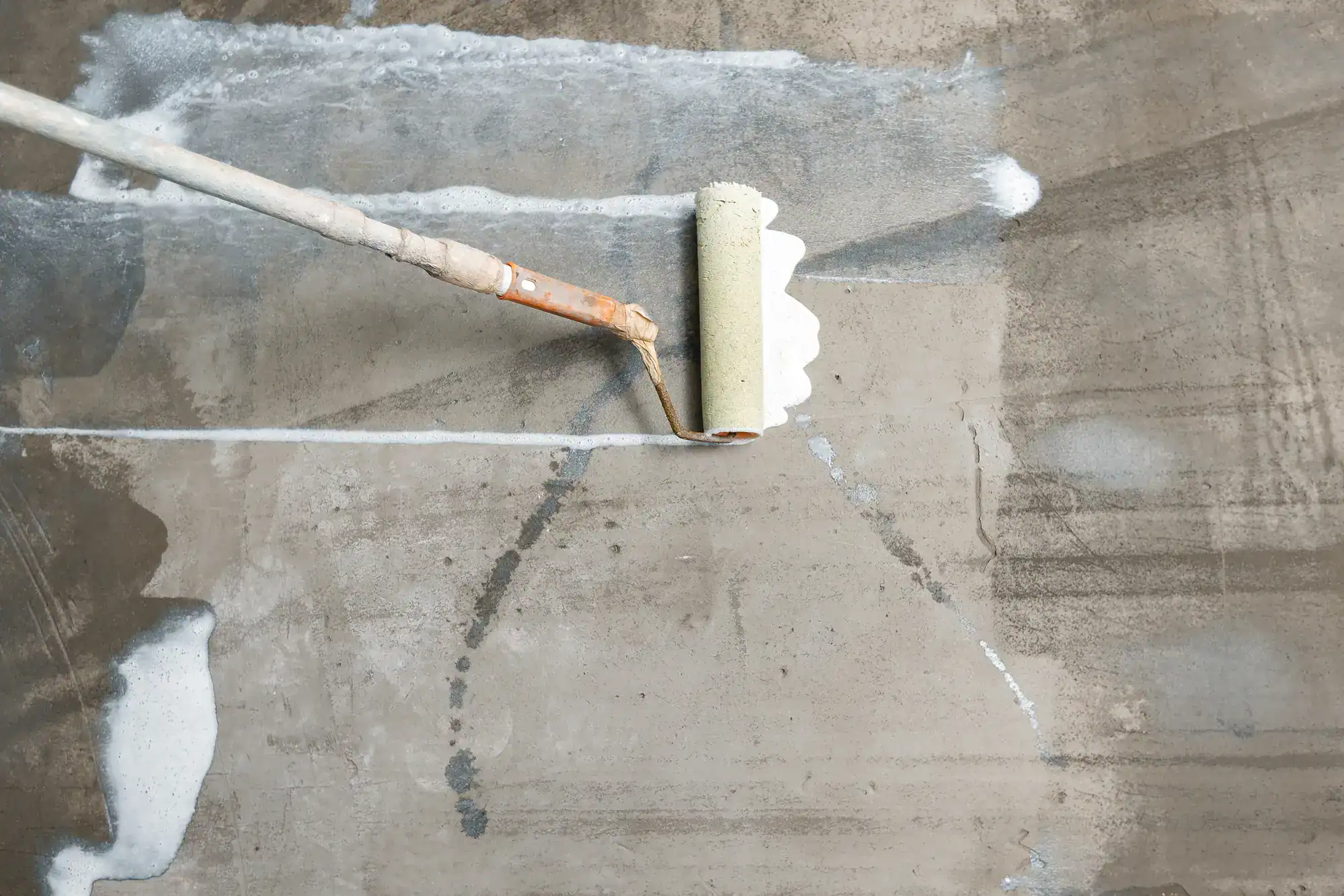
The first thing that happens on any commercial epoxy flooring job in Uniondale isn’t mixing product it’s assessing the slab. That means checking for moisture vapor transmission, identifying cracks or surface irregularities, and determining what surface profile is needed for proper adhesion. In Nassau County, where ground moisture and older slab construction are both common, this step isn’t optional. Skipping it is how you end up with a floor that looks fine for six months and then starts lifting at the edges.
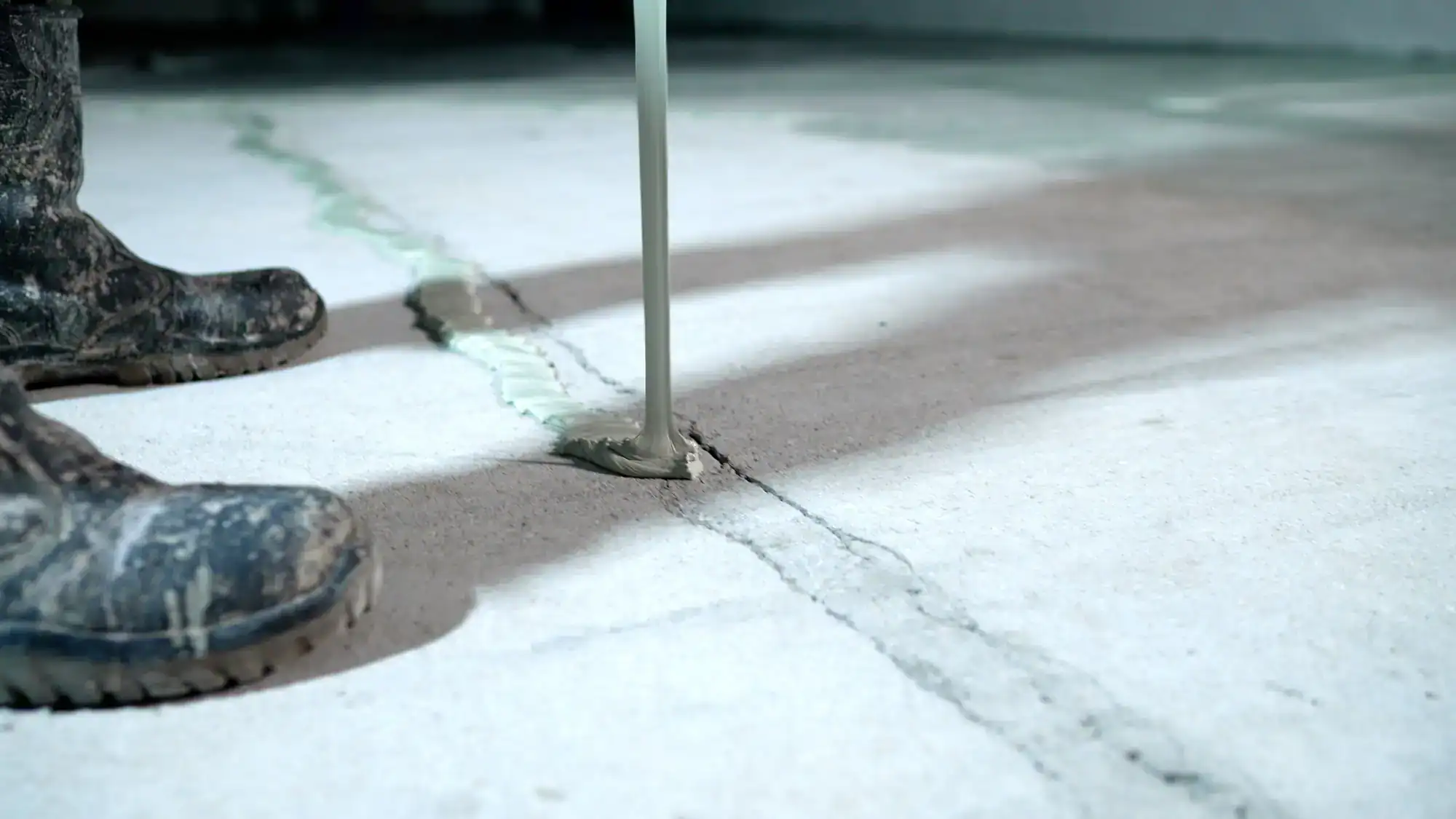
Once the slab assessment is done, surface preparation begins. For commercial and industrial applications, that means diamond grinding not acid etching. Diamond grinding creates a mechanical profile that allows the epoxy system to bond permanently to the concrete. Acid etching alone produces an inconsistent surface that leads to adhesion failure, often within the first year. After grinding, any cracks or voids are repaired, moisture mitigation is applied if the slab requires it, and the floor is cleaned before the primer coat goes down.
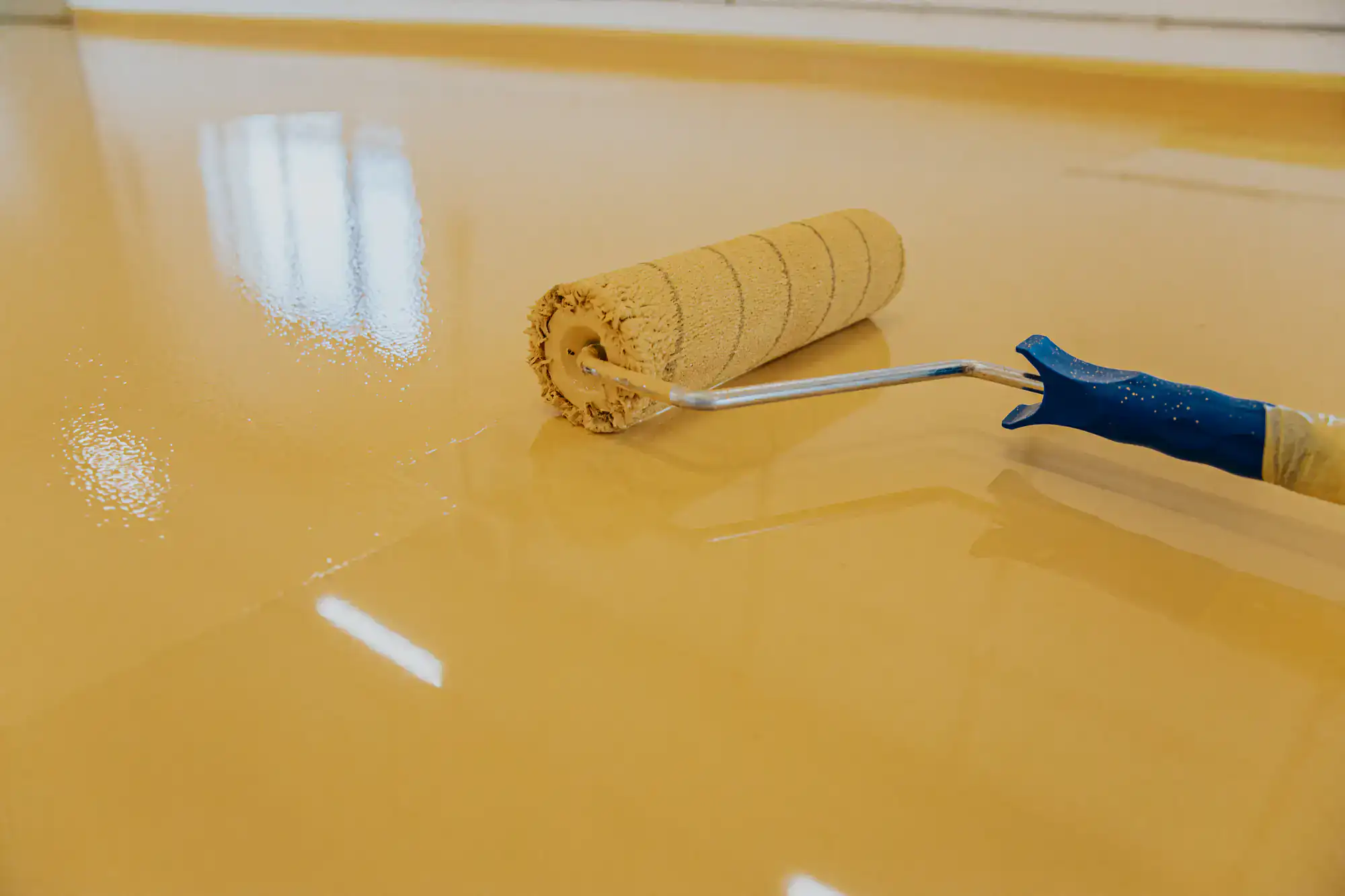
From there, the system is built up in layers primer, base coat, broadcast aggregate if the application calls for it, and a topcoat rated for the specific environment. Commercial kitchens get a thermally shock-resistant, USDA-compliant system. Warehouses and high-load floors get a build thickness rated for forklift and equipment traffic. Healthcare and laboratory environments get seamless resinous floor coatings with chemical-resistant epoxy finishes. Each layer cures fully before the next one goes down. That cure discipline is what separates a floor that lasts 20 years from one that doesn’t make it to three. For facilities in Uniondale along the Hempstead Turnpike corridor or on the Mitchel Field campus that need to be back in service quickly, we schedule overnight and weekend installations to minimize your downtime.
Ready to get started?
Not every epoxy job in Uniondale looks the same and it shouldn’t. A commercial kitchen on Hempstead Turnpike has completely different requirements than a warehouse near RXR Plaza or an apparatus bay at one of the Uniondale Volunteer Fire Department’s four stations. The system we specify depends on what your floor actually has to handle.
For food service and commercial kitchen environments, that means a USDA-compliant, seamlessly coved system that eliminates every grout line and right-angle joint where bacteria can harbor the exact features Nassau County Health Department inspectors look for. For high-traffic institutional environments like university corridors at Nassau Community College or office lobbies at EAB Plaza, we install high traffic commercial epoxy systems built for the kind of continuous foot traffic those facilities see daily. For warehouses, distribution centers, and industrial facilities, we use heavy duty industrial epoxy floor systems engineered to handle forklift axle loads exceeding 10,000 lbs without cracking or delaminating. And for the biotech and life sciences facilities coming online as part of the Nassau Hub development the $1.5 billion mixed-use redevelopment around the Nassau Coliseum we install chemical resistant epoxy finishes and seamless resinous floor coatings that meet pharmaceutical and laboratory cleanliness standards.
Every system we install is covered by manufacturer-backed product warranties and our own workmanship guarantee. All of our installers carry OSHA 40 certification, which is a procurement requirement for regulated commercial and institutional job sites in Nassau County not just a credential we list on a website. If your project requires documentation for a Town of Hempstead building permit or Nassau County Health Department compliance, we provide it.
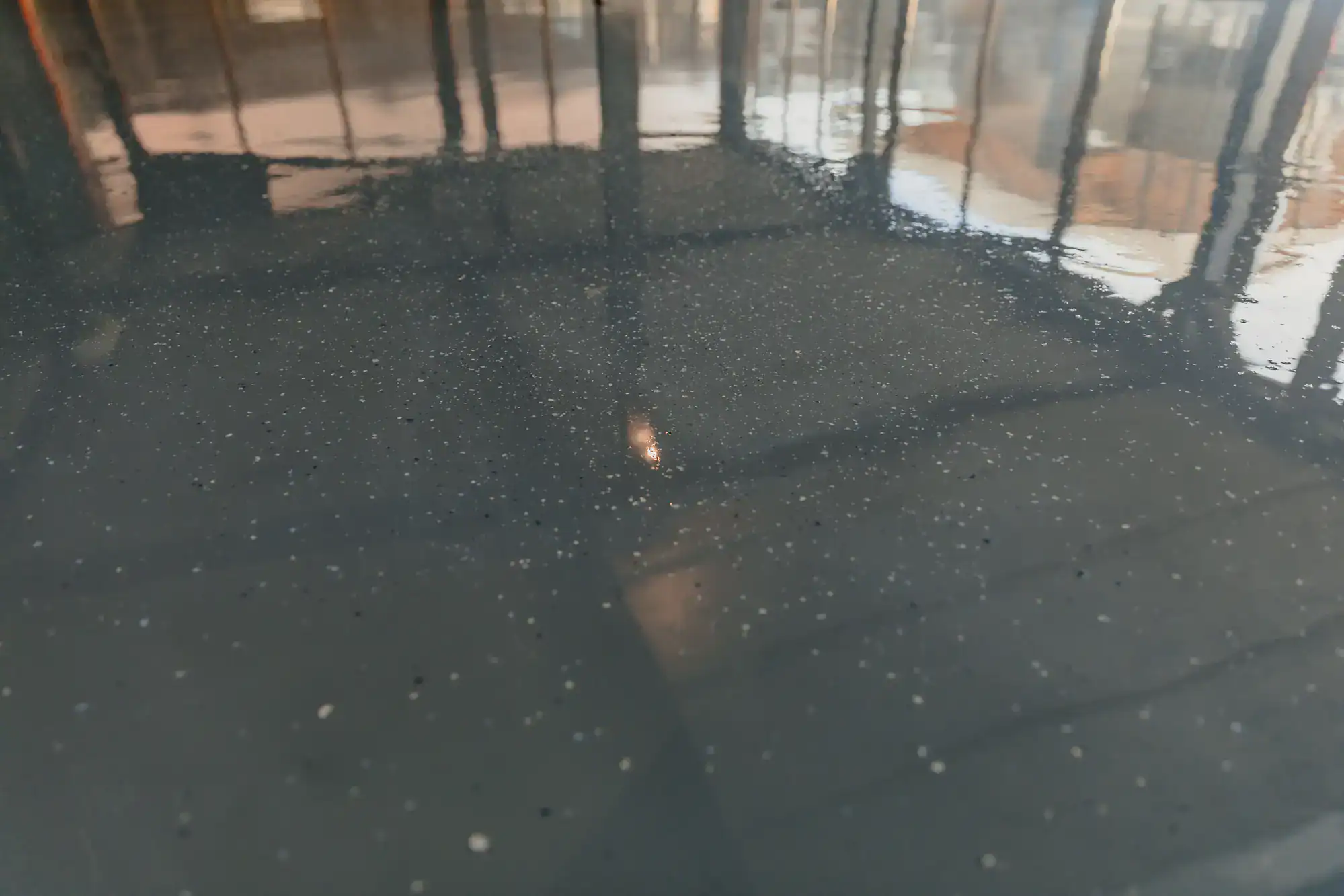
It’s one of the most common reasons floors fail here, and most property owners don’t find out until the damage is already done. Nassau County’s position on Long Island roughly 10 to 12 miles from the South Shore means year-round humidity levels that are consistently higher than inland U.S. averages. That humidity doesn’t just affect the air; it affects what’s happening inside and beneath your concrete slab. Moisture vapor migrates upward through concrete constantly, and when an epoxy coating is applied over a slab that hasn’t been properly tested and treated for moisture, that vapor has nowhere to go. It builds up beneath the coating and eventually forces it off the surface bubbling, blistering, and delamination that no amount of recoating will fix permanently.
The correct approach is to test for moisture vapor transmission before any product goes down. Depending on what the test shows, the solution might be a moisture-tolerant primer, a dedicated moisture-mitigation barrier coat, or a different system specification entirely. Buildings in Uniondale that were constructed during the post-WWII development of the area many of them dating to the 1950s and 1960s frequently have older slabs with minimal or no vapor barrier beneath them, which makes this assessment even more important. It’s not a step you can skip and hope for the best.
The difference shows up fast, and it shows up in ways that are expensive to fix. Store-bought and consumer-grade epoxy products are water-based systems that typically cure to somewhere between 3 and 8 mils of dry film thickness. Professional commercial epoxy systems are 100% solids products that cure to 14 to 30 mils depending on the application. That’s not just a technical distinction it’s the difference between a coating that wears through under daily commercial traffic within a year or two and a system that holds up under forklift loads, chemical exposure, and continuous foot traffic for 10 to 20 years.
Beyond the product itself, the application process is completely different. Consumer kits don’t require diamond grinding, moisture testing, or multi-layer system builds with full cure time between coats and most people applying them at home don’t do those things. That means the coating is going down on a surface that isn’t properly prepared, which is the leading cause of adhesion failure regardless of product quality. For a Uniondale business owner or facility manager making a capital investment in their floor, the lifecycle cost math is straightforward: a professionally installed system at $7 to $12 per square foot that lasts 20 years costs far less per year of service than a consumer-grade application that fails in two or three and requires full removal and reinstallation before you can start over.
The timeline depends on the size of the space, the condition of the slab, and the system being installed but for most commercial projects in Uniondale, you’re looking at one to three days from prep to final cure. Surface preparation and the first coat typically happen on day one. Additional coats go down as each layer reaches its cure window, and the floor is generally ready for light foot traffic within 24 hours of the final coat and ready for full commercial use within 48 to 72 hours.
For businesses along Hempstead Turnpike or in the Mitchel Field campus area that can’t afford to close during the week, we schedule overnight and weekend installations specifically to keep your operation running. A commercial kitchen that needs to open for the breakfast shift, a university corridor that can’t be blocked during the academic week, a retail space in a high-traffic building these are all situations we’ve worked around before. The scheduling conversation happens during your initial assessment, and we build the project timeline around your operational needs rather than asking you to work around ours.
Nassau County Health Department inspections are specific about what a commercial kitchen floor has to be: seamless, non-porous, impervious to moisture, and cleanable without harboring bacteria. A standard epoxy coating doesn’t automatically meet those requirements the system has to be specified and installed correctly to get there. That means no grout lines, no open joints, and no right-angle transitions where the floor meets the wall. The wall-to-floor cove base is one of the most commonly cited issues in health inspections because a standard right-angle joint is impossible to clean completely and becomes a bacterial harborage point over time.
The correct system for a Uniondale commercial kitchen is a USDA-compliant, thermally shock-resistant epoxy floor with a seamlessly coved base installed as a single continuous surface from floor to wall with no breaks or joints. The system also needs to handle thermal shock, which is what happens when hot water or steam hits a cold floor surface during cleaning. A coating that isn’t rated for thermal shock will crack under those conditions. We’ve installed commercial kitchen floors that have been through years of health inspections without issues, including work held to the standards of a White House kitchen in 1996. We know what inspectors look for, and we install accordingly.
For the kind of foot traffic that moves through institutional corridors, dining halls, and common areas at a facility like Nassau Community College, seamless resinous floor coatings are genuinely one of the best long-term choices available. The key word is “institutional-grade” not every epoxy system is built for that volume of use. The system needs to be specified for high traffic commercial epoxy applications, which means a higher build thickness, an aggregate broadcast for slip resistance, and a topcoat rated for continuous abrasion rather than just chemical resistance.
What makes epoxy particularly well-suited for institutional environments is the combination of durability, cleanability, and compliance capability. A seamless floor with no grout lines cleans faster, sanitizes more completely, and doesn’t deteriorate at joints the way tile or VCT does under heavy use. For a facility that operates on an academic calendar, the installation can be scheduled during semester breaks or summer shutdowns to avoid disrupting building traffic. The floor is typically ready for full use within 48 to 72 hours of the final coat, which fits comfortably within most institutional maintenance windows. We’ve worked in regulated institutional environments and understand the documentation and compliance requirements that come with those projects.
The honest answer is that you shouldn’t have to figure that out on your own and a contractor who sends you a quote without first assessing your slab and understanding your facility’s actual use conditions isn’t giving you a real quote. They’re giving you a number that may or may not reflect what your floor actually needs.
The right starting point is an on-site assessment. That covers the slab condition, moisture vapor readings, the surface profile that’s going to be needed for proper adhesion, and the performance requirements of your specific environment whether that’s chemical exposure in an auto shop on Hempstead Turnpike, load-bearing capacity for equipment in a warehouse near the Mitchel Field campus, or compliance documentation for a healthcare or laboratory space in the Nassau Hub development. Once we understand what the floor has to do and what the slab is actually giving us to work with, we can specify the right system and give you a number that means something. The assessment is also where we walk through the lifecycle cost comparison, so you can see exactly what you’re getting for the investment over time rather than just comparing upfront prices between contractors.