

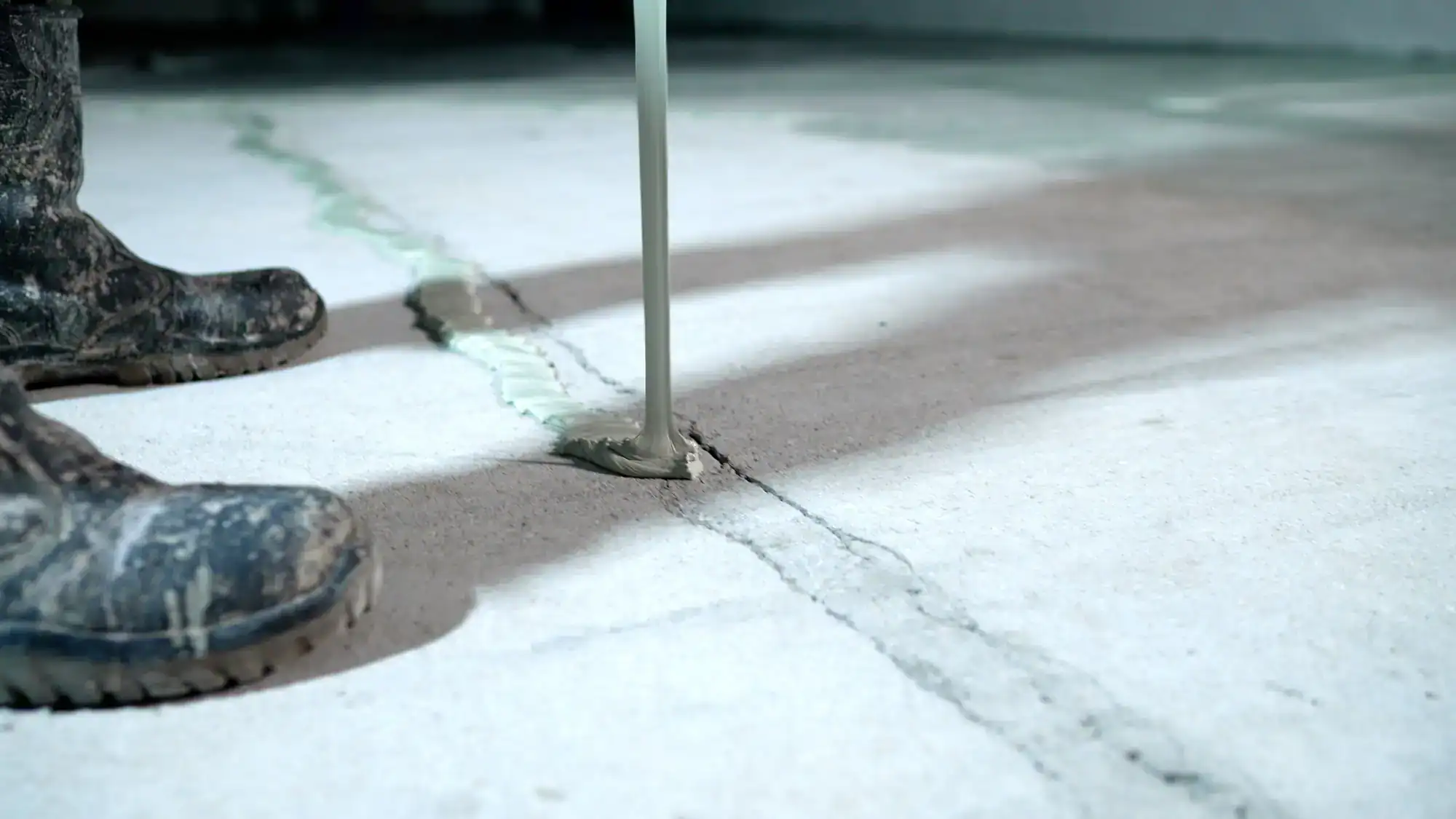
When a floor is doing its job, you stop thinking about it. No more oil soaking into the slab overnight. No more cracks catching dirt that won’t come out. No more wondering if a health inspector is going to flag your kitchen floor before you even open the menu.
For businesses along Hempstead Turnpike in Franklin Square auto shops, diners, medical offices, service businesses the floor is a working surface that takes chemical exposure, foot traffic, and equipment weight every single day. The concrete slabs in most Franklin Square commercial buildings were poured between the 1940s and 1970s. That’s 50 to 80 years of wear, moisture absorption, and surface breakdown. A properly installed epoxy system doesn’t just cover that it bonds to the slab, seals it from the inside out, and gives you a surface that wipes clean, holds weight, and doesn’t need to be redone in two years.
Nassau County’s coastal humidity is also a real factor here. Franklin Square sits about 10 to 15 miles from the South Shore, and that moisture works its way up through aging concrete constantly. If a contractor skips moisture testing before installation, that’s usually why the floor starts peeling six months later. It’s not bad luck it’s a skipped step.
We’ve been installing commercial and industrial epoxy systems across Nassau and Suffolk County for over 35 years. Our work is led by Danny Harmer, who has more than 40 years of hands-on installation experience not managing crews from an office, but actually knowing what a properly prepped slab looks like and what happens when that step gets rushed.
That experience has taken us into some demanding environments. In 1996, Danny and our team installed the epoxy floor in the White House kitchen. That floor is still standing. The same process, the same standards, and the same attention to preparation are what go into every job in Franklin Square whether it’s an auto shop off Hempstead Turnpike, a medical practice near the Nassau University Medical Center corridor, or a restaurant that needs to pass its next health inspection.
We hold Sherwin-Williams High Performance Flooring certification, Res Tech certification, and BBB Accreditation with an A+ rating. Every installer on site carries OSHA 40 certification. These aren’t credentials collected for a website they’re the standard we’ve held for three decades.
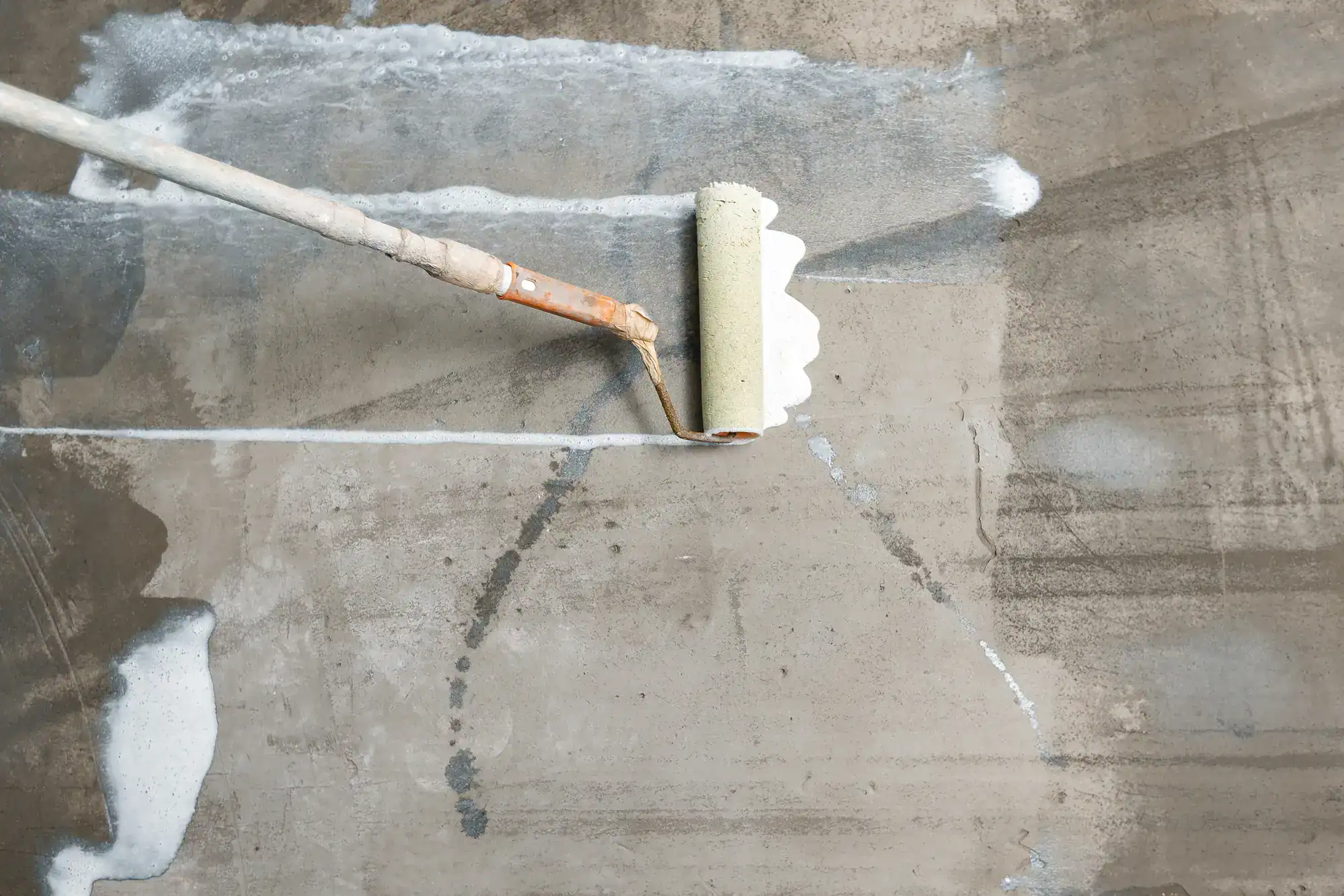
Before anything gets applied, we evaluate the slab. That means moisture testing first because in Nassau County’s coastal climate, skipping that step is how floors fail. If moisture vapor transmission is present, we address it before the first coat goes down. This is not standard practice across the industry. It should be, but it isn’t.
Once the slab clears moisture assessment, we diamond grind it. Acid etching is faster and cheaper, which is why a lot of contractors use it but it doesn’t create the surface profile that industrial epoxy needs to bond permanently. Diamond grinding opens the concrete at a mechanical level. That’s what makes the system hold for 15 to 20 years instead of peeling in 18 months.
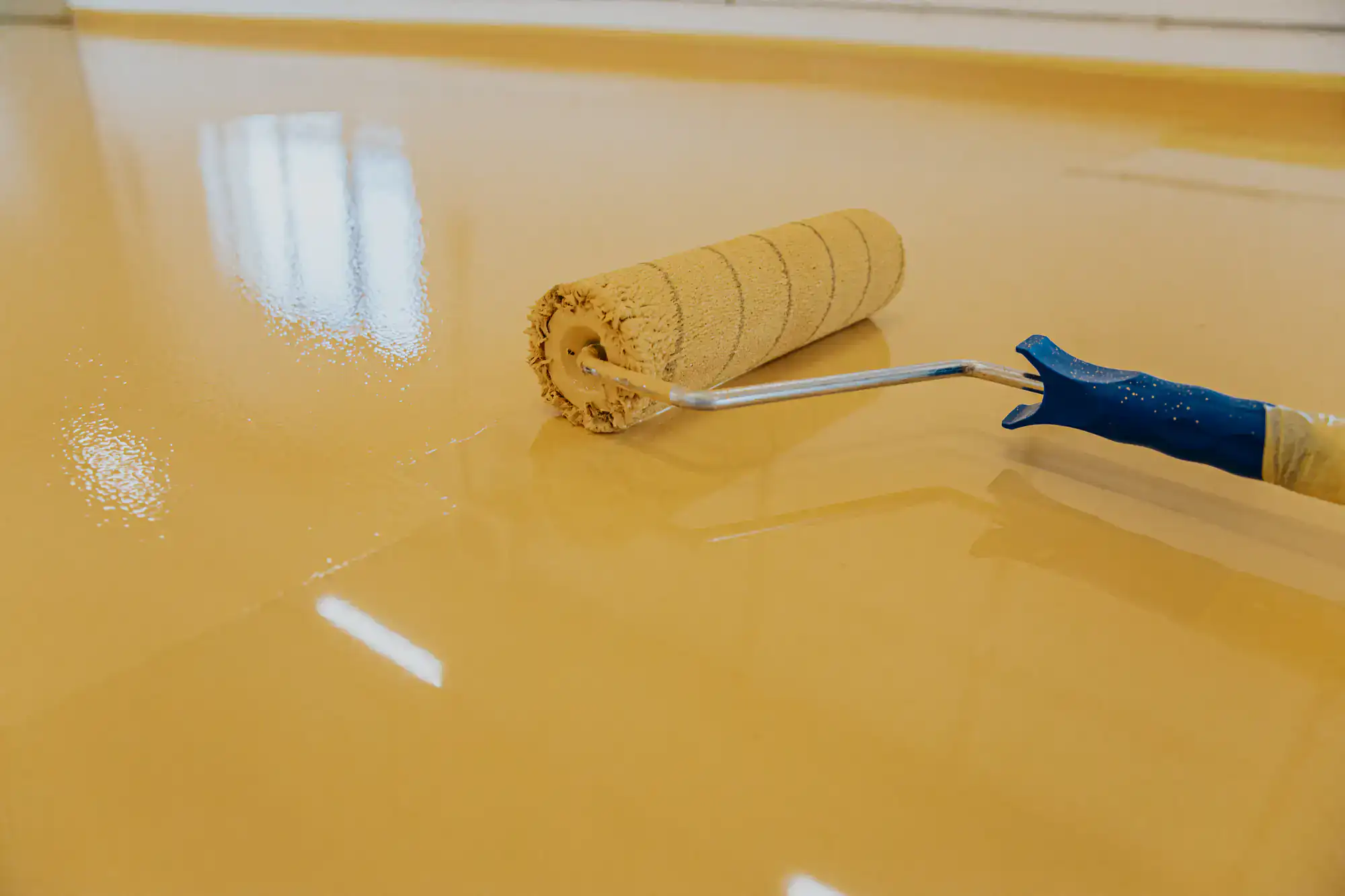
From there, the system goes down in layers primer, base coat, broadcast if the spec calls for it, and a topcoat suited to the environment. For an auto shop on Hempstead Turnpike, that means a chemical-resistant finish rated for oil, hydraulic fluid, and road chemicals. For a commercial kitchen, it means a seamless, USDA-compliant surface that meets Nassau County Health Department standards. Each coat cures fully before the next one goes on. For most commercial jobs in Franklin Square, the floor is ready for traffic the following morning which matters when your business can’t afford to lose a day.
Ready to get started?
The system we specify depends on what the floor is going to face. For automotive service shops and there are a lot of them along Hempstead Turnpike that means a high-build epoxy base with a chemical-resistant polyaspartic topcoat. It handles oil, antifreeze, brake fluid, and the kind of daily chemical exposure that eats bare concrete alive. It also creates a surface that actually looks professional, which matters when customers are walking through your shop.
For restaurants, diners, and commercial kitchens in Franklin Square, the system is seamless and USDA-compliant no grout lines, no seams, no places for bacteria to accumulate between cleanings. Nassau County Health Department inspections are not forgiving on flooring, and a cracked or absorbent kitchen floor is a violation that can shut you down. The overnight installation schedule means the kitchen is ready to open the next morning.
For medical and dental offices in Franklin Square and the surrounding communities New Hyde Park, Garden City, Floral Park we include antimicrobial properties and a seamless finish that meets ADA and healthcare facility guidelines. For warehouses, light-industrial spaces, and general commercial properties, the system is rated for heavy equipment, pallet jacks, and the kind of continuous traffic that destroys standard flooring. Whatever the environment, the process starts with the right diagnosis not a one-size-fits-all quote.
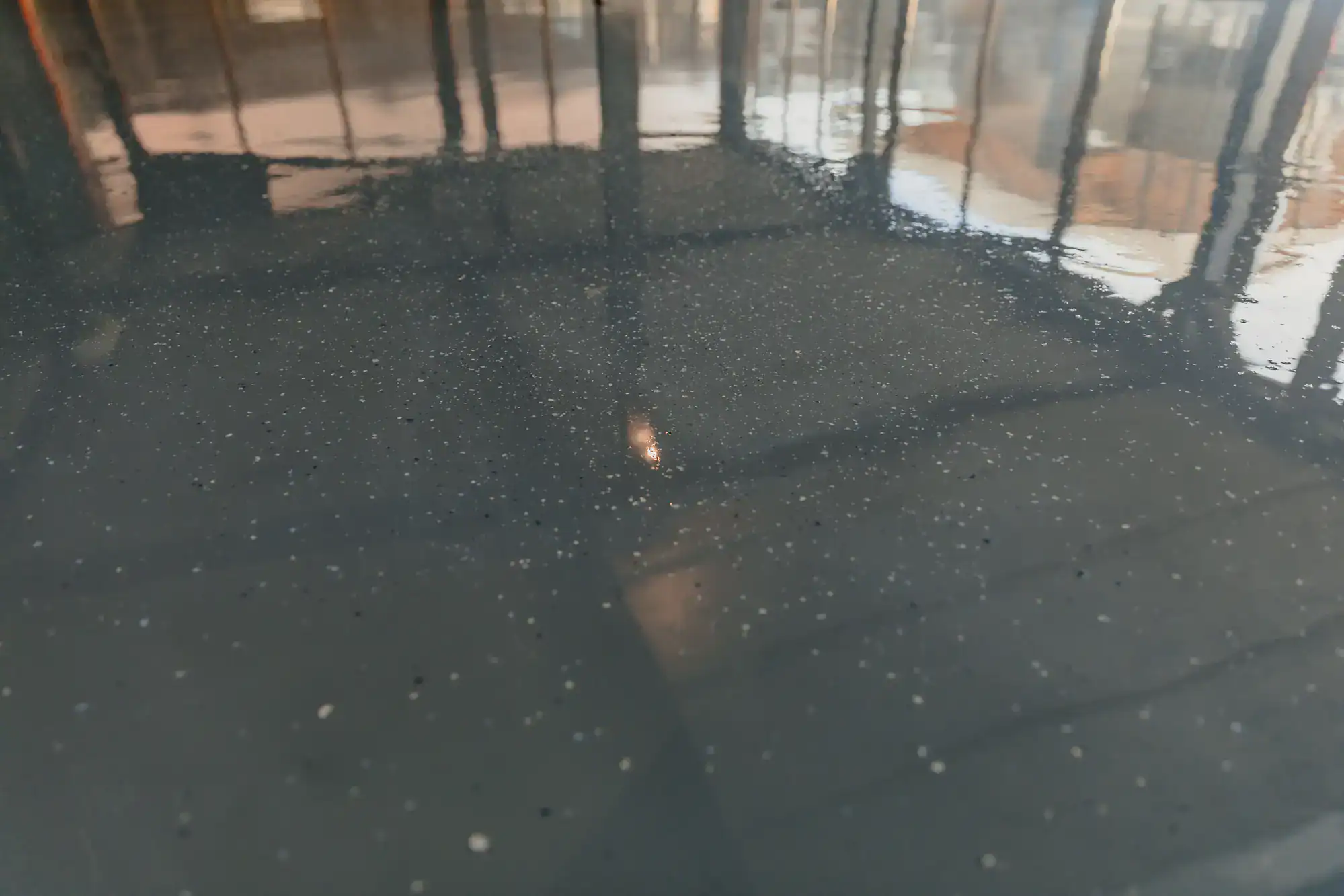
The most common cause of epoxy floor failure in Franklin Square is moisture specifically, moisture vapor pushing up through aging concrete slabs from below. Franklin Square’s commercial building stock is largely postwar construction, and those slabs have been absorbing groundwater and humidity for decades. Nassau County’s proximity to the South Shore means ambient humidity is consistently elevated, which compounds the problem.
The fix isn’t complicated, but it requires discipline. Every slab needs to be tested for moisture vapor transmission before any coating goes down. If moisture is present, we address it with a moisture-mitigating primer before the system is applied. The second factor is surface preparation diamond grinding, not acid etching. Acid etching doesn’t create the mechanical bond profile that industrial epoxy needs to adhere permanently. When both steps are done correctly, peeling is not a normal outcome. When either step is skipped, it usually is.
For most commercial jobs in Franklin Square a restaurant kitchen, an auto shop, a medical office the installation itself takes one day. The floor is typically ready for foot traffic within 12 to 24 hours and ready for full equipment and vehicle load within 48 to 72 hours, depending on the system specified and the ambient conditions during cure.
The scheduling window matters here. Nassau County’s summer humidity July and August regularly push above 80% relative humidity can affect open-time and cure rates for certain systems. We account for this when scheduling jobs in Franklin Square and select products suited to the conditions on site. For restaurants and food service businesses, overnight installation is standard work begins after close, and the kitchen opens on schedule the next morning. For larger commercial or warehouse floors, the timeline scales with square footage, but the same process applies.
For a standard commercial epoxy installation in Franklin Square, most business owners are looking at a range of roughly $7 to $12 per square foot, depending on the system, the condition of the existing slab, and any prep work required. A basic single-coat system on a well-maintained slab will land toward the lower end. A full commercial build diamond grinding, moisture mitigation, multi-layer epoxy with a polyaspartic topcoat will land toward the higher end or above it.
The number that matters more than the upfront cost is the cost per year of service. A professional system installed correctly at $10 per square foot, lasting 20 years, costs $0.50 per square foot per year. A budget system at $3 per square foot that fails in 18 months costs more than $2 per square foot per year plus the cost of removal, disposal, and reinstallation. For a working business on Hempstead Turnpike operating on real margins, that math is the actual conversation.
In most cases, a straightforward epoxy coating application on an existing concrete slab does not require a building permit from the Town of Hempstead. You’re applying a surface system to an existing floor not altering the structure. That said, if the epoxy installation is part of a larger renovation project that involves structural changes, plumbing, or other permitted work, the flooring may fall under that broader permit scope.
For food service businesses in Franklin Square, the more relevant regulatory body is the Nassau County Health Department, which inspects commercial kitchen floors for compliance with hygiene standards. A seamless, non-absorbent, USDA-compliant epoxy surface satisfies those requirements and in some cases, upgrading a failing floor before an inspection is the difference between passing and receiving a violation. If you’re unsure what applies to your specific property or project, the Town of Hempstead Building Department can confirm what’s required before work begins.
It’s a fair question. Not every concrete floor needs a full epoxy system but there are clear signs that cleaning alone isn’t going to solve the problem. Surface dusting, where fine concrete powder keeps appearing no matter how many times you sweep, means the top layer of the slab is breaking down. Staining that won’t come out especially oil in an auto shop or grease in a kitchen means the concrete is absorbing chemicals at a depth that surface cleaning can’t reach. Visible cracking, spalling, or pitting means the slab surface has already degraded structurally.
For Franklin Square’s older commercial building stock, most slabs showing any of these signs have been doing so for years. The concrete doesn’t improve on its own. A proper epoxy system stops the degradation, seals the slab, and gives you a surface that’s actually maintainable going forward. If the floor just needs a deep clean and the slab is in sound condition, that’s worth knowing too an honest assessment before any work is quoted is part of our process.
Yes but not every epoxy system is rated for it, and that distinction matters. A standard residential or light-commercial epoxy coating will break down under repeated exposure to motor oil, hydraulic fluid, brake cleaner, antifreeze, and the road salt and chemical runoff that comes in on vehicles in Nassau County winters. The surface discolors, softens, and eventually fails.
The systems we use for automotive service environments are high-build industrial epoxy bases paired with a chemical-resistant polyaspartic or urethane topcoat. These are rated for the specific chemicals present in a working shop not just oil and grease, but the solvents and cleaners used to remove them. The surface is also non-porous, which means spills sit on top and wipe up instead of soaking in. For auto shops along Hempstead Turnpike dealing with concrete that’s been absorbing chemicals for 30 or 40 years, the right system also includes a penetrating sealer at the prep stage to stabilize the existing slab before the coating goes down. The spec depends on the condition of the floor and what the shop handles daily that’s determined during the assessment before anything is quoted.
Other Services we provide in Franklin Square