


Your current concrete is probably showing the damage. Spalling joints where forklift wheels hit the same spots. Cracks spreading across high-traffic lanes. Dust that settles on everything and gums up equipment.
That’s not just an eyesore. It’s a safety liability and an operational drain that costs you in downtime, repairs, and constant maintenance.
A properly installed forklift traffic resistant coating in Southold changes that equation entirely. You get a seamless surface that absorbs impact instead of cracking under it. Chemical spills wipe clean instead of staining and eating into the concrete. The floor stays intact under point loads that would destroy standard concrete.
Your team moves faster. Equipment lasts longer. You stop budgeting for emergency repairs because the floor just works.
We’ve been installing large scale warehouse flooring in Southold since 1990. Our installation teams aren’t rotating contractors—most have been with us over a decade, with supervisors bringing 40+ years of combined field experience.
Every installer is OSHA 40 certified. We don’t subcontract the work or rush the prep. Southold’s industrial facilities need floors that can handle Long Island’s position as the largest warehouse concentration on the East Coast, and we’ve built our reputation on delivering exactly that.
You’re not getting a sales pitch from someone who’s never held a grinder. You’re working with people who’ve prepped thousands of warehouse floors and know what actually holds up under real-world conditions.

We start with moisture testing because even the best coating fails if water’s pushing up from below. Then comes diamond grinding for warehouses in Southold—this isn’t a quick surface clean. We’re opening the concrete pores so the epoxy mortar bonds at a molecular level.
Any cracks, spalls, or joint damage get repaired before coating. Skipping this step is where most installations fall apart within a year. We fill, level, and reinforce problem areas so the entire floor performs as one continuous surface.
The epoxy system itself depends on your operation. Light traffic might only need a thin grind and seal. Heavy forklift zones often require a 1/4″ trowel-down system that can take repeated impacts without showing wear. We’re not upselling you on thickness you don’t need—we’re matching the system to your actual load requirements and traffic patterns.
Cure time varies by product, but we schedule around your operations to minimize downtime. Most warehouses are back to full use within days, not weeks.

Ready to get started?
You’re getting a complete system, not just a coating slapped over problems. That includes full moisture testing, concrete surface prep with diamond grinding, all crack and joint repairs, and a customized epoxy system spec’d to your facility’s demands.
The coating itself is a high-performance epoxy mortar that’s engineered for impact resistance and chemical exposure. It forms a seamless bond that eliminates the weak points where standard concrete fails. You can customize slip resistance by adding aggregates in high-risk zones.
Southold’s mix of distribution centers and manufacturing facilities means every warehouse has different needs. A climate-controlled storage facility doesn’t need the same chemical resistance as a facility handling solvents or industrial cleaners. We adjust the formulation and thickness based on what your floor actually encounters daily.
The result is a floor that’s easier to clean, safer to work on, and strong enough to handle whatever you’re moving across it. No dust. No ongoing degradation. Just a surface that does its job so you can do yours.
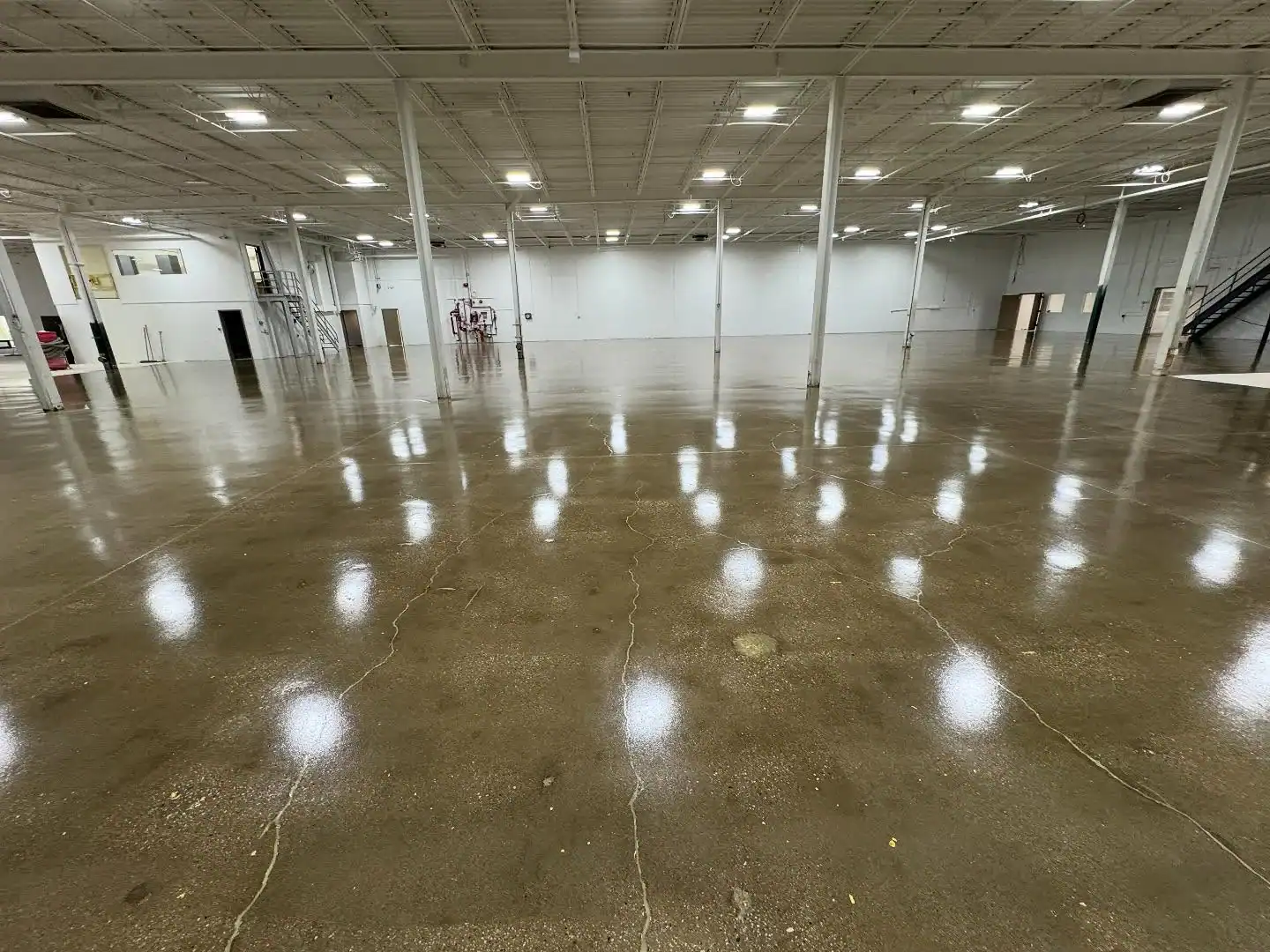
A properly installed epoxy mortar system in a warehouse setting typically lasts 15 to 20 years under heavy forklift traffic, and often longer with reasonable maintenance. That’s not marketing speak—that’s what we see in facilities we installed a decade or two ago.
The longevity depends entirely on three things: proper surface prep, the right system thickness for your traffic load, and whether the concrete underneath was in good condition before coating. If any of those three are compromised, you’ll see failure much sooner.
Thin coatings in heavy-traffic zones might need resealing every few years. A 1/4″ trowel-down system in those same zones can go decades. That’s why we don’t give one-size-fits-all timelines—your floor’s lifespan is directly tied to matching the system to your actual use. Most warehouse operators find the upfront investment pays for itself several times over by eliminating the constant repair cycle that comes with bare or poorly coated concrete.
Yes, but only if it’s the right epoxy system installed correctly. Not all epoxy is created equal, and a residential garage coating will fail catastrophically under warehouse conditions.
What you need is a high-solids epoxy mortar or urethane system designed specifically for point loads and abrasion. These systems are engineered to flex slightly under impact rather than crack, and they’re thick enough to absorb the repetitive stress from steel wheels hitting the same traffic lanes thousands of times.
The concrete prep matters just as much as the coating. If the underlying concrete is weak, spalling, or has moisture issues, no coating will hold up. We grind the surface to create proper mechanical bonding, repair any structural issues, and then apply a system that’s spec’d for your equipment weight and traffic frequency. Facilities running 24/7 operations with heavy loads need more robust systems than light-duty warehouses. That’s not upselling—that’s engineering a floor that won’t fail when you need it most.
Polished concrete and epoxy serve different purposes, and the right choice depends on what your operation demands from the floor.
Polished concrete is extremely durable and has a longer lifespan in some applications, especially in areas with very heavy traffic. It’s essentially densified and ground concrete that’s been mechanically refined to a smooth, hard surface. The upside is durability and low maintenance. The downside is it offers minimal chemical resistance, can still dust over time, and doesn’t seal the concrete against moisture or staining.
Epoxy creates a protective barrier over the concrete. It’s highly resistant to chemicals, oils, and acids that would stain or damage polished concrete. It’s also seamless, which matters in facilities where cleanliness and contamination control are priorities. The tradeoff is that epoxy in high-traffic zones may need resealing periodically, though a properly installed system should go many years before that’s necessary.
Many warehouse operators choose epoxy for chemical exposure areas and loading zones, and polished concrete for general traffic areas. We can walk you through what makes sense for your specific facility and budget.
For most warehouse epoxy installations, you’re looking at three to seven days from start to full operational use, depending on the size of the area and the system complexity.
Surface prep and concrete repairs typically take one to two days. The epoxy application itself might be completed in a day, but cure time is where most of the waiting happens. Light foot traffic is usually possible within 24 hours. Full forklift traffic and heavy loads require a complete cure, which ranges from 48 to 72 hours for most systems, sometimes longer in cold weather.
We schedule installations to minimize disruption. That might mean working in sections so part of your warehouse stays operational, or timing the work around slower periods in your calendar. Some facilities have us come in over a weekend or during a planned shutdown.
The worst thing you can do is rush the cure time. We’ve seen competitors promise faster turnarounds and then watch their floors fail within months because equipment rolled over coating that wasn’t fully cured. We give you realistic timelines based on the actual chemistry and your operational needs, not what sounds good in a sales pitch.
Very little, which is one of the main reasons warehouse operators choose epoxy over bare concrete or other coatings.
Daily maintenance is just sweeping or dust mopping to remove debris. For deeper cleaning, a standard mop with mild soap and water is usually sufficient. Chemical spills should be cleaned promptly—not because the epoxy can’t handle them, but because leaving corrosive materials sitting on any surface for extended periods isn’t great practice.
You don’t need special cleaners or expensive maintenance programs. The seamless surface means there are no joints or cracks where dirt and contamination can hide. That makes cleaning faster and more effective than it ever was with bare concrete.
Over time, high-traffic lanes might show wear, especially if you’re running heavy equipment in the same paths daily. A properly installed system should go many years before needing attention, but when it does, we can reseal those specific zones without redoing the entire floor. The key is catching wear early rather than waiting until the coating fails and the concrete underneath starts deteriorating again.
Joints are where most warehouse floors start failing, so we treat them as critical structural elements, not just cracks to fill.
Forklift traffic creates repetitive impact right at joint edges, causing the concrete to spall and break down. If we just coat over damaged joints, the problem continues underneath and the coating fails within months. Instead, we grind out the damaged edges, clean the joint thoroughly, and rebuild it with a flexible epoxy or polyurea repair compound that can handle movement and impact.
For control joints that are in good condition, we fill them with a semi-rigid material that prevents debris infiltration while still allowing the concrete to move slightly as it naturally does with temperature changes. Trying to make joints completely rigid often causes more problems than it solves.
In some cases, if joint damage is severe across large areas, we might recommend a thicker trowel-down system that essentially creates a new wearing surface over the entire floor. That’s more expensive upfront, but it eliminates the ongoing joint maintenance cycle and gives you a floor that performs like new concrete without the cost of full replacement. We assess every floor individually and recommend what actually makes sense for your situation and budget.