


Right now, your warehouse floor might be costing you more than you realize. Cracks from forklift traffic turn into pitting. Joints break down from repeated heavy loads. Concrete dust gets everywhere. Your maintenance crew patches the same spots every few months, and you’re watching your floor deteriorate faster than it should.
Industrial warehouse floor epoxy in Hauppauge changes that equation. You get a seamless surface that actually stands up to the punishment. Forklifts rolling over the same paths thousands of times don’t create the same wear patterns. Chemical spills and oil leaks wipe clean instead of soaking into porous concrete. Your floor becomes something you stop thinking about because it’s doing its job.
The difference shows up in your operations. Material handling equipment moves faster when the surface is smooth and level. Your team isn’t navigating around damaged sections or waiting for repairs. OSHA compliance gets easier when trip hazards disappear and you can add slip-resistant textures where you need them. You’re looking at years of performance instead of months before the next repair cycle.
We’ve been installing high-traffic concrete sealers and industrial coatings across Long Island for years. Our installers are OSHA 40 certified, and most of our crew has been with us for over a decade. That’s not common in this industry, and it matters when you’re trusting someone with a project that could shut down part of your operation.
Hauppauge sits in the middle of Long Island’s industrial corridor. We’ve worked in facilities throughout Suffolk County that deal with the same challenges you face: constant forklift traffic, 24/7 operations, tight installation windows, and floors that need to perform immediately. We understand what’s at stake when your warehouse floor fails during peak season or right before a major client visit.
You’re not getting a crew that learned about epoxy last month. You’re getting supervisors with over 40 years of combined experience who know how to read concrete, plan around your schedule, and install systems that match your specific traffic patterns and load requirements.

We start with moisture testing and a full assessment of your existing concrete. This tells us what prep work is needed and which system will perform best in your space. If you’ve got failing joints, surface damage, or areas where the concrete is breaking down, we handle those repairs before any coating goes down.
Next comes diamond grinding for warehouses in Hauppauge. This isn’t optional if you want the coating to bond properly. We’re opening up the concrete surface, removing any contaminants, and creating the profile that epoxy needs to lock in. Depending on your floor’s condition and your performance requirements, we might recommend anything from a thin grind-and-seal system to a full 1/4-inch trowel-down application.
The installation itself is planned around your operations. We work in phases if you can’t shut down the entire warehouse. We coordinate timing so cured sections are ready when you need them. Once the forklift traffic resistant coating in Hauppauge is down, you’re looking at a cure time before full operations resume, but we’ll give you exact timelines based on your specific system. After that, you’ve got a floor that’s ready for whatever you’re moving across it.

Ready to get started?
You’re getting a complete system, not just a coating slapped over damaged concrete. That includes full concrete preparation, repairs to existing damage, moisture mitigation if needed, and a customized epoxy system designed for your traffic patterns. We’re talking about coatings that range from 30-mil thickness up to 1/4-inch trowel-down systems depending on what your forklifts and operations demand.
The Long Island industrial market has specific challenges. Facilities here run year-round with heavy equipment, and many warehouses in Hauppauge handle distribution for the entire metro area. Your floor sees more concentrated traffic than a lot of facilities elsewhere. We account for that when we’re specifying thickness, aggregate additions for slip resistance, and cure schedules that match your operational needs.
You also get chemical and oil resistance that matters in real-world conditions. Hydraulic fluid leaks, battery acid, cleaning chemicals—these don’t penetrate a properly installed epoxy system. You’re protecting the concrete underneath, which means you’re avoiding the expensive repairs that come when contaminants soak in and start breaking down your substrate. This is why facilities that install quality warehouse floor coatings see lower maintenance costs over time. You’re paying once for protection that lasts years instead of patching problems every season.
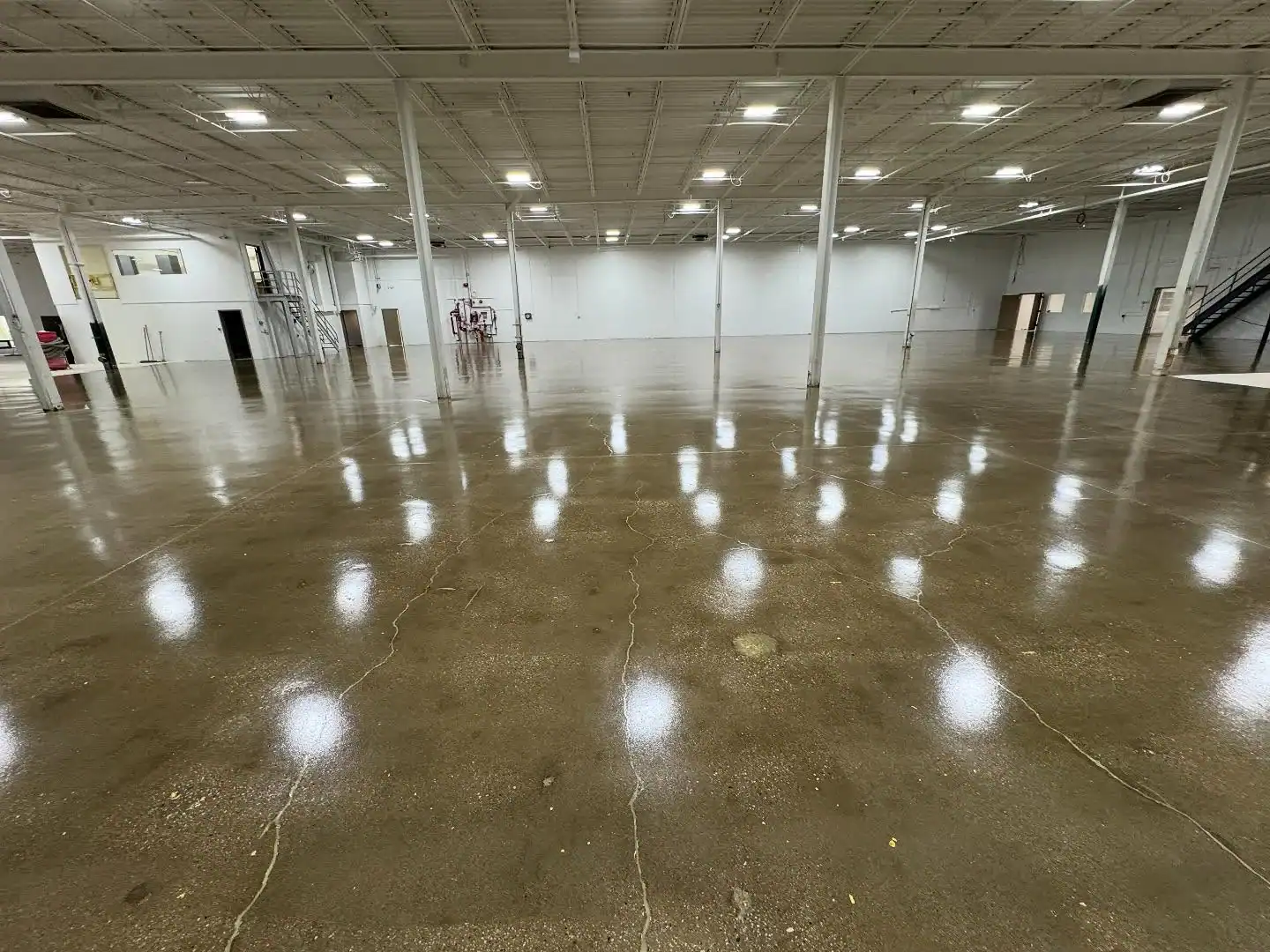
You’re looking at multi-year performance if the system is installed correctly and matches your traffic. A properly specified epoxy floor in a warehouse environment typically delivers 7-10 years before you need to think about recoating, and even then, you’re often just adding a fresh topcoat rather than starting over.
The lifespan depends on what you’re running across it. Facilities with constant forklift traffic and heavy pallet loads will see wear faster than warehouses with lighter operations. But here’s the thing: even under heavy use, a quality epoxy system outlasts bare concrete or cheaper coatings by a significant margin. You’re not patching cracks every few months or dealing with concrete dust that never stops.
We’ve seen floors we installed years ago still performing well because the prep work was done right and the system was thick enough for the application. That’s the difference between a floor coating and a floor system. You want the latter.
Yes, and we do it regularly for facilities that can’t afford full shutdowns. We phase the installation so you can keep critical operations running while we work in sections. It takes longer than doing the whole floor at once, but it’s manageable if you’ve got the space to work around.
The key is planning the sequence so you’re not blocking yourself into a corner or cutting off access to high-traffic areas during peak hours. We map out which sections get done in which order, coordinate with your team on timing, and make sure cured areas are ready for traffic before we move to the next phase. Some facilities do this over weekends, others prefer overnight shifts, and some just cordon off sections during slower periods.
Cure time is the limiting factor. You need to stay off the fresh coating until it’s ready, which is usually 24-48 hours for foot traffic and longer for forklifts depending on the system. We give you exact timelines before we start so you can plan accordingly.
Thickness and hardness. Regular epoxy might be fine for a showroom or light commercial space, but warehouse floors in Hauppauge need systems that can handle point loads and repetitive impact. We’re talking about 100-mil systems or thicker, often with aggregate fillers that increase impact resistance.
Forklifts create unique stress on floors. You’ve got hard wheels concentrating thousands of pounds into small contact patches, and those wheels are rolling over the same paths constantly. That’s different from foot traffic or even vehicle traffic in a parking garage. The coating needs to resist both the compression and the abrasion without delaminating or cracking.
A forklift-rated system also addresses joints differently. Floor joints are where most damage starts in warehouse environments because that’s where edges break down under wheel impact. We either fill and seal joints or use flexible joint fillers that move with the concrete without cracking. This is why you can’t just buy epoxy at a big box store and expect it to perform in an industrial setting. The engineering matters.
We repair it properly, which means going deeper than surface patches. Cracks get routed out and filled with epoxy or polyurea depending on whether they’re active or dormant. Spalled areas where the concrete surface has broken away get ground down to solid substrate and built back up. Failed joints get cleaned out and refilled with appropriate joint filler systems.
If you’ve got areas where the concrete is deteriorating badly, we assess whether those sections need full-depth repair or if we can stabilize them with the coating system. Sometimes you’re looking at actual concrete replacement in small sections, especially if moisture or chemical damage has compromised the slab. We don’t hide problems under a coating and hope for the best.
This prep work is why quality installations cost more than cheap bids. You’re paying for the time and materials to fix the substrate before any epoxy goes down. But it’s also why the floor performs afterward. Epoxy bonds to concrete, not to dust, contaminants, or failing surface layers. If the base isn’t solid, the coating won’t be either.
Replacing a warehouse floor means you’re looking at tens of thousands of dollars minimum, plus the downtime to demolish existing concrete, pour new slabs, and wait for cure times before you can operate. You’re talking weeks of disruption and costs that scale with square footage fast. Most facilities can’t absorb that kind of hit unless the floor is completely failed.
Repairing and protecting floors with a proper epoxy system costs a fraction of replacement. You’re paying for surface preparation, repairs to damaged areas, and the coating installation. Even a high-end industrial system with full repairs typically runs 20-30% of what replacement would cost, and you’re back in operation within days instead of weeks.
The math gets better when you factor in longevity. A quality epoxy system protects the concrete underneath from further damage, which means you’re avoiding the escalating repair costs that come when you let floor problems compound. Every year you delay dealing with concrete deterioration, the eventual fix gets more expensive. Catching it early and installing protection makes financial sense.
They do, but not automatically. A properly installed epoxy floor eliminates trip hazards from cracks and uneven surfaces, which addresses one of the most common warehouse safety issues. OSHA reports that trips and falls are a major problem in warehousing environments, and floor condition is a direct factor. A smooth, level surface reduces that risk significantly.
You can also add slip resistance where you need it by incorporating aggregates into the topcoat or using textured systems in areas where spills are common. This gives you traction without creating surfaces that are hard to clean or that damage forklift wheels. The seamless nature of epoxy also means fewer places for contaminants to hide, which matters for facilities with hygiene requirements.
The bigger safety benefit is operational. When your floor isn’t failing, your material handling equipment operates more smoothly. Forklifts aren’t bouncing over damaged joints or slowing down to navigate around problem areas. That means fewer jarring impacts, less wear on equipment, and reduced risk of load shifts or tip-overs caused by sudden stops or rough surfaces. Your floor becomes part of your safety program instead of a liability.