


When your warehouse floor cracks under forklift traffic, you’re not just dealing with an eyesore. You’re managing constant repairs, safety hazards, product damage from uneven surfaces, and equipment wear that shouldn’t be happening. Every pothole means another close call, another maintenance ticket, another reason your operations can’t run smoothly.
A forklift traffic resistant coating in East Patchogue, NY changes that equation entirely. You get a seamless surface that absorbs the punishment of daily operations without dusting, chipping, or breaking down. The floor becomes something you stop thinking about because it’s doing its job.
That means forklifts roll smoother, loads stay stable, and your team isn’t navigating around problem areas or waiting for another patch job to cure. Your warehouse runs the way it should—without the floor holding you back or eating into your maintenance budget every quarter.
We’ve been installing high-traffic concrete sealer systems and industrial coatings across Long Island for over three decades. We’ve worked in facilities from the White House kitchen to distribution centers across the Northeast, and we bring that same level of precision to every warehouse floor in East Patchogue, NY.
Our team isn’t learning on your dime. Every installer is OSHA 40 certified, and most have been with us for over ten years. We handle the full scope—moisture testing, concrete prep, repairs, and custom epoxy systems designed for your specific load requirements and traffic patterns.
East Patchogue’s industrial corridor demands floors that can handle real work. We know the local operations, the equipment you’re running, and what it takes to keep a warehouse floor functional under Suffolk County’s demanding logistics environment.

We start with a thorough assessment of your existing concrete. That includes moisture testing, checking for structural issues, and identifying high-wear zones where forklift traffic concentrates. If your slab has damage, we repair it properly before any coating goes down—because no epoxy system performs well over compromised concrete.
Next comes surface preparation, typically through diamond grinding for warehouses in East Patchogue, NY. This mechanical process opens the concrete pores and creates the profile needed for maximum adhesion. It’s not the fastest prep method, but it’s the most reliable for large scale warehouse flooring that needs to last decades, not years.
We then apply the epoxy system in layers—primer, body coats, and topcoat—each engineered for compressive strength and chemical resistance. For high-traffic areas, we use epoxy mortar formulations that can handle concentrated point loads and constant turning forces. The result is a monolithic surface that bonds to your concrete and distributes stress across the entire floor.
Cure times vary based on the system, but we work with you to minimize downtime. Most warehouse floors in East Patchogue, NY can handle light traffic within 24 hours and full operations within 72 hours.

Ready to get started?
Your warehouse floor isn’t just getting a coat of paint. You’re getting a multi-layer system with specific performance characteristics: high compressive strength for rack legs and pallet loads, impact resistance for dropped materials, and chemical resistance for battery acid, hydraulic fluid, and whatever else hits your floor during operations.
We customize slip resistance based on your needs—enough traction for safety without creating drag that wears out wheels or makes cleaning difficult. Line striping, safety markings, and traffic flow indicators get integrated during installation, not painted on afterward where they’ll wear off in six months.
In East Patchogue, NY, warehouse operations often run around the clock with heavy material handling equipment. That’s why we focus on seamless installations that eliminate joints where forklifts would otherwise catch and cause load shifts. The floor becomes one continuous surface that’s easier to clean, safer to operate on, and far more durable than segmented coating systems.
You also get a floor that protects your underlying concrete from the cement dust, staining, and erosion that plague bare slabs. That matters when you’re looking at 15-20 year service life instead of recoating every few years because the concrete itself is deteriorating.
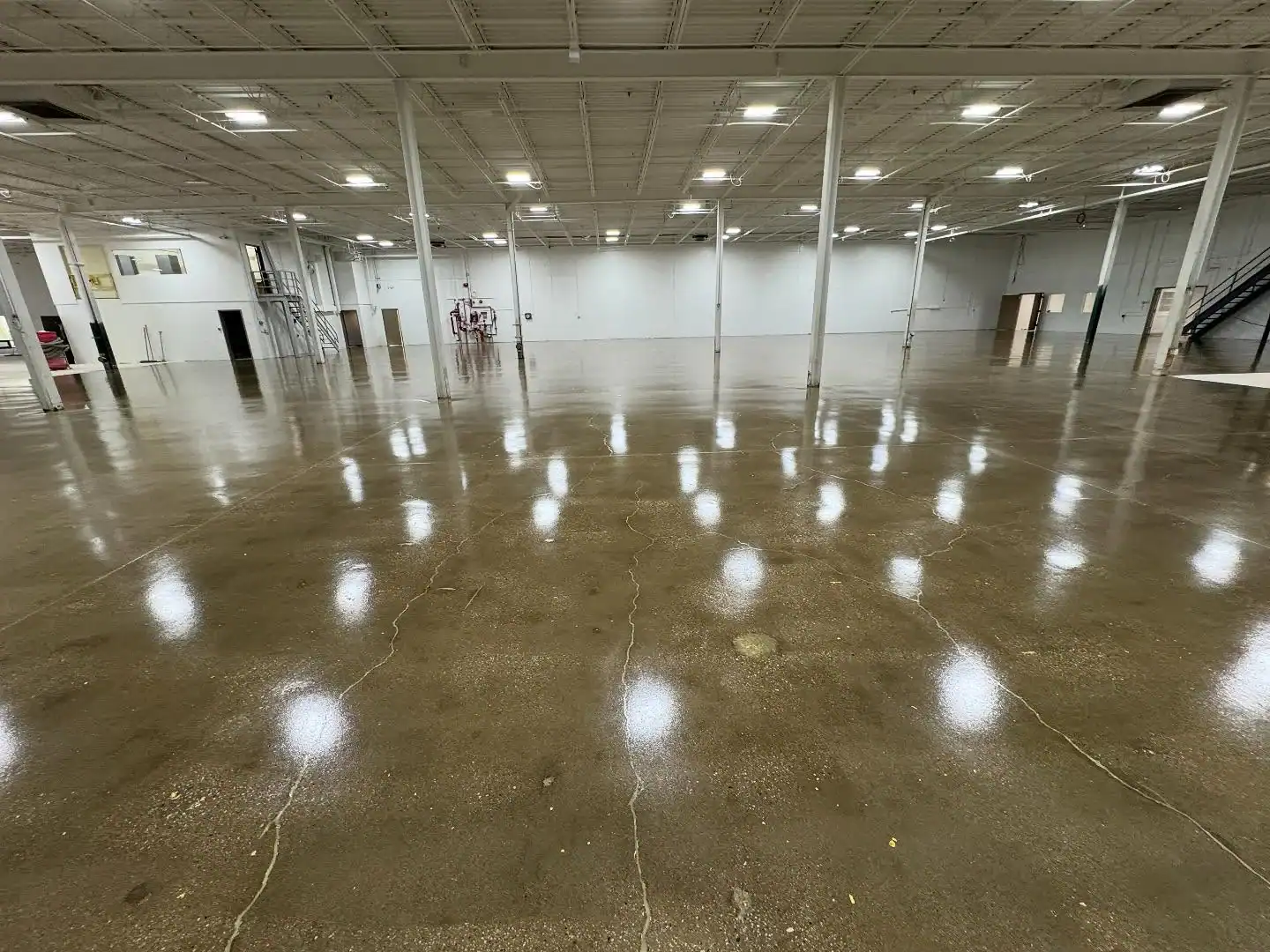
A properly installed epoxy system in a warehouse environment typically lasts 10 to 20 years, even under constant forklift traffic. The wide range comes down to three factors: the quality of the system installed, how well the concrete was prepared, and the actual load conditions in your facility.
If you’re running standard sit-down forklifts with cushion tires in normal distribution operations, you’re looking at the longer end of that range. If you’re dealing with heavy-duty equipment, frequent turning in concentrated areas, or outdoor forklifts tracking in abrasives, you’ll see more wear but still get a decade-plus of service from a commercial-grade system.
The key difference between epoxy and other coatings is how the system handles stress. Thin paint-based coatings wear through in months because they sit on top of the concrete. Epoxy mortar systems bond into the concrete and distribute loads across the entire floor, which is why they hold up where other products fail. You’re not just covering the concrete—you’re reinforcing it.
Floor paint is a thin film that sits on your concrete surface. It might look good initially, but it has no structural strength and wears through quickly under any real traffic. You’ll see it fail in travel lanes first—where forklifts make repeated passes—then spread to turning zones and loading areas.
A proper epoxy coating system is a multi-layer application that bonds chemically to the concrete and builds up thickness. You’re typically looking at 10-40 mils of material (compared to 2-3 mils for paint), which gives you actual impact resistance and wear depth. The system includes a primer that penetrates the concrete, body coats that build thickness and strength, and a topcoat that provides chemical resistance and the final surface characteristics.
For warehouse floors in East Patchogue, NY, this distinction matters because you’re not just trying to change the color of your floor. You need a surface that can handle the mechanical stress of daily operations without breaking down. Paint can’t do that. A properly specified epoxy system can, which is why the upfront cost difference pays for itself in longevity and reduced maintenance.
Yes, but it requires careful planning and phased installation. Most warehouses can’t afford to shut down completely, so we section off areas and work in zones that allow you to maintain operations in the rest of the facility.
The process typically involves installing one section at a time—maybe a quarter or a third of your floor space—while you route traffic around the work area. Each section needs 24-72 hours depending on the system and conditions, so you’re looking at a rolling schedule that keeps most of your warehouse functional throughout the project.
The challenge is managing the disruption without compromising the installation quality. We need clean conditions, controlled temperature, and time for proper curing. That means coordinating with your operations team to minimize dust, control traffic flow, and schedule the work during slower periods if possible. For large scale warehouse flooring projects in East Patchogue, NY, we’ve done this enough times to make it work without shutting you down completely, but it does take longer than a full closure would.
If you have old coating or sealers on your concrete, they have to come off completely before we can install new epoxy. Any contamination between the concrete and the new system will cause adhesion failure, which means the floor fails prematurely no matter how good the epoxy is.
We typically use diamond grinding for warehouses in East Patchogue, NY because it mechanically removes old coatings, opens the concrete pores, and creates the surface profile needed for proper bonding—all in one step. It’s dusty and time-consuming, but it’s the most reliable prep method for industrial applications where failure isn’t an option.
Shot blasting is another option for some facilities, and chemical stripping works in specific situations, but grinding gives us the most control over the final surface. Once the old material is removed, we repair any cracks or spalls in the concrete, test for moisture issues, and verify the surface is ready for coating. Skipping or rushing this prep work is the main reason epoxy floors fail, which is why we don’t cut corners here even when schedules are tight.
Heavy impacts can damage epoxy coating—usually you’ll see a gouge or chip where a load dropped or a forklift hit particularly hard. The good news is that a properly installed system contains the damage to the impact point rather than spalling out across a large area like bare concrete would.
Small damage can be repaired without redoing the entire floor. We clean out the damaged area, reapply epoxy material to fill and level it, and blend the repair into the surrounding surface. It won’t be invisible, but it restores the floor’s protection and prevents the damage from spreading.
For warehouse floors in East Patchogue, NY that see heavy use, occasional repairs are normal and expected. What matters is that the overall system stays intact and continues protecting your concrete. A chip in the epoxy is a maintenance item. A chip in bare concrete becomes a growing crater that damages equipment and creates safety hazards. The coating is doing its job by taking the hit instead of your slab, and repairs are straightforward when they’re needed.
Professional epoxy flooring for warehouse applications typically runs $6 to $10 per square foot installed in the East Patchogue, NY area. That range accounts for different system types, the condition of your existing concrete, and the specific performance requirements of your operation.
A basic epoxy system for light-duty warehouse space sits at the lower end. Heavy-duty epoxy mortar systems designed for constant forklift traffic, chemical exposure, or extreme durability requirements cost more because they use more material and require more labor to install correctly. If your concrete needs significant repair work or the existing surface requires extensive prep, that adds to the cost as well.
The number that matters isn’t the per-square-foot price—it’s the cost per year of service. A $6 floor that lasts 15 years costs you 40 cents per square foot annually. A $3 coating that fails in three years costs you a dollar per square foot per year, plus you’re dealing with repairs and recoating disruption. We’re not the cheapest option, but we install systems that make financial sense when you calculate actual lifecycle costs instead of just upfront expense.
Other Services we provide in East Patchogue