


You stop worrying about when the next crack will appear or which section needs patching this month. Your forklifts move across a smooth, level surface without damaging edges or creating safety hazards.
Operations run without unexpected shutdowns for emergency repairs. Your team isn’t dodging problem areas or slowing down to navigate around deteriorating concrete.
The floor looks professional when clients visit, and you’re not explaining away visible damage or making excuses about “old concrete.” Your maintenance budget goes to actual improvements instead of constant band-aid fixes. That’s what a properly installed industrial warehouse floor epoxy in Copiague actually delivers.
We’ve been handling large scale warehouse flooring in Copiague and across Long Island for years. Our installers are OSHA 40 certified, and most of our crew has been with us for over a decade.
We’re not learning on your job. We’ve seen what fails in Long Island warehouses—the moisture issues, the concrete quality variations, the traffic patterns that destroy poorly installed systems.
Copiague’s industrial facilities need contractors who understand the local conditions and building stock. We do the moisture testing, concrete prep, and repair work that other companies skip because they don’t know better or don’t want to spend the time. You get a floor installed right the first time.

We start with moisture testing because installing over concrete with moisture problems guarantees failure. If your slab needs repair work, we handle that before any coating goes down.
Next comes diamond grinding for warehouses in Copiague—proper surface preparation that creates the profile epoxy needs to bond correctly. This isn’t optional. Skip this step and you’ll have peeling within months.
Then we apply the system that matches your traffic and use patterns. Light warehouse traffic gets different treatment than facilities running forklifts 24/7. We’re installing forklift traffic resistant coating in Copiague that’s spec’d for your actual conditions, not a one-size-fits-all product.
The installation includes proper cure time. You can’t rush chemistry. We’ll tell you exactly when you can resume operations, and that timeline is based on the coating reaching full strength—not when we want to move to the next job.

Ready to get started?
You get complete concrete preparation, which means we’re grinding, repairing cracks, and fixing spalled joints before any coating is applied. This is where most failures start—poor prep work that contractors skip to save time.
The high-traffic concrete sealer in Copiague we install is designed for the loads you’re actually running. We’re talking impact resistance for dropped pallets, chemical resistance for whatever you’re storing or processing, and the flexibility to handle building movement without cracking.
Long Island warehouses deal with temperature swings and humidity that affect concrete and coatings differently than climate-controlled spaces. Your system accounts for that. We’re also adding anti-slip additives in areas where you need traction and creating smooth, cleanable surfaces where you don’t.
The work includes proper joint treatment, which is critical in warehouse floors in Copiague where forklift wheels hammer the same spots thousands of times. You’re getting a system designed around how your facility actually operates, not a generic coating job.
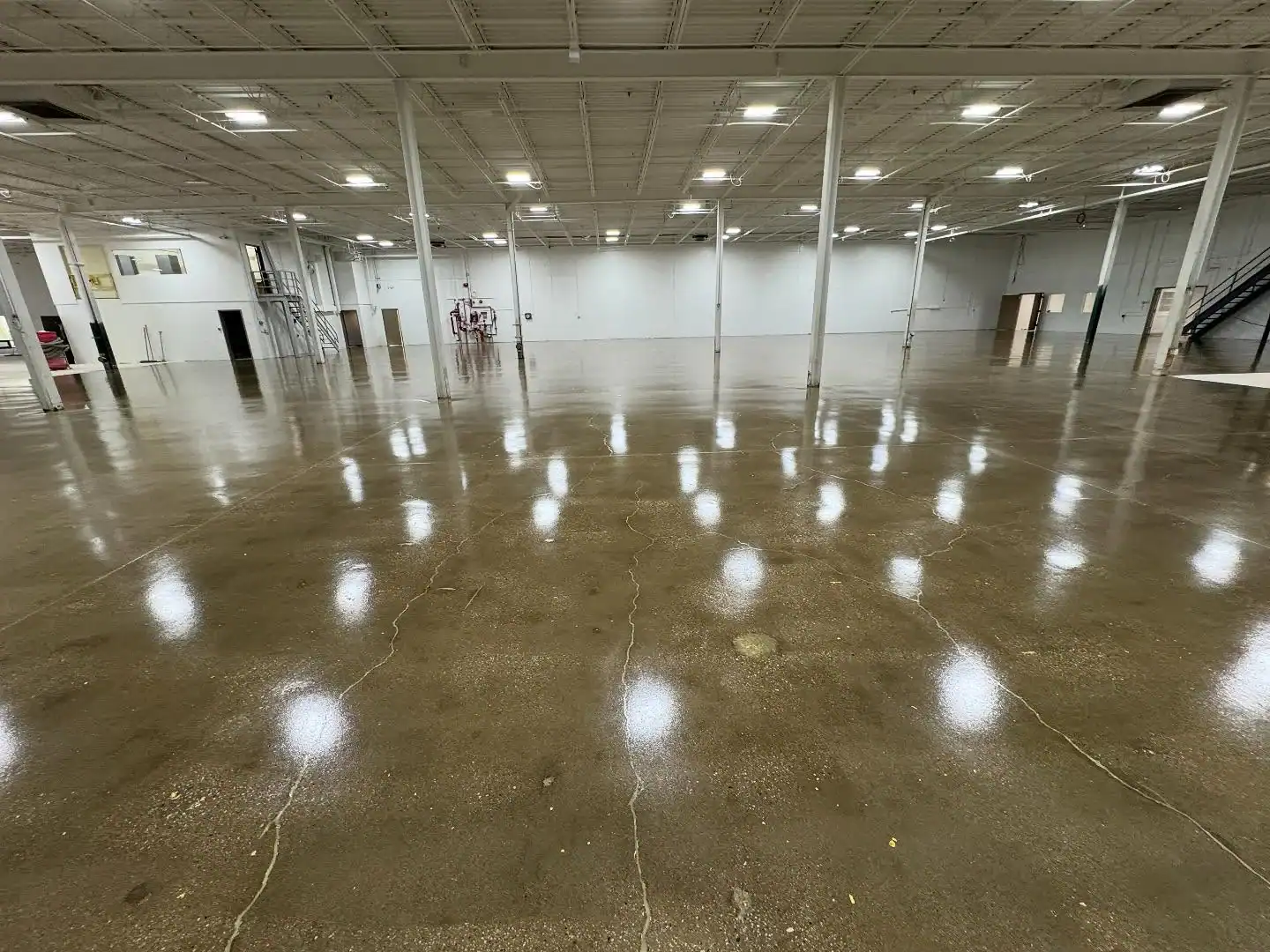
A properly installed system lasts 10 to 20 years depending on your traffic levels and what you’re running across it. That’s not marketing speak—that’s what we see in facilities we installed years ago.
The key word is “properly installed.” If someone skips moisture testing, rushes the prep work, or uses the wrong system for your traffic, you’ll be recoating in 2-3 years. The concrete needs to be dry, clean, and profiled correctly. The coating needs to be the right chemistry for your use case.
Forklifts are harder on floors than foot traffic. Chemical exposure matters. Temperature fluctuations in non-climate-controlled warehouses affect longevity. We account for all of this when we’re spec’ing your system, which is why our installations hold up while others fail early.
Usually, yes. We can phase the work so you’re only losing access to sections at a time, not your whole warehouse.
The reality is that epoxy needs cure time—typically 24 to 72 hours depending on the system and conditions before you can resume normal traffic. We can’t change chemistry. But we can break the project into zones that let you keep operating in other areas.
This takes more coordination and planning on our end. We’re scheduling around your shipping schedules, production needs, and access requirements. It’s more complex than shutting everything down for a week, but it’s how we handle most large scale warehouse flooring in Copiague. You tell us what you can’t afford to shut down and when, and we build the installation schedule around that.
Thickness, flexibility, and impact resistance. Thin coatings crack under the point loads and repetitive stress that forklifts create. You need a system with enough build to absorb and distribute impact.
The chemistry matters too. Epoxy has some flex to it, which is why it doesn’t shatter when something heavy drops. Rigid coatings crack. The system also needs high compressive strength to handle the loads without deforming or creating tire marks that never come out.
Joint treatment is critical. Forklift wheels hammer the same edges thousands of times, and that’s where you see spalling and breakdown in untreated concrete. A proper forklift traffic resistant coating in Copiague includes reinforcement and build-up at joints and high-stress areas. We’re not just painting your floor—we’re engineering it for the abuse it takes daily.
We test first. Concrete looks dry on the surface but can be pushing moisture from below, especially in older Long Island buildings. We use calcium chloride tests to measure actual moisture vapor emission rates.
If your slab is pushing too much moisture, we either need to address the source or use a moisture-mitigating primer system. Installing standard epoxy over wet concrete leads to blistering and delamination within months. We’ve seen it happen to work other contractors did.
Long Island’s water table and humidity create conditions where moisture problems are common, especially in warehouses without climate control. Your building might have drainage issues or a vapor barrier that was never installed or has failed. We identify these problems before installation, not after your new floor fails. That’s the difference between a system that lasts and one that peels.
Cheap coatings are thin, use lower-grade resins, and skip the prep work that makes epoxy bond correctly. You’ll get a nice-looking floor for about six months. Then you’ll see wear patterns, peeling at edges, and tire marks that won’t clean off.
The systems we install for warehouse floors in Copiague use higher solids content, which means more actual epoxy and less solvent. That translates to a thicker, more durable coating after cure. We’re also using products designed for industrial traffic, not residential garage floors.
The bigger difference is installation. We’re grinding the concrete to the right profile, repairing damage, treating joints, and applying proper mil thickness. A cheap job skips most of this to save time and underbid everyone else. You’re not saving money when you’re recoating in two years instead of getting 15 years from a proper installation. The math doesn’t work.
Yes, and this is non-negotiable for a floor that lasts. Cracks, spalled joints, and uneven areas need to be fixed before any coating goes down. Epoxy isn’t a crack filler—it’s a coating that needs sound concrete underneath.
We’re using repair mortars that match the strength of your existing slab and bond properly to old concrete. Joint repairs get special attention because that’s where forklifts cause the most damage. We’re rebuilding edges and creating a solid substrate for the coating system.
Some contractors will coat right over damaged concrete because repair work takes time and cuts into their profit. Then the coating fails at every crack and repair area, and you’re dealing with the same problems plus a failed coating. We handle repairs as part of the installation because it’s the only way to deliver a high-traffic concrete sealer in Copiague that actually performs long-term.