
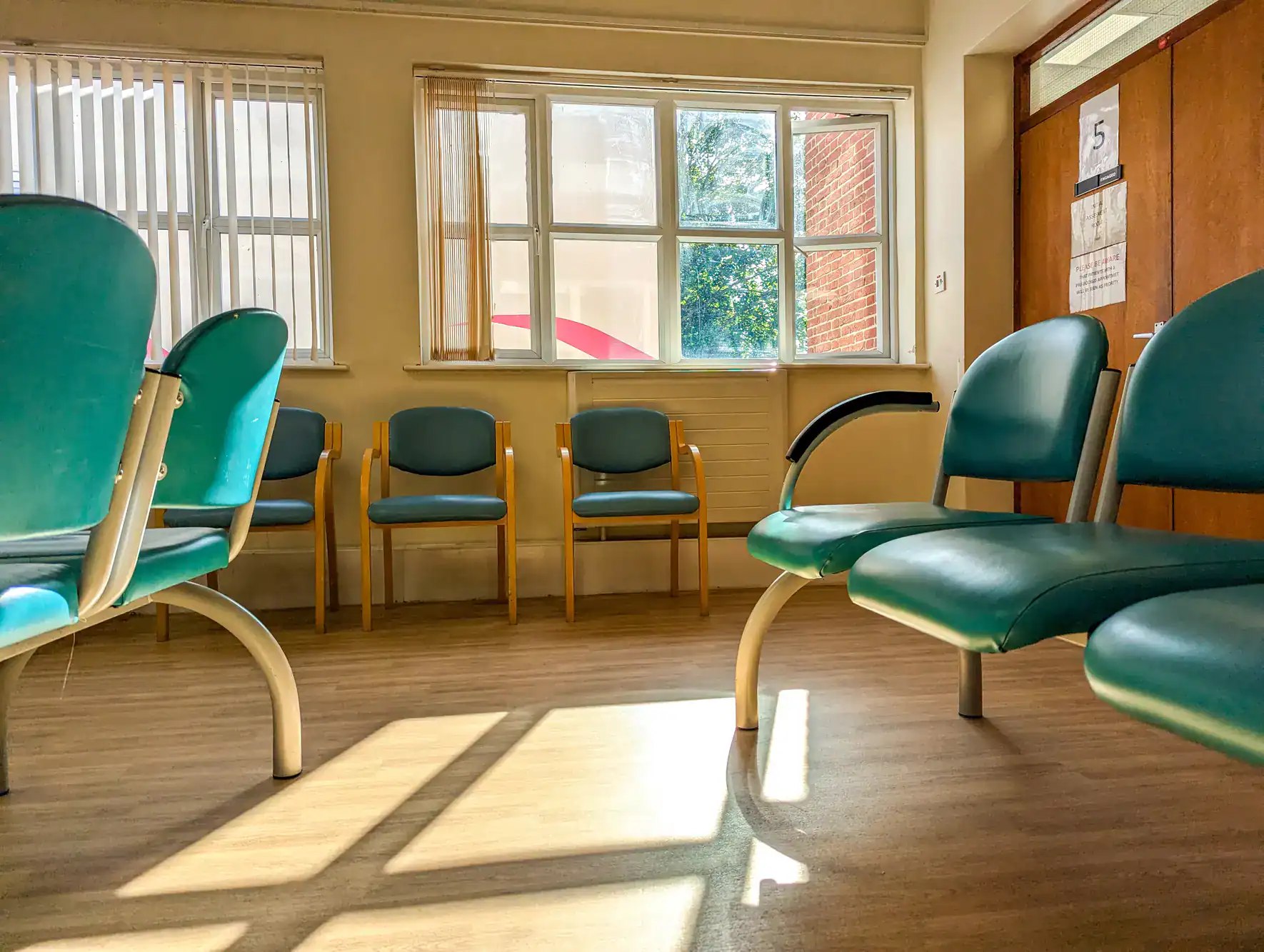
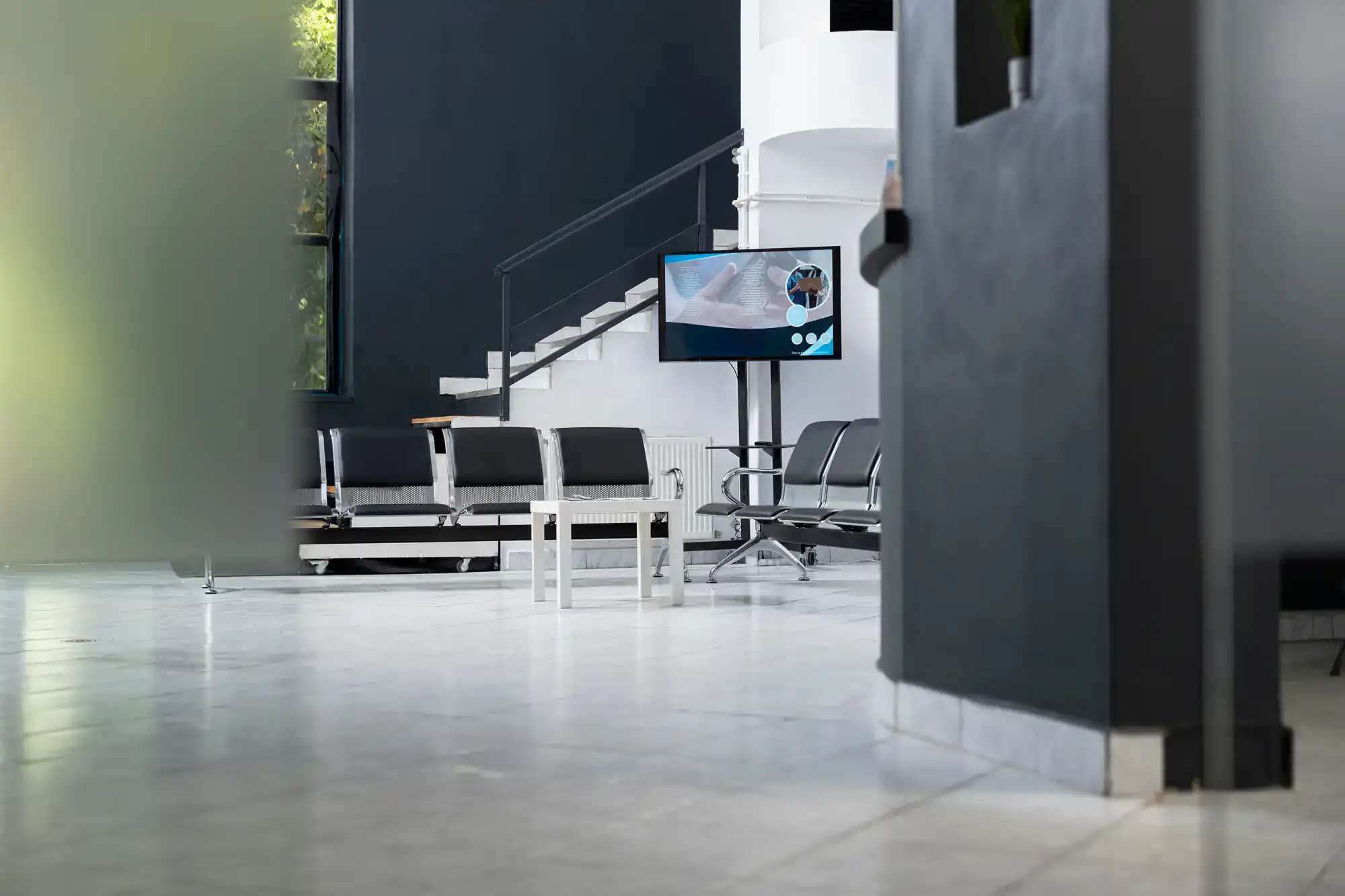
Healthcare-associated infections affect roughly 1 in 31 hospital patients in the U.S. on any given day. That’s not a scare tactic—it’s CDC data, and it’s why flooring in medical facilities isn’t just about aesthetics or durability.
Your floors are either helping control contamination or contributing to it. Seams, porous surfaces, and grout lines create places where bacteria, fungi, and viruses can survive routine cleaning. Antimicrobial hospital flooring in Mineola eliminates those hiding spots with seamless, non-porous surfaces that inhibit microbial growth and support your infection control protocols.
This isn’t about upgrading for the sake of it. It’s about reducing cross-contamination risks in operating rooms, patient areas, and high-traffic zones where wheelchairs, equipment, and foot traffic move pathogens from one space to another. When your flooring meets USDA/FDA compliance standards, you’re not just checking a box—you’re creating an environment where cleaning protocols actually work.
We work with healthcare facilities in Mineola, NY that need flooring systems built to medical standards. We’re not a general contractor trying to figure out healthcare compliance on the fly—we install seamless medical-grade epoxy in Mineola designed specifically for environments where infection control isn’t optional.
Mineola sits at the center of Nassau County’s healthcare infrastructure, home to NYU Langone Hospital—Long Island, a 591-bed comprehensive medical center and Level 1 Trauma Center. Facilities here operate under strict regulatory oversight, and flooring plays a bigger role in compliance than most people realize.
We’ve worked in surgical suites, patient rooms, laboratories, and sterile processing areas where floors need to handle chemical washdowns, resist staining, and maintain their antimicrobial properties under constant use. You’re not getting a sales pitch from us—you’re getting a straightforward conversation about what your facility actually needs and whether we’re the right fit to install it.
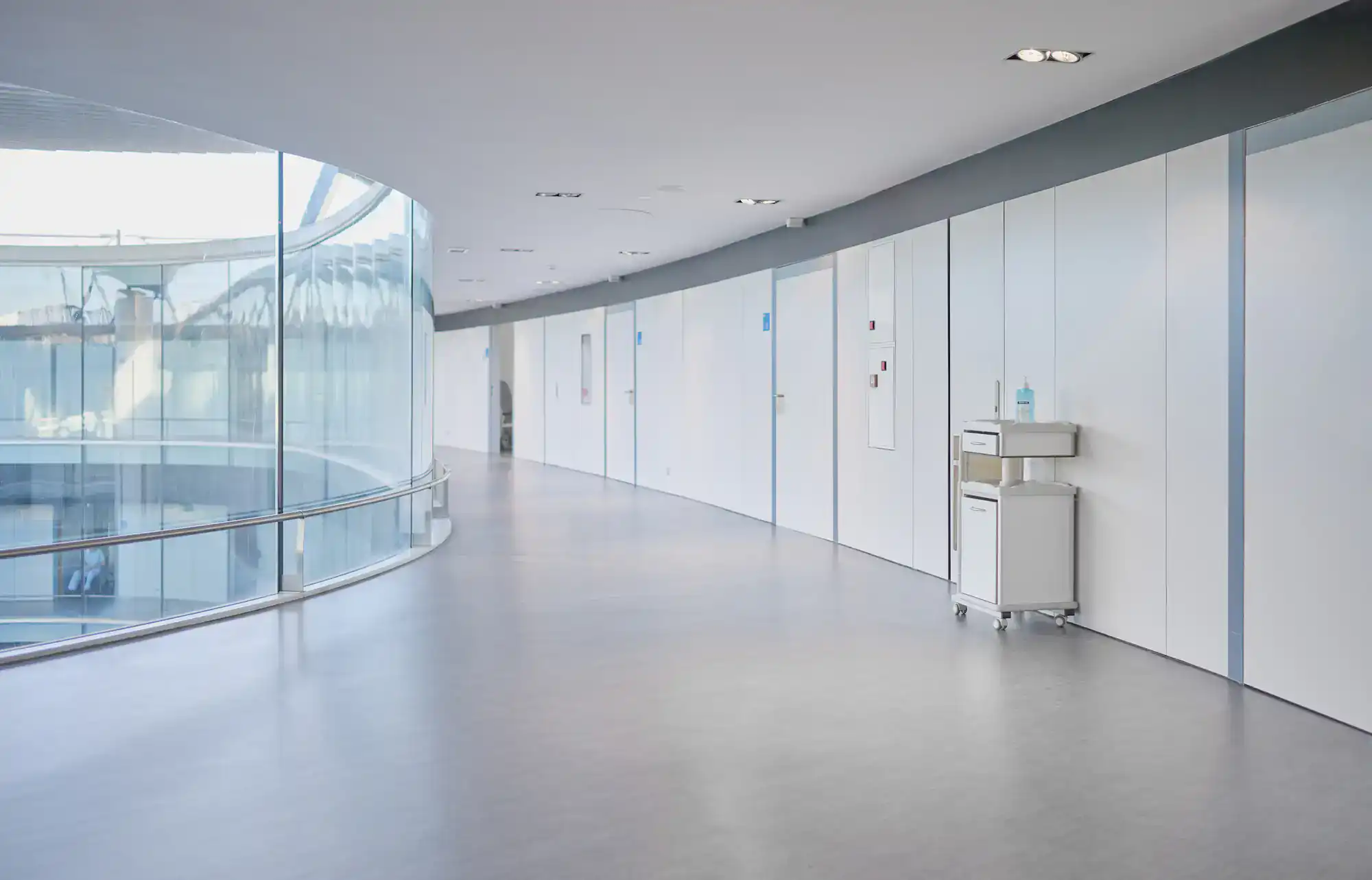
We start with surface prep, because no coating system performs well over a poorly prepared substrate. That means profiling the concrete to the right level, repairing cracks or spalling, and ensuring the surface is clean and dry before any material goes down.
Next comes the base coat—typically a high-performance epoxy or urethane system depending on the room’s function and chemical exposure. For operating rooms and sterile environments, we install seamless, non-porous systems with flash-coved walls to eliminate any joint where pathogens could collect. This is where sterile room floor coatings in Mineola differ from standard commercial flooring—there’s no room for seams, gaps, or porous surfaces.
Top coats are selected based on your facility’s needs: slip resistance for wet areas, chemical resistance for labs and decontamination rooms, or low-VOC formulations for occupied spaces where air quality matters. We’re not rushing the cure time or cutting corners on mil thickness. The goal is a floor that meets USDA/FDA compliant flooring standards in Mineola and performs under the conditions your facility actually operates in—not ideal lab conditions.

Ready to get started?
USDA/FDA compliant flooring in Mineola means smooth, seamless, non-porous surfaces that can withstand thermal shock, chemical exposure, and repeated washdowns without breaking down. These aren’t marketing terms—they’re performance requirements that get tested in real-world conditions.
You’re getting antimicrobial protection built into the coating, not applied as an afterthought. That means the floor actively inhibits bacterial and fungal growth between cleanings, which matters in patient areas, ICUs, and surgical suites where vulnerable populations are at higher risk. Low-VOC healthcare coatings in Mineola also matter when you’re working in occupied facilities where air quality affects patients and staff.
Healthcare facilities in Mineola operate under the same regulatory scrutiny as facilities across Long Island and the greater New York metro area. NYU Langone Hospital—Long Island alone handles thousands of patient visits, surgeries, and emergency cases annually, and every square foot of flooring in that facility has to support infection control measures. Whether you’re renovating an existing wing or building out a new surgical center, the flooring system has to meet the same standards: seamless, durable, chemically resistant, and easy to clean. That’s what we install.
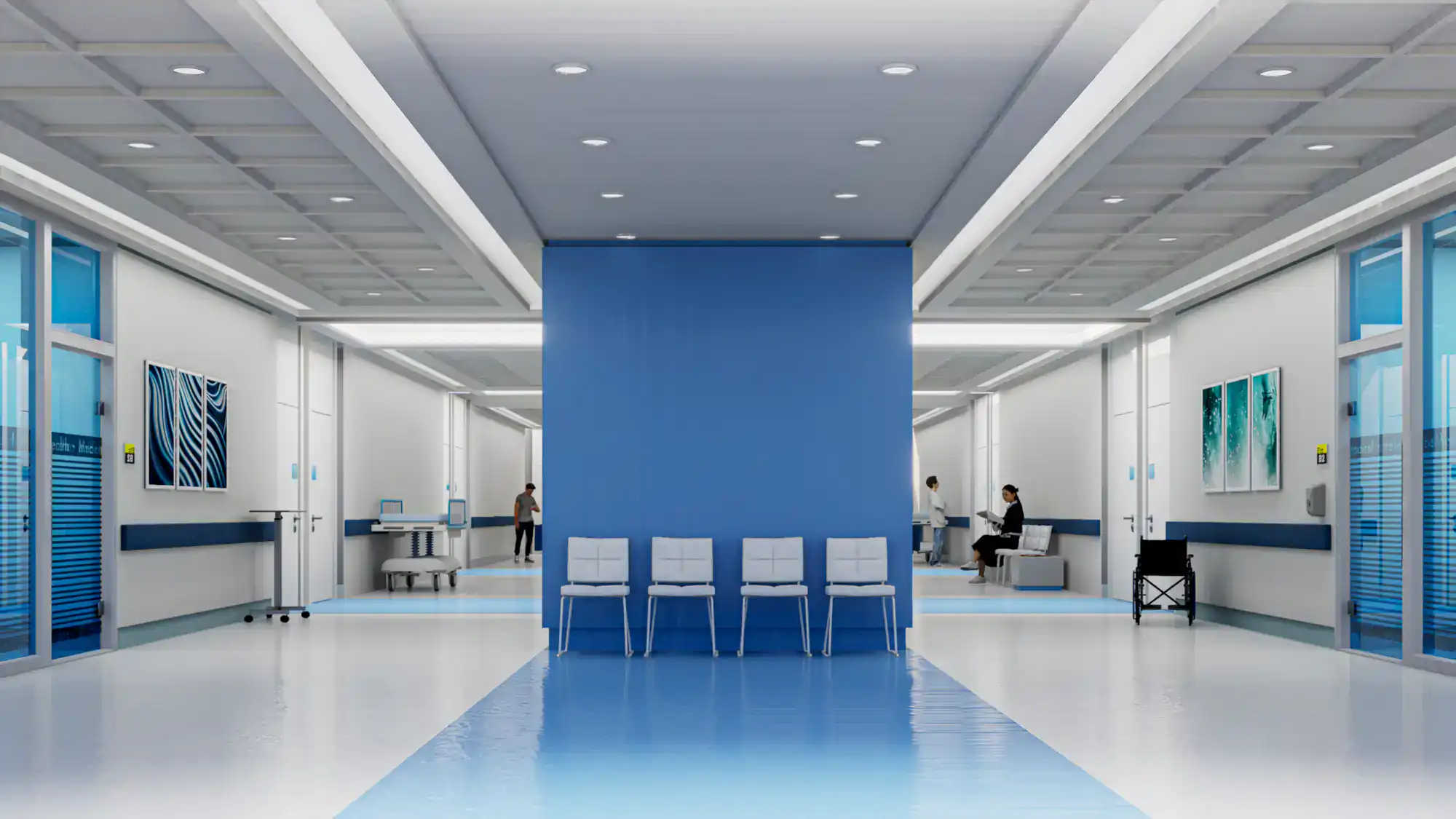
Healthcare flooring has to meet infection control and regulatory standards that don’t apply to retail stores or warehouses. You need seamless, non-porous surfaces that don’t give bacteria, mold, or fungi anywhere to survive between cleanings.
Regular commercial epoxy might handle foot traffic and look clean, but it’s not designed for chemical washdowns, thermal shock from sterilization equipment, or the antimicrobial properties required in patient care areas. USDA and FDA standards require floors that can be cleaned and sanitized without breaking down, which means the coating chemistry, surface profile, and installation method all have to be dialed in.
In operating rooms and sterile processing areas, you also need flash-coved walls—where the floor material runs up the wall to eliminate the seam at the base. That’s not a standard detail in commercial flooring, but it’s critical in healthcare because even small gaps can harbor pathogens that survive routine cleaning.
Installation timelines depend on square footage, the type of system you’re installing, and whether we’re working in an occupied facility. A single patient room might take a day or two. A full surgical suite or lab could take a week or more when you factor in prep, coatings, and cure time.
If you’re operational, we can phase the work to minimize disruption—closing off sections at a time or scheduling installations during lower-census periods. Low-VOC healthcare coatings help because they don’t off-gas the way older epoxy systems did, which matters when you have patients in adjacent rooms.
The bigger concern isn’t always time—it’s doing it right. Rushing cure times or skipping surface prep might get you back online faster, but it also means the floor won’t perform the way it should. We’d rather give you an honest timeline upfront than overpromise and deliver a system that fails inspection or starts delaminating six months in.
Antimicrobial flooring is one part of a larger infection control strategy—it’s not a replacement for proper cleaning protocols, hand hygiene, or sterilization procedures. But it does reduce microbial load on surfaces between cleanings, which matters in healthcare environments where pathogens are constantly being introduced.
The CDC estimates that healthcare-associated infections cost the U.S. healthcare system roughly $28.4 billion annually, and flooring is one of the surfaces that gets touched, rolled over, and contaminated throughout the day. Antimicrobial hospital flooring in Mineola inhibits bacterial and fungal growth, meaning there’s less opportunity for pathogens to colonize the surface and spread.
Studies on antimicrobial surfaces show measurable reductions in microbial counts compared to untreated surfaces, especially in high-touch or high-traffic areas. It’s not a magic bullet, but it’s a meaningful layer of protection when combined with rigorous cleaning and disinfection protocols. If your facility is serious about infection control, your flooring should support that effort—not work against it.
Maintenance is straightforward: regular cleaning with approved disinfectants and periodic inspections to catch any damage before it becomes a problem. Seamless medical-grade epoxy in Mineola is designed to handle chemical cleaners, so you’re not limited to gentle soaps—you can use the same hospital-grade disinfectants you’re already using on other surfaces.
The key is avoiding abrasive scrubbing tools that can scratch the surface and create places for bacteria to hide. Microfiber mops and auto-scrubbers work well. If you’re in a high-traffic area, you might need to reapply a top coat every few years depending on wear, but the base system should last decades if it’s installed correctly.
One advantage of seamless systems is that there’s no grout to scrub or seams to worry about. You’re cleaning a smooth, continuous surface, which makes your environmental services team’s job easier and more effective. If something does get damaged—say, a heavy piece of equipment gouges the floor—it can usually be repaired without replacing the entire section.
Yes. Slip resistance is a safety requirement, not a nice-to-have feature. Healthcare facilities deal with spills—blood, saline, cleaning solutions—and floors need to provide traction even when wet. USDA standards specifically call out slip resistance as a requirement for safe working conditions, and that applies to healthcare environments as well.
We can adjust slip resistance by adding texture to the top coat or using aggregate in the final layer. The goal is to balance traction with cleanability—you don’t want a surface so rough that it’s hard to mop, but you also can’t have a floor that becomes a slip hazard the moment liquid hits it.
Different areas of your facility might need different levels of slip resistance. Surgical suites might prioritize smoothness for easy cleaning, while decontamination areas or kitchens need more aggressive texture. We test slip resistance during installation to make sure it meets the required coefficient of friction for your space and use case.
If your flooring has seams, grout lines, or porous surfaces, it’s probably not compliant. USDA and FDA standards require smooth, seamless, non-porous flooring that can be effectively cleaned and sanitized. If water, chemicals, or cleaning agents can seep into cracks or joints, you’ve got a contamination risk.
Compliance also depends on how the floor performs under your facility’s actual conditions—chemical resistance, thermal shock, impact resistance, and bond strength all get tested. If your floor is staining, cracking, or delaminating, it’s not meeting the durability standards required for healthcare environments.
The best way to know for sure is to have someone who understands healthcare flooring requirements take a look. We can assess your current system, identify compliance gaps, and give you a realistic picture of whether you need repairs, recoating, or a full replacement. You don’t want to wait until an inspection flags your flooring as non-compliant—by then, you’re dealing with downtime, citations, and rushed fixes that cost more than doing it right the first time.