


Right now, your floor might be costing you more than you realize. Cracks slow down operations. Dust gets everywhere. Forklifts tear up the surface, and suddenly you’re looking at repairs that shut down sections of your warehouse.
Industrial warehouse floor epoxy in Uniondale changes that. The surface becomes seamless—no joints to crack, no concrete dust coating your inventory. Forklifts can make tight turns without gouging the floor. Spills wipe up instead of soaking in.
You’re not constantly scheduling repairs or worrying about whether the floor will hold up during your busiest seasons. The floor just works, day after day, without demanding your attention or your maintenance budget. That’s what a properly installed forklift traffic resistant coating in Uniondale actually does—it removes the floor from your list of problems.
We’ve been installing high-traffic concrete sealer in Uniondale, NY and across Long Island for years. Our installation team isn’t new to this—our supervisors bring over 40 years of combined experience, and most of our crew has been with us for more than a decade.
Every installer is OSHA 40 certified. That matters in warehouse environments where safety isn’t optional and downtime costs real money.
We handle the full process—moisture testing, concrete prep, repairs, and the actual coating system. Uniondale’s industrial facilities need floors that can take a beating, and we’ve installed enough of them to know exactly what works in this market.

We start with moisture testing. Concrete that looks fine can trap moisture that’ll ruin a coating from underneath. If there’s an issue, you’ll know before we start, not after.
Next comes surface prep—usually diamond grinding for warehouses in Uniondale. This isn’t optional. The coating needs a clean, profiled surface to bond properly. We remove any existing coatings, oils, or contaminants that would cause problems later.
If there are cracks or damaged areas, we repair them. Then we apply the coating system based on what your floor actually needs to handle. For heavy forklift traffic, that typically means a troweled urethane mortar system at 1/4 inch thickness. For lighter use, a thinner epoxy system might work fine.
Cure times vary by system, but we’ll tell you exactly when you can get back to operations. Most large scale warehouse flooring in Uniondale can handle light traffic within 24 hours and full traffic within a few days.

Ready to get started?
Uniondale’s industrial properties see serious use. With 108,000 square feet of industrial space in the area, warehouses here aren’t small hobby operations—they’re distribution centers, logistics hubs, and facilities running multiple shifts.
Your floor needs to handle constant forklift traffic without breaking down. A proper forklift traffic resistant coating in Uniondale does that by creating a surface that’s harder than the concrete underneath. The coating absorbs impact and resists abrasion from turning wheels and heavy loads.
Chemical resistance matters too. Oil, solvents, cleaning chemicals—they all hit warehouse floors. Epoxy systems are impervious to most industrial chemicals, which means spills don’t eat into your floor or create staining that never comes out.
The seamless surface is practical, not just aesthetic. No joints mean no weak points where cracks start. No porous concrete means dust stays minimal and cleaning takes minutes instead of hours. For facilities dealing with inventory that can’t get dirty or damaged, that’s not a luxury—it’s a requirement.
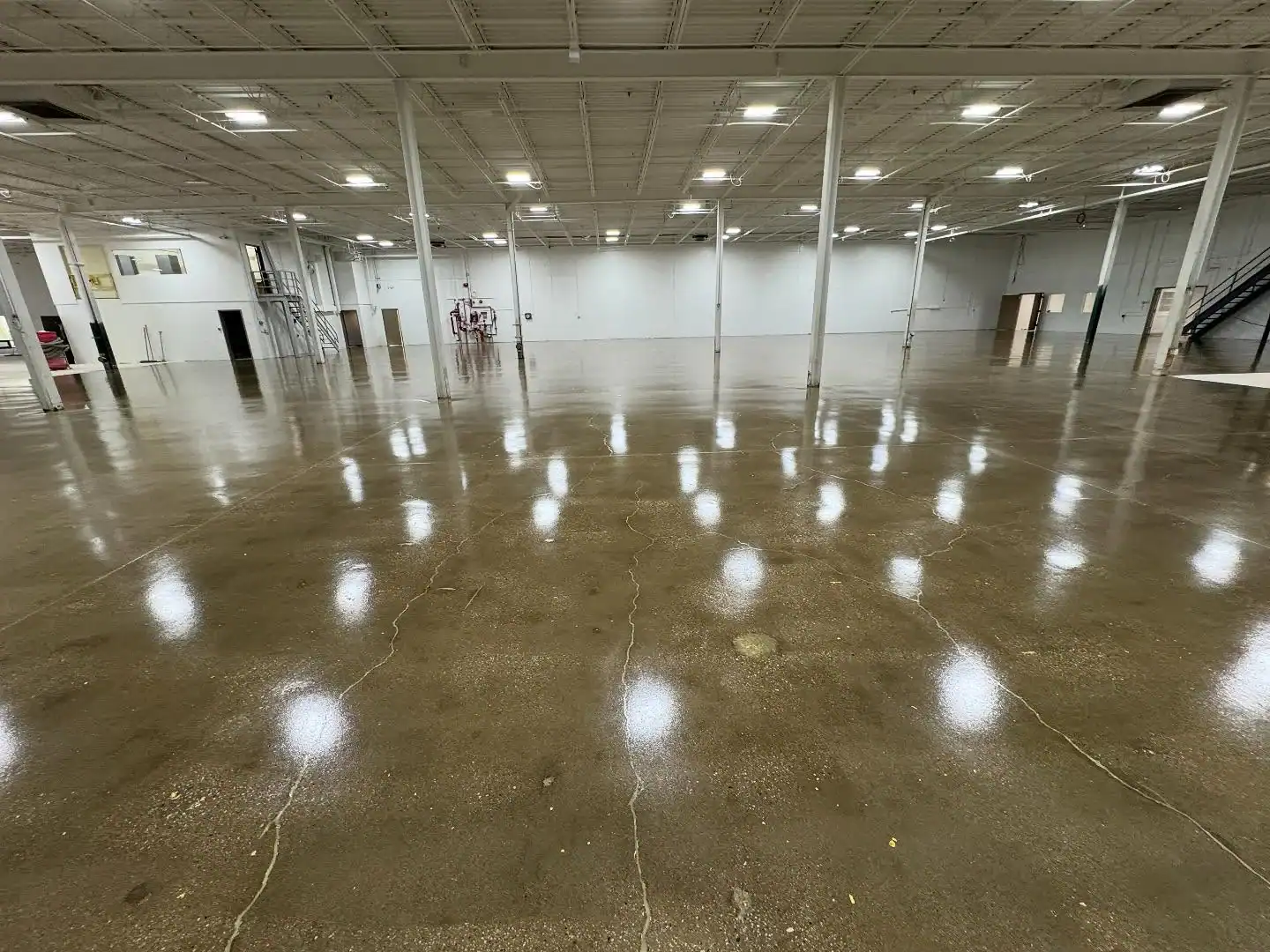
Commercial and industrial epoxy systems typically last 5-10 years under normal warehouse conditions. But “normal” varies wildly depending on your operation.
If you’re running forklifts 16 hours a day with heavy loads and tight turns, you’ll see more wear than a facility with lighter traffic. The thickness and type of system matter too—a 1/4 inch urethane mortar system holds up significantly longer under heavy use than a thinner epoxy coating.
Maintenance plays a role. Floors that get cleaned regularly and don’t sit with chemical spills last longer. The concrete prep before installation is probably the biggest factor—if the surface wasn’t properly prepared, the coating can fail early no matter how good the product is. That’s why we don’t skip steps on prep work.
Epoxy is harder and bonds extremely well to concrete. It handles impact and provides excellent chemical resistance. For many warehouses, a quality epoxy system does everything needed.
Urethane is more flexible and resists abrasion better, especially from turning forklift wheels. It also handles temperature changes and UV exposure better than epoxy, though that matters less in enclosed warehouses.
For the heaviest forklift traffic, we often recommend urethane mortar systems. These are troweled on at 1/4 inch thickness and can take punishing loads day after day. They cost more upfront but last longer in high-abuse environments. For moderate traffic, epoxy systems work well and cost less. The right choice depends on what your floor actually deals with daily.
Surface prep and coating application typically take 3-5 days for most warehouse projects, depending on square footage and the system being installed. Then you need cure time before putting the floor back into service.
Light foot traffic is usually fine after 24 hours. Full forklift traffic and heavy loads typically require 3-7 days, depending on the specific coating system. Urethane systems often cure faster than epoxy in this regard.
Temperature affects cure times—cooler weather slows things down. We can work in sections if you can’t shut down the entire warehouse at once. Many Uniondale facilities schedule installations during slower periods or work around operational needs by coating different zones on different weeks. The key is planning it properly so you’re not caught off guard by longer-than-expected downtime.
Sometimes yes, sometimes no. It depends entirely on what’s there now and what condition it’s in.
If you have an existing coating that’s failing—peeling, delaminating, or heavily worn—it needs to come off. Coating over a failing system just means the new coating fails too. If the existing coating is still well-bonded and in decent shape, we can often prep and coat over it.
Bare concrete is usually the best starting point. We can profile it properly with diamond grinding, ensure good adhesion, and know exactly what we’re working with. If there’s old paint, sealers, or unknown coatings, those often need removal. We test adhesion and moisture levels before making the call. The goal is a coating that lasts years, not one that looks good for six months then starts peeling.
Regular cleaning is the main requirement. Sweep or dust mop to remove grit and debris that can act like sandpaper under forklift wheels. Mop with a neutral pH cleaner when needed—nothing harsh or acidic that could dull the surface over time.
Address spills promptly. While epoxy resists most chemicals, leaving aggressive solvents or acids sitting on the floor for days isn’t ideal. Wipe them up and you’re fine.
Inspect high-traffic areas periodically. If you notice wear patterns developing, those areas can often be touched up or recoated before the entire floor needs redoing. That’s much cheaper than waiting until the coating fails completely.
The beauty of a quality epoxy or urethane system is that maintenance is minimal compared to bare concrete. You’re not dealing with constant dust, staining that won’t come out, or cracks that keep spreading. Clean it regularly and it’ll keep performing for years.
If the concrete itself is structurally sound—no major heaving, severe spalling, or foundation issues—coating is almost always the better option. It’s faster, costs less, and gets you back to operations quicker than tearing out and replacing concrete.
Cracks, surface damage, pitting, and dusting are all fixable with proper prep and coating. We repair damaged areas, grind the surface smooth, and apply a coating system that’s often more durable than the original concrete.
Replacement only makes sense when the concrete slab has failed structurally or has moisture issues that can’t be addressed with coatings. That’s rare. Most warehouse floors in Uniondale that look rough can be brought back to full performance with the right coating system. We’ll assess your floor honestly—if coating won’t work, we’ll tell you. But in most cases, a high-traffic concrete sealer in Uniondale, NY solves the problem without the cost and downtime of replacement.