


You’re running forklifts across the same paths every day. Loading pallets. Dropping cargo. Turning sharp corners under weight. Your concrete is taking a beating, and every crack, pit, or uneven joint costs you more than you think.
Forklift repairs from rough floors run into tens of thousands. Tires wear out faster. Stopping distances get unpredictable. Employees trip. Equipment tips. Dust settles on inventory. And every time you patch a problem, you’re back to the same issue six months later.
A forklift traffic resistant coating in Southampton, NY stops that cycle. You get a seamless, level surface that absorbs impact, resists abrasion, and holds up under the kind of traffic that would destroy untreated concrete in a year. No more joint deterioration. No more step-downs at slab edges. No more constant repairs eating into your operating budget.
We’ve been working in Southampton, NY since the area’s industrial market started heating up. We’ve watched warehouse space become increasingly scarce and expensive here—averaging $33 per square foot now—and we know what that means for you. You can’t afford to redo your floor every few years.
Our installers are OSHA 40 certified. Most have been with us over a decade. Our supervisors bring more than 40 years of combined experience to every job. We handle the full process: moisture testing, concrete prep, repairs, and customized epoxy systems built for your specific traffic patterns.
We’re not the cheapest option in Southampton. But you’re not paying for the install twice, and you’re not losing productivity to floor failures that could’ve been prevented with the right system from the start.

First, we test your concrete for moisture. This matters because trapped moisture will cause any coating to fail, and most installers skip this step. We don’t.
Next comes surface prep. We use diamond grinding for warehouses in Southampton to remove any existing coatings, open up the concrete pores, and create the profile needed for proper adhesion. If your slab has cracks, spalling, or joint damage, we repair it before we coat it. Coating over problems just hides them temporarily.
Then we apply your system. For most warehouse floors in Southampton, NY, that means either a 1/8″ broadcast system or a 1/4″ trowel-down, depending on your traffic load and what your floor sees daily. Both are built to handle forklifts, resist chemicals, and create a seamless surface that won’t pit, crack, or break down under normal use.
Cure time is quick. You’re not shut down for weeks. And once it’s done, you’ve got a floor that requires nothing more than regular sweeping and occasional mopping.

Ready to get started?
You get a high-traffic concrete sealer in Southampton, NY that’s USDA approved for food-area use, heavily resistant to chemicals, and built to last years under the kind of abuse that would destroy standard concrete in months. The surface is seamless, so there are no joints for forklifts to break down. It’s level, so your equipment operates safely and efficiently.
Southampton’s industrial market is tight right now. With only six listings available and space averaging over 6,000 square feet, you’re likely operating in a facility you plan to keep. That makes your floor a long-term investment, not a temporary fix. Landscape companies, logistics operations, and e-commerce fulfillment centers here all face the same challenge: limited space, high costs, and floors that need to perform without constant maintenance.
A proper large scale warehouse flooring system in Southampton eliminates the dust problem that settles on inventory. It prevents the joint deterioration that creates step-downs and uneven surfaces. It protects against chemical spills and fluid damage. And it does all of this while requiring almost no upkeep beyond basic cleaning.
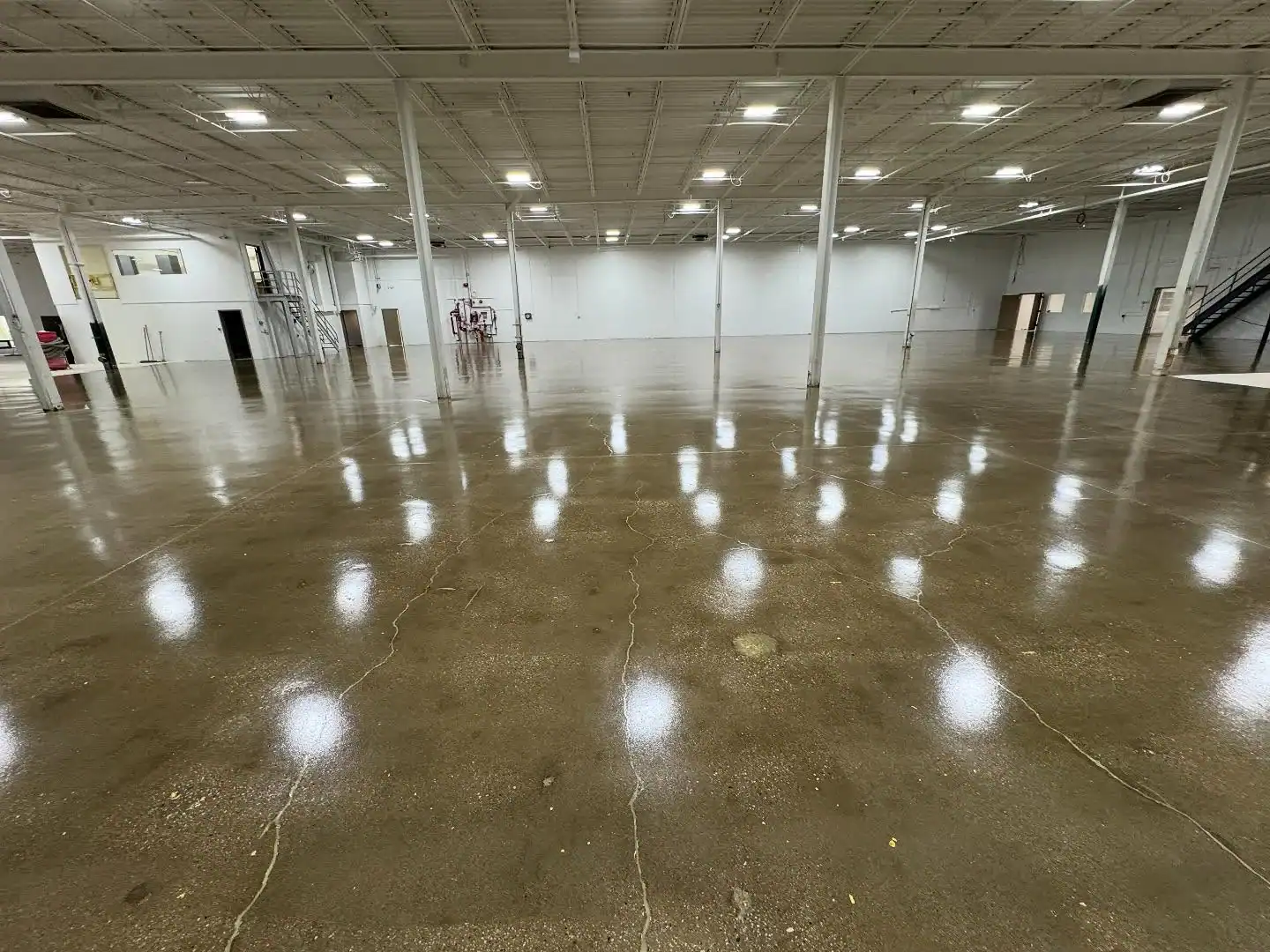
If it’s installed correctly, you’re looking at 10 to 20 years depending on your traffic volume and how well you maintain it. The key phrase there is “installed correctly.”
Most failures happen because the concrete wasn’t prepped right, moisture wasn’t tested, or the wrong system was used for the application. A 1/8″ system works for moderate traffic. A 1/4″ trowel-down is what you need if you’re running loaded forklifts all day. We match the system to your actual use, not just what’s cheapest to install.
Regular sweeping and occasional mopping will extend the life even further. But the system itself is designed to handle the constant abrasion, impacts, and weight that come with daily warehouse operations in Southampton, NY.
Yes, but we repair the damage first. Coating over cracks, spalling, or deteriorated joints doesn’t fix the problem—it just hides it until the coating fails in the same spots.
We assess the slab condition before we quote the job. If you’ve got joint deterioration, we rebuild those edges. If there are cracks, we fill and seal them properly. If the surface is pitted or uneven, we grind it down and level it out. Then we coat it.
This adds time and cost upfront, but it’s the only way to get a floor that actually lasts. Shortcuts here mean you’re paying for another install in three years instead of getting 15 or 20 out of the first one.
Thickness and durability. A 1/8″ broadcast system is thinner, faster to install, and works well for warehouses with moderate traffic—think smaller operations, lighter loads, or areas where forklifts aren’t running constantly.
A 1/4″ trowel-down is thicker, more impact-resistant, and built for heavy industrial use. If you’re running loaded forklifts all day, making sharp turns under weight, or dealing with frequent dropped cargo, this is what you need. It creates a more substantial barrier between your equipment and the concrete, and it holds up longer under abuse.
We recommend the system based on what your floor actually sees, not what sounds good in a sales pitch. Most large scale warehouse flooring in Southampton needs the 1/4″ system to handle the traffic without breaking down.
Plan for three to five days from start to finish, depending on the size of your space and whether we’re doing repairs. Day one is surface prep and repairs. Day two is coating application. Days three through five are cure time before you can run equipment on it.
You don’t need to shut down your entire operation if you can section off areas and work in phases. We’ve done plenty of installs where part of the warehouse stays operational while we work on another section. That takes longer overall but keeps your business running.
The cure time is non-negotiable. Putting forklifts on the floor before it’s fully cured will damage the coating and void any warranty. We’ll tell you exactly when it’s safe to resume normal operations based on the system we install and the conditions in your facility.
Diamond grinding does create dust, but we use equipment with built-in vacuum systems that capture most of it during the process. You’ll still want to cover or move any inventory near the work area, but it’s not the disaster it would be with standard grinding methods.
The grinding step is necessary because it removes old coatings, opens up the concrete pores for proper adhesion, and levels out any surface irregularities. Skipping it or doing it poorly is one of the main reasons coatings fail early.
After grinding, we clean the surface thoroughly before applying any coating. Dust left on the concrete will prevent proper bonding and lead to delamination later. This is basic prep work, but a lot of installers rush through it or skip steps to save time. We don’t.
Minor damage can usually be repaired without redoing the entire floor. If a forklift gouges a small area or you get a localized crack, we can grind out the damaged section, prep it, and patch it with matching material. It won’t be invisible, but it’ll be functional and protected.
Major damage—like widespread delamination or coating failure across large areas—usually means the system wasn’t installed correctly in the first place, and yes, that requires a full removal and reinstall. This is why the upfront work matters so much.
If you maintain the floor properly and it was installed right, you shouldn’t see major damage within the expected lifespan. Most repairs we do are from impacts that would’ve damaged any floor system, not from the coating itself failing under normal use.