


Your concrete is breaking down faster than you can patch it. Forklifts are chipping edges. Dust is settling on inventory and clogging filters. Floor markings are fading, and you’re worried about what OSHA will say during the next inspection.
Industrial warehouse floor epoxy in Shirley, NY eliminates those problems. You get a seamless surface that stands up to concentrated loads, resists chemicals, and doesn’t crack under pressure. No more concrete dust floating through your facility. No more emergency repairs that shut down sections of your operation.
The floor becomes an asset instead of a liability. Your equipment rolls smoother. Your team works safer. Your maintenance budget stops bleeding. That’s what happens when the foundation of your operation can actually handle the work you’re doing.
We’ve been installing commercial and industrial floors for over 30 years. Our president has over 40 years of hands-on experience with epoxy systems. We’ve worked in distribution centers, cold storage facilities, and chemical plants across the country—and we installed flooring in the White House kitchen back in 1996.
Shirley’s industrial corridor demands flooring that can handle the volume and weight of modern warehouse operations. We’ve seen what works and what fails in Long Island facilities. Our crew is OSHA 40 certified, and most of our installers have been with us for over a decade. They know how to prep concrete properly, apply systems correctly, and finish on schedule.
You’re not getting a crew that learned epoxy last year. You’re getting people who’ve done this thousands of times and understand what your operation needs.

We start with moisture testing and a full assessment of your concrete slab. If there’s existing damage, joint separation, or structural issues, we address them before any coating goes down. Shortcuts here mean failure later, so we don’t skip this step.
Next comes surface preparation. For large scale warehouse flooring in Shirley, NY, that usually means diamond grinding to open the concrete pores and create proper adhesion. We remove any existing coatings, oils, or contaminants that would prevent the epoxy from bonding. This phase determines how long your floor lasts.
Then we apply the epoxy system—typically a solid-based formulation designed specifically for forklift traffic resistant coating in Shirley, NY. Depending on your needs, we can add slip resistance, chemical barriers, or high-gloss finishes that improve lighting. The system cures in layers, and we control the environment to ensure proper hardening.
Most installations wrap up in 24 to 72 hours depending on square footage. You get back to operations fast, and the floor is ready to take the load immediately.

Ready to get started?
You get a floor system engineered for the specific demands of warehouse operations in Shirley, NY. That means resistance to the 300+ pounds per square inch that forklifts exert on your concrete. It means a high-traffic concrete sealer in Shirley, NY that stops dusting, prevents moisture intrusion, and creates a surface that won’t chip or peel under load.
The system includes full concrete repair if needed—crack filling, joint stabilization, and slab leveling. We handle diamond grinding for warehouses in Shirley, NY to ensure the substrate is ready for adhesion. You get a seamless finish that doesn’t trap dirt or bacteria and cleans with a damp mop and mild detergent.
Chemical resistance is built in. Oils, solvents, acids, bleach—they won’t penetrate or stain the surface. If you’re storing or handling chemicals, that matters. The floor also improves visibility with high-gloss options that reflect light and reduce the need for additional fixtures.
And because this is Long Island, we account for temperature swings, humidity, and the reality of older buildings with settling foundations. The system flexes enough to handle minor movement without cracking. You’re not just getting a coating—you’re getting a floor that works with your building and your operation.
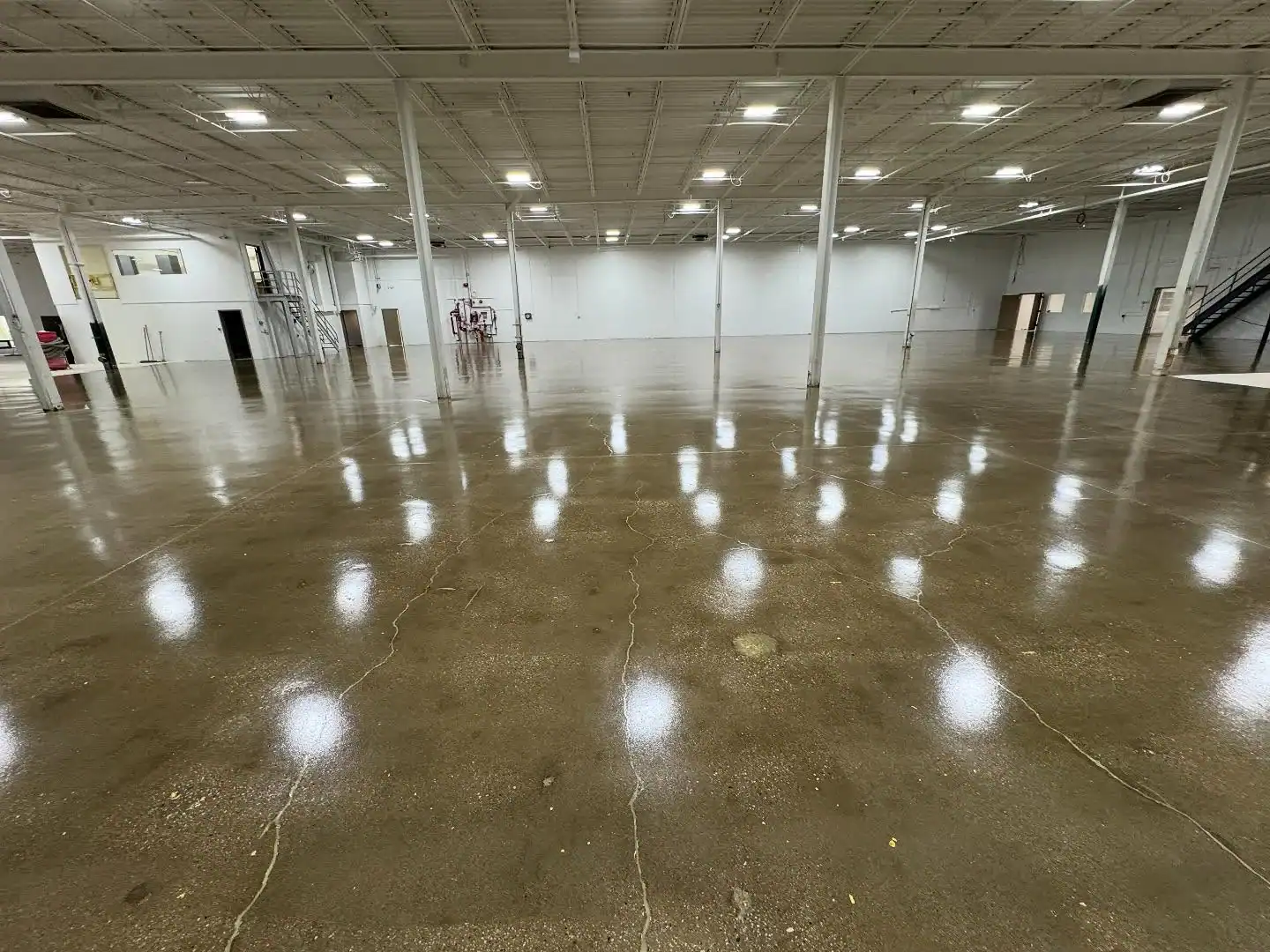
A properly installed industrial epoxy system in a warehouse setting typically lasts 10 to 20 years, even with daily forklift traffic. The lifespan depends on the thickness of the system, the quality of surface preparation, and how well the concrete was repaired before installation.
Solid-based epoxy formulations—designed specifically for commercial environments—handle the concentrated loads and repetitive stress better than thin coatings or DIY products. If your concrete was diamond ground and moisture-tested before application, and if any cracks or joint issues were addressed, you’re looking at the longer end of that range.
The key is proper prep. Epoxy that’s applied over dusty, oily, or damaged concrete will fail early no matter how good the product is. That’s why surface preparation accounts for about 80% of the success of these installations. Most failures happen because someone rushed that step or skipped it entirely.
Yes, but only if the right system is used. Industrial-grade epoxy is highly resistant to oils, solvents, acids, bleach, and most cleaning chemicals. It creates a non-porous barrier that prevents liquids from penetrating the concrete below.
That said, not all epoxy is the same. Retail-grade kits and thin coatings don’t offer the same chemical resistance as commercial systems. If your warehouse handles aggressive chemicals or sees frequent spills, you need a thicker build with a chemical-resistant topcoat. Some operations also benefit from urethane or polyaspartic topcoats for additional protection.
The seamless nature of epoxy is a big advantage here. There are no grout lines or seams where chemicals can seep through. Spills sit on the surface and wipe up easily. For facilities dealing with hazardous materials or strict compliance requirements, that seamless barrier is critical for both safety and regulatory reasons.
Most warehouse epoxy installations take 24 to 72 hours from start to finish, depending on the size of the space and the condition of the existing concrete. If significant repairs are needed—like joint stabilization or crack filling—that can add time.
The process breaks down like this: surface prep and repairs usually take one day, epoxy application takes another day, and curing takes 24 to 48 hours depending on the system and environmental conditions. Some fast-cure systems allow limited foot traffic in 12 hours and full vehicle traffic in 24 hours.
We typically schedule installations during slower operational periods or work in phases so you don’t have to shut down the entire facility. If you’ve got a 50,000-square-foot warehouse, we can section it off and complete the work in stages. The goal is to minimize disruption while still doing the job right. Rushing the cure time or skipping prep to save a few hours will cost you years of floor life, so we don’t cut those corners.
Preparation starts with a full inspection of the slab. We’re looking for cracks, spalling, moisture issues, joint separation, and any existing coatings or contaminants. Moisture testing is critical—if the slab is releasing too much vapor, the epoxy won’t bond and will eventually delaminate.
Next comes mechanical prep, usually diamond grinding. This process removes the top layer of concrete, opens the pores, and creates a profile that allows the epoxy to grip. It also removes oils, old coatings, and surface laitance that would prevent adhesion. For warehouses, this step is non-negotiable.
Any cracks or damaged areas get repaired with epoxy fillers or concrete patching compounds. Joints may need routing and filling depending on their condition. We also clean the surface thoroughly to remove all dust and debris before application. The entire prep phase determines whether your floor lasts two years or twenty. Most coating failures trace back to inadequate surface preparation, not product failure.
Yes. Concrete dusting happens when the surface breaks down and releases fine particles into the air. Those particles settle on racking, inventory, and equipment, and they clog forklift filters and create respiratory concerns for your crew.
Epoxy creates a sealed barrier over the concrete that stops the dusting process. Once the surface is coated, there’s no exposed concrete to break down and release particles. The seamless finish also prevents dirt and debris from getting trapped in cracks or pores, which means cleaner air and less contamination of stored goods.
This is especially important in warehouses handling food products, pharmaceuticals, or electronics where dust contamination can cause compliance issues or product damage. The epoxy doesn’t just reduce dusting—it eliminates it entirely as long as the coating remains intact. Regular maintenance is minimal: a damp mop and mild cleaner keep the surface in good shape without generating dust or requiring harsh chemicals.
If you’re dealing with heavy forklift traffic, chemical exposure, concrete dusting, or frequent cracking, epoxy is likely the right choice. It’s designed for high-impact, high-traffic environments and offers the durability and chemical resistance that warehouses need.
Polished concrete is another option, but it doesn’t offer the same chemical resistance or surface protection. It works well for lighter traffic or spaces where aesthetics matter more than heavy-duty performance. If your operation involves aggressive chemicals, temperature extremes, or constant loading and unloading, epoxy is the better fit.
The condition of your existing slab also matters. If the concrete is severely damaged, settling, or has major structural issues, coating it won’t solve the underlying problem. In those cases, you may need slab repair or replacement before any coating system goes down. A proper assessment will tell you what’s needed. We don’t push epoxy if it’s not the right solution—we’d rather tell you upfront what will actually work for your facility and your budget.