


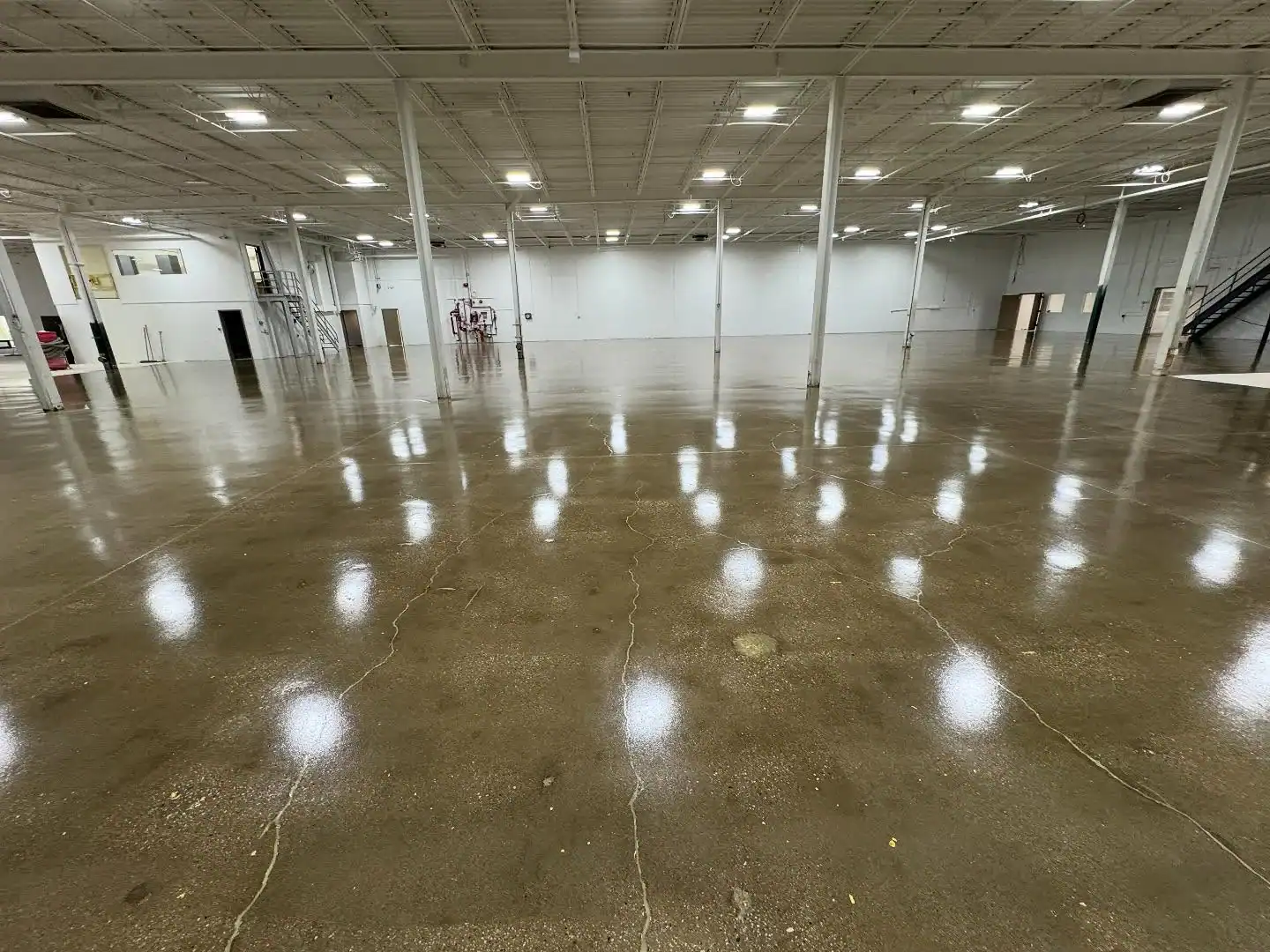
Your forklifts stop chewing through tires every few months. The floor you’re looking at right now—cracked joints, spalling edges, uneven transitions that shake every load—gets replaced with a seamless surface built to take the hit.
Forklift traffic resistant coating isn’t just about appearance. It’s about cutting down on equipment wear, reducing the constant tire replacements, and eliminating the mast shifting that happens when operators hit another pothole in your concrete.
You’ll see better lighting too. The high-gloss finish reflects light back into your space, which means you’re not burning extra electricity to see what you’re doing. Some facilities report up to 200% improvement in brightness after installation.
And when something spills—oil, chemicals, whatever—you wipe it up. No staining. No seeping into cracks. The floor stays intact because there aren’t any seams or joints for contaminants to work their way into.
We’ve been installing industrial floors across Long Island for over 30 years. Most of our crew has been with us for more than a decade. Our field supervisors have over 40 years of combined experience on job sites just like yours.
North Bellmore sits in the middle of Nassau County’s industrial corridor. We know the buildings here—many of them are older warehouses that were built when the area was still growing into the logistics hub it is today. Those concrete slabs have seen decades of use, and most of them are showing it.
Every installer on our team is OSHA 40 certified. We handle the prep work, the repairs, the moisture testing, and the full installation. You’re not coordinating between three different contractors to get one floor done right.

We start with the concrete itself. If your floor has cracks, spalling, or joint damage, we repair it first. There’s no point in coating over problems—they’ll just come back worse.
Next comes diamond grinding for warehouses in North Bellmore. This step opens up the concrete pores so the epoxy can bond properly. It also levels out any uneven spots that cause your forklifts to lurch when they cross from one section to another.
We run moisture tests before anything gets applied. Concrete slabs can trap moisture, especially in older buildings. If we don’t account for that, the coating fails within months.
Then we apply the epoxy system. It’s not a single coat. It’s a multi-layer process designed to handle the specific load and traffic patterns in your facility. The top layer is a high-traffic concrete sealer that resists abrasion, chemicals, and impact.
Curing time depends on the system we’re using, but most installations allow you to get back to operations within a few days. We work with your schedule to minimize downtime.

Ready to get started?
You’re getting a USDA-approved epoxy system that’s built for heavy industrial use. These coatings are four times stronger than standard commercial-grade products, and they’re designed specifically to resist the repetitive stress of forklift traffic.
The system is seamless. No joints means no weak points where your floor starts breaking down first. It’s also non-porous, which matters when you’re dealing with spills or when you need to meet cleanliness standards for certain types of storage or manufacturing.
North Bellmore has a mix of distribution centers, light manufacturing, and logistics facilities. Some of you are running 24-hour operations. Others are dealing with temperature swings because your building isn’t climate controlled year-round. We account for that when we spec your floor.
If you need anti-slip additives, we add them. If you need anti-static properties for certain types of equipment or inventory, we build that in. The floor gets customized based on what’s actually rolling across it every day.
You’re looking at 10 to 20 years if the floor is maintained properly. That doesn’t mean swept once a month. It means regular cleaning and addressing any damage early instead of letting it spread.
The lifespan depends on your traffic volume and what kind of loads you’re moving. A facility running three shifts with constant forklift activity will see more wear than a warehouse that’s only active during business hours. But even in high-traffic environments, a properly installed epoxy system outlasts bare concrete by a significant margin.
Most of the floors we installed 15 years ago are still performing. The ones that needed repairs early were usually dealing with underlying concrete issues that weren’t addressed before the coating went down. That’s why we don’t skip the prep work.
Yes, if it’s the right system. Not all epoxy is created equal. The residential-grade kits you see at hardware stores won’t hold up. You need a commercial system designed for impact and abrasion resistance.
Our coatings are USDA approved and built specifically for environments where forklifts, pallet jacks, and heavy carts are moving across the floor all day. The epoxy bonds directly to the concrete and creates a surface that distributes weight and absorbs impact better than bare concrete.
Forklift tires are hard. They don’t have the give that car tires do, which means every turn and every stop transfers force directly into the floor. A weak coating will start peeling or cracking within months. A properly installed system handles that stress without breaking down.
Commercial epoxy typically runs between $5 and $12 per square foot in the New York area. Your actual cost depends on the size of the space, the condition of your existing concrete, and what kind of system you need.
If your floor needs extensive repairs—deep cracks, major spalling, or sections that have settled unevenly—that adds to the prep work. If you’re coating a smaller area or a space with a lot of obstacles, the price per square foot goes up because the labor becomes more intensive.
We give you a quote based on what’s actually in front of us, not a generic estimate. That means we need to see the space, test the concrete, and understand how you’re using the floor. The cheapest option upfront usually isn’t the cheapest over time if it fails in three years and you’re paying to redo it.
Most installations take a few days from start to finish, but the timeline depends on the size of your facility and the system we’re using. Prep work and concrete repairs usually take the longest.
You can often phase the work so you’re not shutting down your entire operation at once. We coat one section, let it cure, and then move to the next. That way you’re still able to move inventory and keep critical operations running.
Curing time varies. Some systems allow light foot traffic within 24 hours and full forklift traffic within 72 hours. Others need closer to a week. We’ll map out the schedule with you before we start so you know exactly when each section will be back online.
Yes. Coating over damaged concrete doesn’t fix the problem—it hides it temporarily, and then it comes back worse.
Cracks will continue to move. Spalled joints will keep breaking down. Uneven sections will still cause your forklifts to bounce and your operators to slow down every time they cross that spot. The epoxy might look good for a few months, but it won’t hold once the underlying concrete starts shifting.
We repair the concrete first. That means filling cracks properly, rebuilding joint edges, and leveling out any areas that have settled or heaved. It adds time to the project, but it’s the only way to make sure the coating lasts. If someone is offering to skip this step to save you money, you’re going to pay for it later.
Regular cleaning is the main thing. Sweep or scrub the floor to keep dirt and debris from acting like sandpaper under your equipment. The floor is chemical resistant, so you can use degreasers and industrial cleaners without worrying about damaging the surface.
Inspect the floor periodically for any signs of wear or damage. Small issues are easy to fix. Large issues mean you waited too long. If you see a crack forming or a section where the coating is starting to lift, address it before it spreads.
Reapply a topcoat every few years if you’re in a high-traffic environment. It’s not always necessary, but it extends the life of the system and keeps the floor looking clean. Most facilities don’t need major work for at least a decade if the floor was installed correctly and maintained properly.
Other Services we provide in North Bellmore