


You’re running forklifts and pallet jacks across the same joints every day. The concrete’s taking a beating. Cracks are spreading, edges are crumbling, and now you’re looking at downtime you can’t afford.
A proper industrial warehouse floor epoxy Franklin Square installation changes that. The floor becomes seamless, impact-resistant, and built to handle the repetitive punishment of heavy equipment. No more watching joints deteriorate. No more scheduling around floor repairs.
Your team moves faster because the surface is smooth and consistent. Cleaning takes less time because there’s nowhere for dust, oil, or debris to hide. And when clients or inspectors walk through, they see a facility that’s maintained to professional standards.
We’ve been installing large scale warehouse flooring in Franklin Square and across Long Island for over 30 years. Our president has more than 40 years of hands-on experience, and most of our installation team has been with us for over a decade.
We’ve installed floors everywhere from the White House kitchen to distribution centers across the country. Every installer on your job is OSHA 40 certified. We don’t send rookies to learn on your facility.
Franklin Square’s industrial sector demands floors that can handle Nassau County’s operational pace. We understand the local market because we’ve been serving it since before most of your competitors opened their doors.

We start with moisture testing your concrete slab. If there’s a moisture issue, you’ll know before we put anything down. Then comes diamond grinding for warehouses in Franklin Square—we mechanically prepare the surface to create the profile your coating system needs to bond properly.
Any cracks, spalling, or joint damage gets repaired. We’re not covering up problems. We’re fixing them so they don’t come back through your new floor in six months.
Then we install your coating system. For most warehouse floors in Franklin Square, that means a multi-layer polyurethane or urethane concrete system engineered for impact resistance and chemical exposure. We can work around your schedule—nights, weekends, whatever minimizes your downtime. The goal is getting you back to full operation as fast as possible with a floor that’s going to perform for 10 to 20 years.

Ready to get started?
You get complete surface preparation, including diamond grinding and concrete repairs. We test for moisture. We fix structural issues. We don’t skip steps to save time.
Your coating system is selected based on your specific traffic patterns and chemical exposure. If you’re running heavy forklifts all day, you need a different system than a light-duty storage facility. We match the system to your actual conditions, not a one-size-fits-all approach.
In Franklin Square, where warehouse and distribution operations run tight schedules, we coordinate installation to minimize disruption. That includes working off-hours if needed. You also get custom color options—whether that’s marking traffic lanes, designating work zones, or matching your facility’s existing color scheme. And because this is a high-traffic concrete sealer Franklin Square NY designed for industrial use, you get slip resistance that meets NFSI standards and a surface that’s genuinely easy to maintain.
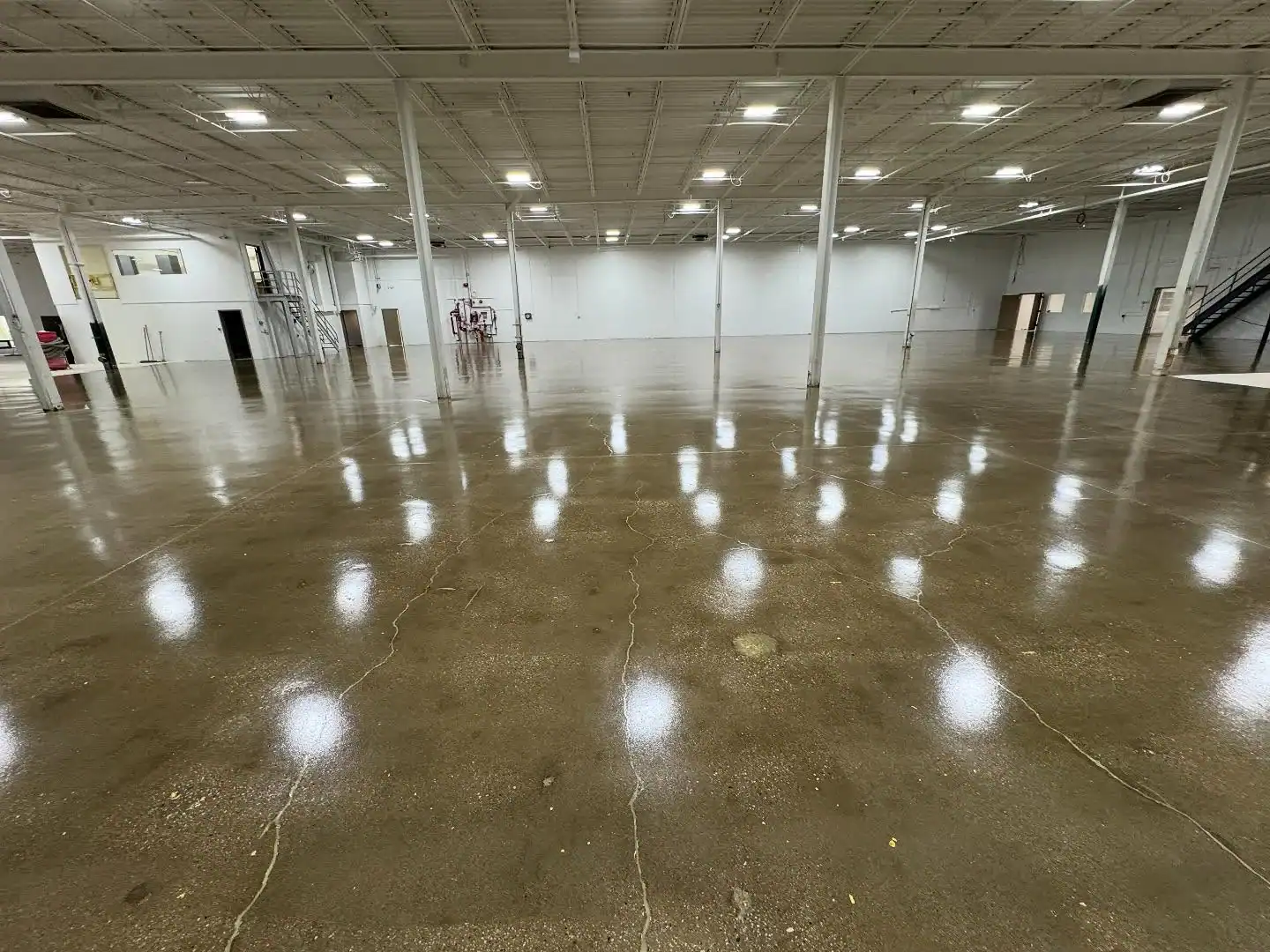
If the concrete is properly prepared and the right coating system is installed, you’re looking at 10 to 20 years of service life. That’s not marketing talk—that’s what happens when the substrate is sound, the profile is correct, and the coating is matched to your traffic load.
The weak point in most warehouse floors isn’t the coating. It’s the joints. Forklifts hit the same control joints thousands of times, and unprotected joints spall and crack. A proper installation addresses joint protection specifically, either by filling and sealing them or using a urethane concrete system that can bridge minor movement.
Your actual lifespan depends on maintenance and usage. If you’re running loaded forklifts with worn wheels making tight turns in the same spot every day, that’s harder on a floor than straight-line traffic. But a correctly installed system should handle your normal operations for well over a decade before you’re thinking about recoating.
Epoxy is hard and chemical-resistant. It bonds well to concrete and creates a durable surface for moderate to heavy traffic. Most multi-layer epoxy systems can handle standard forklift operations without issue.
Urethane concrete is tougher. It has better impact resistance and can handle more severe point-load stress—like a loaded forklift hitting the same spot repeatedly. It’s also more flexible, which helps with thermal expansion and minor substrate movement. If your operation involves constant heavy equipment traffic or extreme temperature fluctuations, urethane concrete usually performs better long-term.
The trade-off is cost and installation complexity. Urethane concrete systems are more expensive and require more specialized installation. For many Franklin Square warehouses, a high-quality polyurethane topcoat over an epoxy base gives you the impact resistance you need without the full cost of a urethane concrete system. It depends on your specific traffic intensity and budget.
Most warehouse floor installations take two to five days from surface prep to final cure, depending on the size of your space and the coating system. But here’s what actually matters: how long until you can put equipment back on it.
Light foot traffic is usually possible within 24 hours. Forklift traffic typically requires 48 to 72 hours, depending on the system and temperature conditions. Full chemical resistance takes about seven days. If you need faster turnaround, there are rapid-cure systems that can get you back to operations sooner, though they cost more.
We can also phase the installation. If you can move operations to one side of your warehouse, we’ll do that section first, let it cure, then move to the other side. For facilities that can’t shut down, we work nights and weekends. It’s not ideal for our schedule, but it’s often the only option for distribution centers that run continuous operations. The key is planning it out before we start so there are no surprises.
Sometimes. If the coating is delaminating or the concrete underneath is damaged, you’re usually better off removing the old system and starting over. Putting new coating over a failing floor just delays the problem.
If the existing epoxy is still bonded but worn or scratched, we can clean it, lightly abrade it, and apply a new topcoat. That works well for floors that are structurally sound but cosmetically tired. You get a refreshed surface without the cost of full removal.
The decision comes down to what’s happening at the substrate level. We’ll test the existing coating for adhesion and inspect the concrete for cracks, moisture issues, or structural damage. If the foundation is solid, a repair or recoat makes sense. If there are underlying problems, those need to be fixed first or they’ll just come back through your new coating. We’ll tell you honestly what you’re dealing with after we assess the floor.
Regular sweeping or dust mopping to keep grit off the surface. Grit acts like sandpaper under forklift wheels and wears down the coating faster. For spills, clean them up when they happen—especially oils, chemicals, or anything acidic. The floor is chemical-resistant, but that doesn’t mean you should leave stuff sitting on it.
Periodic damp mopping with a neutral pH cleaner keeps the floor looking good and removes buildup. Avoid harsh solvents or highly alkaline cleaners unless you’re dealing with something specific. Most warehouse floors stay clean with just water and a mild detergent.
Every few years, you might want to have the floor inspected for wear patterns, especially in high-traffic areas. If you’re seeing wear-through in specific spots, those can be touched up before they become bigger problems. The easier you are on the floor—smooth forklift wheels, regular cleaning, prompt spill cleanup—the longer it lasts. It’s not complicated, but consistency matters.
Yes. We’ve installed floors in operating facilities where downtime wasn’t an option. That means working nights, weekends, or in phases so you can keep part of your operation running.
It’s more complicated than shutting everything down and working straight through, but we understand that warehouse and distribution operations in Franklin Square run on tight margins. Missing even a day of productivity can cost more than the floor itself.
We’ll walk through your facility, understand your workflow, and build an installation plan that works with your schedule. If you can shift operations temporarily, we’ll coordinate around that. If you need us there at midnight, we’ll be there at midnight. The installation process doesn’t change—we’re still doing full prep, proper curing times, and quality control. We’re just doing it on your timeline instead of ours.
Other Services we provide in Franklin Square