


You stop worrying about cracks opening up under pallet jacks. You stop scheduling emergency repairs that shut down sections of your facility. Your floor becomes something you don’t think about anymore because it just works.
That’s what happens when you install a forklift traffic resistant coating in Dix Hills that’s actually engineered for the load. The concrete underneath gets properly prepared—ground flat, cracks filled, moisture tested. Then we apply a solid-based epoxy system that bonds at the molecular level and cures into a surface harder than the concrete itself.
Your maintenance crew spends less time patching and more time on actual work. Your insurance company sees fewer slip-and-fall incidents. Your floor looks professional when clients tour the facility, and it stays that way for years because the coating doesn’t wear through in the high-traffic lanes.
We’ve been installing warehouse floors since before most coating companies existed. Over 30 years in business, with our CEO bringing more than 40 years of hands-on installation experience to every project in Dix Hills, NY.
Our crews are OSHA 40 certified. Most have been with us over a decade. They’ve seen what works and what fails, and they know the difference between a floor that looks good at ribbon-cutting and one that’s still performing 15 years later.
Dix Hills has a strong industrial presence, and facilities here need floors that can handle the volume. We’ve installed epoxy systems across the country and internationally, but Long Island is home. We understand the local concrete, the climate, and what your operation demands from a floor.

First, we test your concrete for moisture. If the slab is releasing vapor, no coating will stick long-term—it’ll delaminate within months. We catch that before we start, not after you’ve paid for a failed floor.
Next comes diamond grinding for warehouses in Dix Hills. We mechanically grind the surface to remove any existing coatings, laitance, and contamination while opening the concrete pores for maximum adhesion. This isn’t acid etching or light scarifying—it’s aggressive surface prep that creates the profile epoxy needs to bond permanently.
We repair cracks and spalled areas with epoxy filler that’s stronger than the surrounding concrete. Then we apply the base coat—a 100% solids epoxy formulated for industrial use. After that cures, we add a high-traffic concrete sealer in Dix Hills with non-slip aggregate mixed in for traction, even when the floor is wet.
The entire system is designed as a single, integrated unit. Each layer chemically bonds to the one below it, so you don’t get delamination or peeling at the edges where forklifts turn.

Ready to get started?
You get full concrete preparation—moisture testing, crack repair, diamond grinding, and profile verification. We don’t skip steps to save time. If your slab isn’t ready, we make it ready before any coating goes down.
The epoxy system itself is customized based on your traffic patterns and chemical exposure. If you’re running forklifts 24/7, we build the floor thicker. If you’re dealing with oils or solvents, we adjust the chemistry for chemical resistance. This isn’t one-size-fits-all; it’s large scale warehouse flooring in Dix Hills built for your specific operation.
You also get a non-slip topcoat that meets NFSI standards. Warehouse floors need traction when they’re wet or contaminated, and we engineer that into the finish from day one. The result is a surface that’s safe, cleanable, and durable enough to last 10 to 20 years with basic maintenance.
Dix Hills facilities operate in a competitive market with access to millions of consumers across the metro area. Your floor is part of your operational efficiency. When it fails, you lose time and money. When it works, it’s invisible—and that’s exactly what you want.
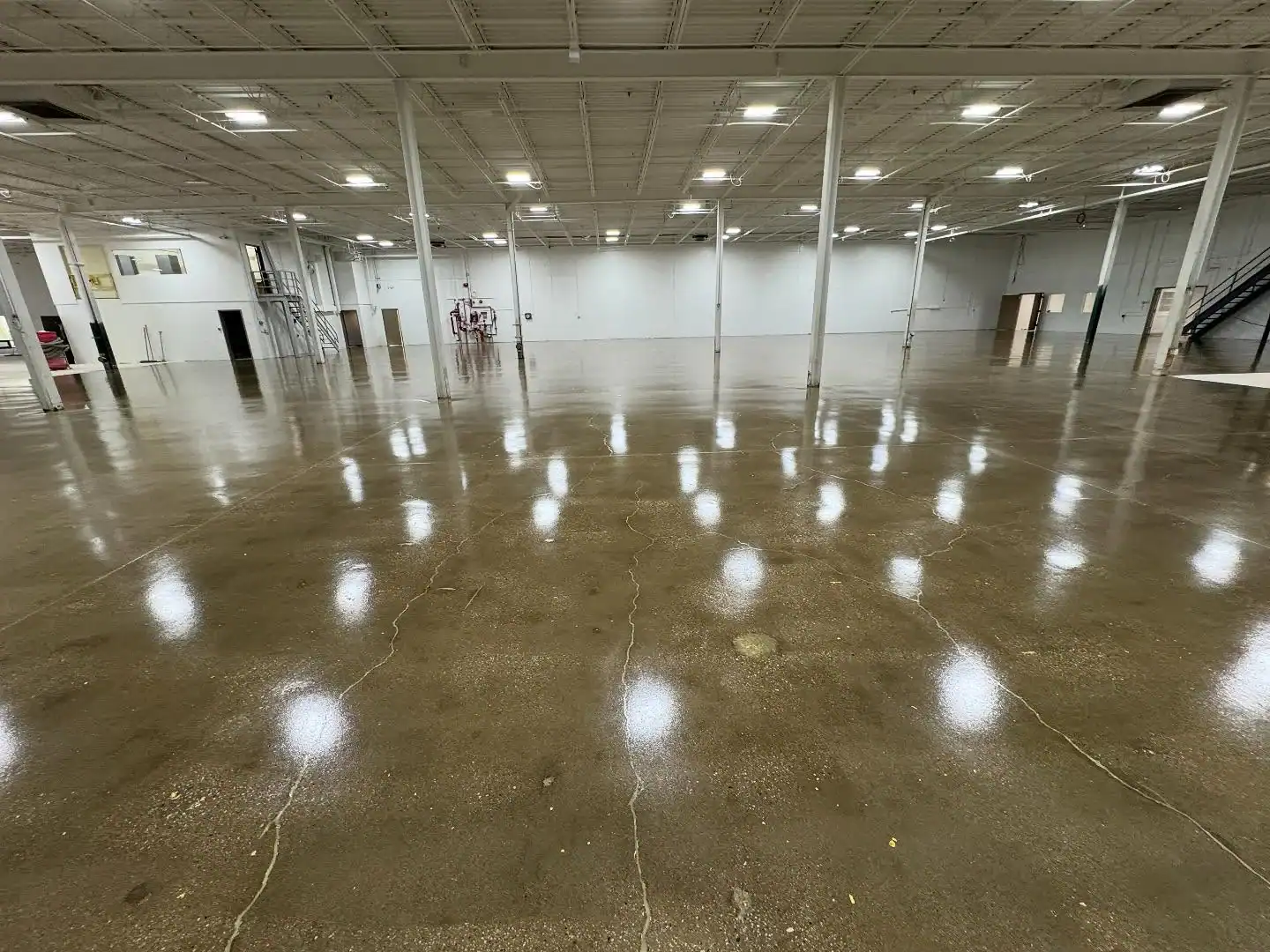
A properly installed industrial warehouse floor epoxy in Dix Hills will last 10 to 20 years, even with daily forklift traffic. The key word is “properly installed.”
Most failures happen because of poor surface prep or moisture issues that weren’t addressed before coating. If the concrete isn’t ground to the right profile, or if vapor is coming up through the slab, the epoxy will delaminate no matter how good the product is. We test for moisture, grind the surface with diamond tooling, and repair any structural issues before we coat.
The epoxy itself is a 100% solids system—no water, no fillers, just resin and hardener. It cures into a surface that’s harder than the concrete underneath, so forklift wheels and pallet jacks don’t wear through it the way they do with thinner coatings. Add a non-slip topcoat, and you’ve got a floor that holds up to the abuse and still looks professional years later.
Bare concrete is porous. It absorbs oils, chemicals, and moisture, which leads to staining, pitting, and eventually structural damage. Once contaminants soak into the slab, they’re nearly impossible to remove, and the concrete starts breaking down from the inside.
Epoxy seals the surface completely. Spills sit on top instead of soaking in, so you can clean them up before they cause damage. The coating also hardens the surface, making it more resistant to impact and abrasion from heavy equipment. You’ll see less dusting, fewer cracks, and a floor that’s easier to keep clean.
From a safety standpoint, bare concrete gets slippery when wet or contaminated. A forklift traffic resistant coating in Dix Hills includes a non-slip topcoat that gives you traction even in those conditions. That reduces accidents and keeps your operation moving without slowdowns from unsafe floor conditions.
Sometimes, but only if the existing coating is fully bonded and in good condition. If it’s peeling, flaking, or delaminating, we remove it completely before installing the new system. You can’t build a durable floor on top of a failing one.
We test the existing coating by trying to scrape it up and checking for hollow spots that indicate delamination. If it passes, we grind the surface to create a profile for the new epoxy to bond to. If it fails, we strip it down to bare concrete using diamond grinding for warehouses in Dix Hills and start fresh.
Most of the time, if a facility is calling us, it’s because the existing floor is already failing. In those cases, removal is the only option that makes sense. It adds time to the project, but it’s the difference between a floor that lasts two years and one that lasts twenty. We’d rather do it right than do it twice.
We test for it before we coat. Moisture vapor transmission is one of the top reasons epoxy floors fail, and most contractors either don’t test for it or ignore the results because dealing with it is expensive and time-consuming.
We use calcium chloride tests or relative humidity probes to measure how much moisture is coming up through the slab. If the levels are too high, we either apply a moisture mitigation primer or, in severe cases, recommend fixing the source of the moisture before we coat. There’s no shortcut here—if the slab is wet, the epoxy won’t stick.
Once we’ve addressed the moisture, we move forward with surface prep and installation. The result is a high-traffic concrete sealer in Dix Hills that stays bonded for the long term because we eliminated the one thing that causes most coatings to peel. It’s not the fastest process, but it’s the only one that works.
Epoxy is harder and bonds better to concrete. Polyurethane is more flexible and UV-resistant. For indoor warehouse floors in Dix Hills, NY, epoxy is almost always the better choice because you need hardness and impact resistance more than flexibility.
Epoxy cures through a chemical reaction that creates a rigid, durable surface. It can handle the point loads from pallet jacks and the constant abrasion from forklift traffic without wearing through. Polyurethane, on the other hand, stays slightly softer, which makes it better for areas with temperature fluctuations or UV exposure—but those aren’t major concerns inside a climate-controlled warehouse.
That said, we sometimes use a polyurethane topcoat over an epoxy base in facilities that need extra chemical resistance or a specific aesthetic. The epoxy provides the strength and bond, and the polyurethane adds a layer of protection on top. It depends on what your operation demands, but for most large scale warehouse flooring in Dix Hills, a full epoxy system is the right call.
Plan for three to five days from start to finish, depending on the size of the space and the condition of the existing concrete. That includes surface prep, coating application, and full cure time before you can put equipment back on the floor.
We can work in phases if you can’t shut down the entire warehouse at once. We’ll coat one section, let it cure, and move to the next while you continue operating in the finished areas. It takes longer overall, but it keeps your operation running, which matters more than speed in most cases.
The actual coating application is fast—it’s the prep and cure time that take up most of the schedule. Diamond grinding, crack repair, and moisture testing happen on the front end. Then the epoxy needs time to cure fully before it can handle heavy loads. Rushing that process leads to failures, so we build the timeline around the chemistry, not the calendar.